Introduction
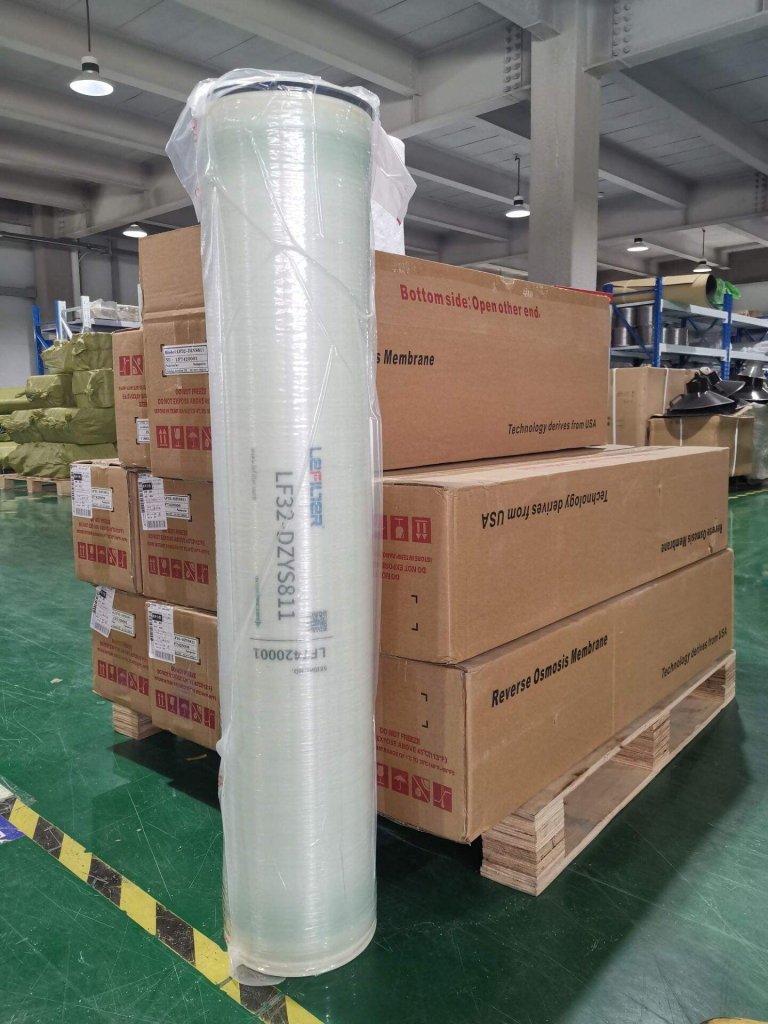
The ULP2012 Reverse Osmosis Membrane by Vontron is a high-performance filtration solution designed for efficient desalination and purification across residential, commercial, and industrial applications. Combining advanced thin-film composite (TFC) polyamide technology with optimized structural design, the ULP2012 achieves exceptional salt rejection and water flux while maintaining durability under demanding conditions. Its compact size and compatibility with standard systems make it a versatile choice for diverse water treatment needs.
Suggested Operating Conditions
Operating Pressure: 1–3 bar (14.5–43.5 psi)
Temperature Range: 5–45°C (41–113°F)
pH Tolerance: 3–10 (continuous operation); 2–11 (cleaning cycles)
Max Feed SDI: ≤5
Free Chlorine Tolerance: <0.1 mg/L
Recovery Rate: 15% (standard testing conditions)
Key Applications
Residential Water Purification: Produces safe drinking water by removing dissolved salts, heavy metals, and contaminants from tap or well water.
Commercial & Hospitality: Ensures high-quality water for hotels, restaurants, and office buildings, meeting NSF/ANSI 58 standards.
Industrial Process Water: Prepares ultrapure water for electronics manufacturing, pharmaceuticals, and food processing.
Wastewater Reuse: Treats industrial effluents for recycling, reducing freshwater consumption.
Pre-Treatment for Seawater Desalination: Reduces TDS in brackish or seawater systems prior to advanced filtration.

Technical Advantages
High Salt Rejection: Achieves ≥97% desalination rate under 250 mg/L NaCl feed conditions.
Anti-Biofouling Design: Incorporates hydrophilic modifications to resist microbial growth and organic fouling.
Energy Efficiency: Operates at low pressure (1–3 bar), reducing energy costs compared to conventional RO membranes.
Long Lifespan: Maintains stable performance for 3–5 years with proper maintenance.
Maintenance Guidelines
Cleaning Cycles: Perform Clean-in-Place (CIP) every 4–6 weeks using citric acid (pH 2–3) or NaOCl (0.1% concentration).
Storage: Keep membranes moist with 1% sodium bisulfite solution to prevent microbial growth during downtime.
First-Hour Flush: Discard initial permeate after installation to eliminate preservatives and stabilize performance.
Innovation & Sustainability
Recent research highlights enhancements in ULP2012’s permselectivity through nanoparticle integration (e.g., hydrotalcite), which boosts water flux by 16.4% without compromising salt rejection9. Additionally, anti-biofouling grafting techniques extend membrane longevity in high-organic environments.
The ULP2012 balances precision engineering with user-centric design, delivering reliable performance in both small-scale residential setups and large industrial systems. For customized configurations, consult technical specifications based on feedwater quality and target output.
Note: Specifications may vary by batch. Refer to the manufacturer’s manual for detailed operational limits.
Application areas of RO membrane
Drinking water treatment
RO membranes have been widely used in the field of drinking water treatment. It can remove harmful substances such as heavy metals, organic matter, bacteria, and viruses from water, providing people with safe and healthy drinking water. Home RO water purifier is one of the most common RO membrane application products, which can be installed in the kitchen or bathroom of a household to provide high-quality drinking water for the family. In addition, RO membranes can also be used for centralized water supply in residential areas, drinking water treatment in schools, hospitals, hotels, and other places.
Industrial water treatment
In the industrial field, RO membranes can be used to prepare various industrial water, such as electronic industry water, pharmaceutical industry water, chemical industry water, etc. These industries have very high requirements for water quality, requiring the removal of almost all ions and particles to prevent any impact on product quality. RO membrane technology can meet the high water quality requirements of these industries and provide reliable water sources for industrial production.
Seawater desalination
Desalination of seawater is one of the important ways to solve the global water shortage problem. RO membrane technology has important application value in the field of seawater desalination. It can remove salt and other impurities from seawater, producing fresh water that meets drinking water standards. Compared with traditional seawater desalination technology, RO membrane technology has the advantages of low energy consumption, simple operation, and small footprint, and has broad development prospects.
waste water treatment
RO membrane can be used for wastewater treatment to remove harmful substances from wastewater and achieve the recycling and utilization of wastewater. For example, in the wastewater treatment of industries such as printing and dyeing, papermaking, and electroplating, RO membranes can remove impurities such as dyes, heavy metals, and organic matter from the wastewater, enabling it to meet discharge standards or be reused in the production process. In addition, RO membranes can also be used in fields such as urban sewage treatment and landfill leachate treatment.
conclusion
RO membrane, as an efficient separation technology, plays an important role in the field of water treatment. It has the advantages of efficient separation performance, simple operation, small footprint, strong adaptability, environmental protection and energy saving, and is widely used in fields such as drinking water treatment, industrial water treatment, seawater desalination, and wastewater treatment. With the continuous advancement of technology, the performance of RO membranes will continue to improve, and their application fields will also continue to expand. In the future, RO membrane technology will develop towards high performance, multifunctionality, green environmental protection, and intelligence, making greater contributions to solving the global water shortage problem and protecting the environment.