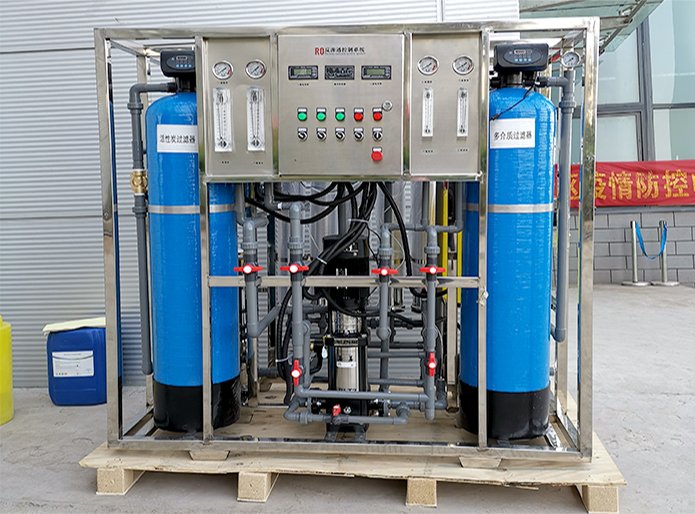
Reverse Osmosis (RO) equipment is a highly efficient membrane separation technology equipment, which plays a vital role in the field of modern water treatment. It can remove a variety of impurities in water, including ions, organic matter, bacteria and viruses, etc., to produce high-quality pure water. With the increasing shortage of water resources and water pollution problems, reverse osmosis equipment is increasingly widely used in various fields, from household drinking water treatment to large-scale industrial water and seawater desalination.
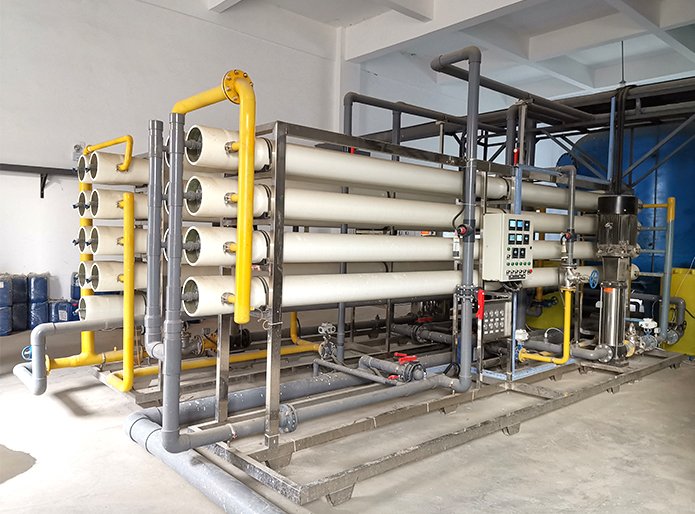
Principle of reverse osmosis equipment
(I) Osmotic pressure and reverse osmosis
Osmotic pressure
When two solutions of different concentrations are separated by a semipermeable membrane, the solvent (such as water) in the dilute solution will spontaneously diffuse through the semipermeable membrane to the concentrated solution side. This phenomenon is called osmosis. In order to prevent the penetration of the solvent, a certain pressure needs to be applied to the concentrated solution side. This pressure is the osmotic pressure. The magnitude of the osmotic pressure depends on factors such as the concentration, temperature and type of solute of the solution.
Reverse osmosis
Reverse osmosis is to apply a pressure greater than the osmotic pressure on the concentrated solution side, so that the solvent (water) flows from the concentrated solution side through the semipermeable membrane to the dilute solution side in the reverse direction, thereby achieving the purpose of separating the solute and the solvent. In the reverse osmosis equipment, the raw water is a solution containing various impurities. By applying sufficient pressure, water molecules can pass through the reverse osmosis membrane, while impurities are retained on one side of the membrane.
(II) Selective permeation of reverse osmosis membrane
Membrane structure and performance
Reverse osmosis membrane is a semi-permeable membrane with a special structure, usually made of polymer materials. Its surface has a very fine microporous structure, and the size of these micropores is usually at the nanometer level. For example, the commonly used polyamide reverse osmosis membrane has micropores that allow water molecules to pass through, while most ions (such as calcium, magnesium, sodium, chlorine, etc.) and organic molecules cannot pass through the reverse osmosis membrane because their diameters are larger than the micropore diameters or chemical interactions with the membrane surface.
Separation mechanism
In addition to the size exclusion effect, the separation of reverse osmosis membranes also involves charge effects. For example, for some charged ions, the membrane surface may have groups with opposite charges, which will repel the passage of ions, further enhancing the membrane’s ability to retain ions.
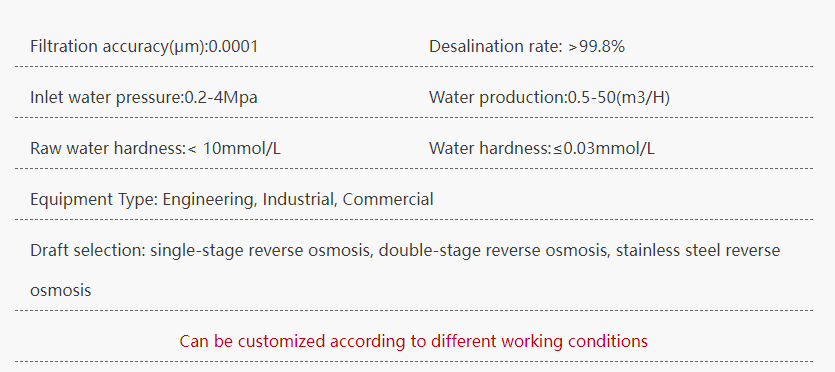
Main components of reverse osmosis equipment
(I) High-pressure pump
Function
The high-pressure pump is a key component in reverse osmosis equipment. Its main function is to provide sufficient pressure for raw water to overcome osmotic pressure and enable water to pass through the reverse osmosis membrane. Since the reverse osmosis process requires a higher pressure, generally 1-10MPa or even higher, the high-pressure pump must be able to provide a stable and continuous high-pressure water flow.
Types and characteristics
Common types of high-pressure pumps include centrifugal pumps and plunger pumps. Centrifugal pumps have the advantages of large flow, simple structure, and stable operation, and are suitable for small and medium-sized reverse osmosis equipment; plunger pumps can provide higher pressure and are suitable for large-scale reverse osmosis systems with high pressure requirements, but their flow is relatively small, and their structure is more complex, requiring more frequent maintenance.
(II) Reverse osmosis membrane assembly
Structural form
The reverse osmosis membrane assembly is the core component for realizing the reverse osmosis function. It mainly has structural forms such as roll type, hollow fiber type and plate and frame type. The roll membrane assembly is a reverse osmosis membrane and supporting material wound on a central tube. It has a higher membrane filling density and lower manufacturing cost. It is currently the most widely used form. Hollow fiber membrane modules are composed of many hollow fiber membranes, which have a large membrane surface area, but have high requirements for raw water pretreatment. Plate-and-frame membrane modules are membranes and baffles stacked alternately, which have good anti-pollution ability, but occupy a large area.
Membrane materials
Currently, commonly used reverse osmosis membrane materials include polyamide and cellulose acetate. Polyamide membranes have a high desalination rate and good chemical stability, and are suitable for the treatment of various water qualities; cellulose acetate membranes have good hydrophilicity and anti-pollution ability, but their chemical stability is relatively poor, and their adaptability to pH and temperature is narrow.
(III) Pretreatment system
Necessity
The pretreatment system is essential for the normal operation of reverse osmosis equipment. Raw water usually contains various impurities, such as silt, rust, organic matter, microorganisms, etc. If these impurities directly enter the reverse osmosis membrane module, it will cause clogging, contamination and damage to the membrane, thereby reducing the performance and service life of the membrane.
Common pretreatment methods
Common pretreatment methods include filtration (such as sand filtration, precision filtration, etc.), activated carbon adsorption, softening, sterilization, etc. Sand filtration can remove larger particles of impurities in raw water, such as silt and rust; precision filtration can further remove fine particles; activated carbon adsorption is mainly used to remove organic matter and residual chlorine; softening can remove calcium and magnesium ions in water to prevent scale from forming on the membrane surface; sterilization is to inhibit the growth of microorganisms and prevent microorganisms from breeding and multiplying on the membrane surface.
(IV) Post-treatment system
Purpose
The post-treatment system is to further improve the effluent quality of the reverse osmosis equipment to meet the needs of different application scenarios. Although the reverse osmosis equipment can remove most impurities in the water, for some special applications, the effluent needs to be further treated.
Common post-treatment methods
For example, in some electronic industries with extremely high water quality requirements, the reverse osmosis effluent needs to be treated with ion exchange resin to further reduce the ion content in the water. In terms of drinking water treatment, mineralization treatment may be carried out to add an appropriate amount of minerals to the water to improve the taste and nutritional value of the water.
(V) Control system
Control function
The control system is responsible for monitoring and controlling the entire operation process of the reverse osmosis equipment. It can control the start and stop of the high-pressure pump, pressure regulation, the cleaning cycle of the membrane assembly, the operating parameters of the pretreatment and post-treatment systems, etc.
Intelligent control
The control system of modern reverse osmosis equipment is becoming more and more intelligent. It can automatically adjust the operating parameters according to factors such as raw water quality, water outlet requirements, and equipment operating status to achieve efficient and stable operation of the equipment. It also has fault diagnosis and alarm functions, which facilitates operators to find and solve problems in time.
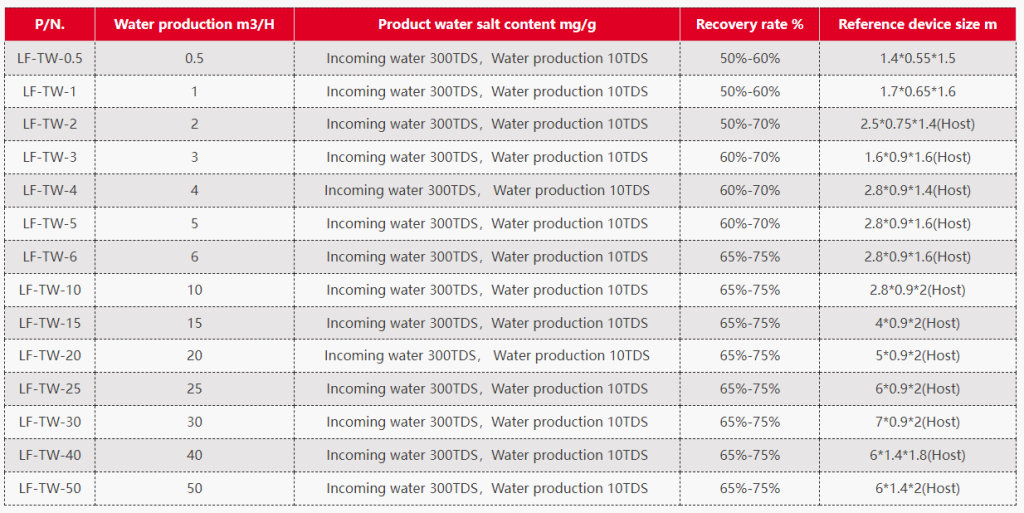
Application of reverse osmosis equipment
(I) Drinking water treatment
Home application
In the home, reverse osmosis equipment can be installed in the kitchen or other water points to convert tap water into high-quality drinking water. It can remove heavy metals (such as lead, mercury, etc.), bacteria, viruses, organic matter and hardness ions in water, and provide safe, healthy and good-tasting drinking water.
Community and small water supply systems
For community or small water supply systems, reverse osmosis equipment can centrally treat raw water to meet residents’ needs for high-quality drinking water. This method can effectively improve the quality of local drinking water, especially in some areas where water sources are polluted or water quality is poor.
(II) Industrial water treatment
Electronic industry
In the electronic industry, such as semiconductor manufacturing and integrated circuit production, the requirements for water quality are extremely high. Reverse osmosis equipment can remove trace ions and impurities in water, provide ultrapure water for the production process, prevent impurities from damaging electronic components, and ensure product quality.
Pharmaceutical industry
The pharmaceutical industry requires that water must meet strict quality standards. Reverse osmosis equipment can remove bacteria, viruses, pyrogen substances and organic impurities in water, and provide purified water and water for injection that meet the requirements of the pharmacopoeia for drug production, ensuring the safety and effectiveness of drugs.
Power industry (boiler feed water)
In the power industry, the quality of boiler feed water directly affects the operating efficiency and safety of the boiler. Reverse osmosis equipment can remove impurities such as hardness ions and dissolved oxygen in water, prevent scale and corrosion from forming in the boiler, improve the thermal efficiency of the boiler, and extend the service life of the boiler.
(III) Seawater desalination
Global water resources strategic significance
With the growth of the global population and the increasing shortage of water resources, seawater desalination has become one of the important ways to solve the shortage of freshwater resources. Reverse osmosis equipment has great advantages in the field of seawater desalination. It can convert high-salinity seawater into drinkable or industrially usable fresh water.
Technical advantages and application status
Reverse osmosis seawater desalination technology has the advantages of relatively low energy consumption, compact equipment, and simple operation. At present, many coastal areas around the world use reverse osmosis seawater desalination technology to solve local freshwater supply problems, and with the continuous development of technology, the cost of seawater desalination is gradually decreasing
Development trend of reverse osmosis equipment
(I) Innovation of membrane technology
Research and development of high-performance membrane materials
Researchers are constantly developing new reverse osmosis membrane materials to improve the desalination rate, anti-pollution ability and flux of the membrane. For example, by modifying the membrane material, introducing special functional groups or nanomaterials, the selectivity and stability of the membrane are improved.
Membrane structure optimization
The structure of the membrane component is optimized to improve the filling density of the membrane and the water permeation efficiency. For example, a new type of spiral membrane component structure is developed to reduce concentration polarization and improve the performance of the membrane.
(II) Development of energy-saving technology
Development of low-energy high-pressure pumps
Develop more efficient and energy-saving high-pressure pumps to reduce the operating energy consumption of reverse osmosis equipment. For example, frequency conversion technology is used to control the speed of the high-pressure pump, and the pressure is adjusted according to the actual operation requirements to reduce energy waste.
Improvement of energy recovery device
In large-scale reverse osmosis systems such as seawater desalination, the energy recovery device can recover the energy on the concentrated water side and reuse it. Improving the performance of the energy recovery device and improving the energy recovery efficiency will further reduce the cost of seawater desalination.
(III) Improvement of intelligence and automation
Intelligent monitoring and fault diagnosis
With the development of the Internet of Things, big data and artificial intelligence technology, reverse osmosis equipment will achieve more intelligent monitoring and fault diagnosis. The equipment can upload operating data to the cloud in real time, predict possible equipment failures in advance through data analysis, and perform maintenance and maintenance in time.
Automated operation and remote control
The equipment can be fully automated, and the operator can control and manage the equipment through the remote terminal, improving the equipment’s operating efficiency and management convenience.
Conclusion
As an advanced water treatment technology equipment, reverse osmosis equipment plays an irreplaceable role in ensuring drinking water safety, meeting industrial water demand and solving water shortages. With the continuous development of membrane technology and energy-saving technology and the improvement of intelligence, reverse osmosis equipment will be more efficient, stable, energy-saving and environmentally friendly, and its application prospects will be broader.