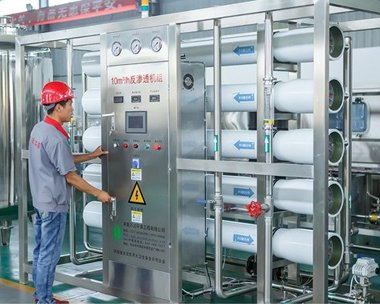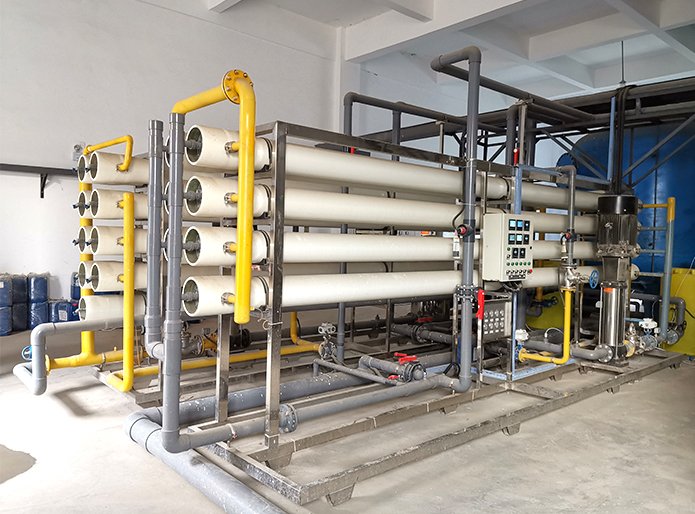
Advantages
(i) Efficient impurity removal capability
High desalination rate
Reverse osmosis equipment has a very high removal rate for salt in water. Generally, the desalination rate of reverse osmosis membranes for common salts such as sodium chloride can reach 95% – 99% or more. This enables it to treat high-salinity water, such as seawater (salt content of about 3.5%) or brackish water (salt content of 1000 – 10000mg/L) into fresh water suitable for various purposes, such as drinking water, industrial water, etc.
In industrial applications, such as the production of ultrapure water in the electronics industry, reverse osmosis equipment can remove trace salt ions in water to extremely low levels, meeting the extremely high water quality requirements of electronic chip manufacturing, etc.
Removal of multiple impurities
In addition to salt, reverse osmosis equipment can also effectively remove other impurities in water. It can intercept bacteria, viruses and other microorganisms in water, with a removal rate of more than 99.99%, thereby providing reliable hygienic protection for drinking water.
Reverse osmosis membranes also have a certain ability to remove organic matter in water, such as pesticide residues and industrial organic pollutants. At the same time, they can also remove suspended matter, colloids, etc. in water, greatly improving the water quality.
(II) Stable effluent quality
Not affected by fluctuations in raw water quality
As long as the pretreatment system works normally, the reverse osmosis equipment can still provide high-quality effluent in a stable manner when the raw water quality fluctuates to a certain extent. For example, when the salinity, organic matter content or number of microorganisms in the raw water varies within a certain range, by reasonably adjusting the operating parameters of the reverse osmosis equipment (such as pressure, flow, etc.), the effluent quality can basically be maintained within the set standard range.
In some areas where surface water sources are greatly affected by seasonal changes, reverse osmosis equipment can effectively cope with seasonal fluctuations in raw water quality and continuously and stably supply fresh water that meets the requirements.
Customizable water quality output
According to different application requirements, the configuration and operating parameters of the reverse osmosis equipment can be adjusted to achieve effluent with different water quality requirements. For example, in drinking water treatment, the total dissolved solids (TDS) of the effluent can be controlled at a low level (such as 50-100 mg/L) to meet people’s demand for healthy drinking water; and in some industrial applications, such as the electroplating industry, the metal ion concentration of the effluent can be controlled at an extremely low level to meet specific production water standards.
(III) Relatively small footprint
Compactness of membrane components
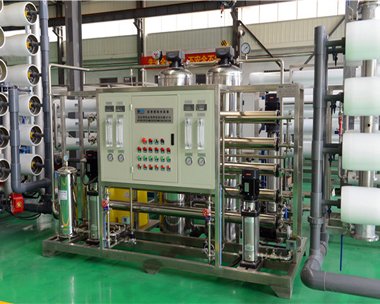
The membrane components in the reverse osmosis equipment have high compactness. For example, the spiral membrane component winds the reverse osmosis membrane and the supporting material on the central tube. This structural form allows a larger membrane area in a smaller volume. Compared with some traditional water treatment processes (such as ion exchange resin beds, etc.), the reverse osmosis equipment requires a smaller footprint when treating the same amount of water.
In small centralized water supply stations in urban residential areas or water treatment workshops in industrial plants, the compactness advantage of reverse osmosis equipment is more obvious. It can be installed and operated in a limited space, saving users valuable land resources.
Integrated design
Modern reverse osmosis equipment often adopts an integrated design, integrating the pretreatment system, reverse osmosis membrane components, post-treatment system, and control system into one or several modules. This integrated design not only reduces the footprint of the equipment, but also facilitates the installation, transportation and maintenance of the equipment.
(IV) High degree of automation
Automatic operation and monitoring
Reverse osmosis equipment can achieve highly automated operation. Through advanced control systems, the start, stop, operating pressure, flow and other parameters of the equipment can be automatically controlled. For example, when the raw water pressure or flow changes, the control system can automatically adjust the speed of the high-pressure pump or the opening of the valve to maintain the stable operation of the equipment.
At the same time, the equipment also has an automatic monitoring function, which can monitor key parameters such as inlet water quality, outlet water quality, equipment operating pressure, temperature, etc. in real time. Once an abnormal situation is found, such as excessive inlet pressure or substandard outlet water quality, the system will automatically send an alarm signal to remind the operator to deal with it.
Remote operation and management
With the help of Internet of Things technology, reverse osmosis equipment can be remotely operated and managed. Operators can monitor the equipment, adjust operating parameters, and even perform fault diagnosis and repair guidance through terminal devices such as mobile phones and computers at a distance from the equipment. This remote operation function is very practical in large industrial water treatment systems or widely distributed small water supply systems, which can greatly improve the management efficiency of the equipment.
Disadvantages
(I) High equipment cost
Membrane component cost
Reverse osmosis membrane is the core component of reverse osmosis equipment, and its manufacturing cost is relatively high. High-quality reverse osmosis membranes usually use special polymer materials (such as polyamide, etc.), and the research and development and production processes of these materials are complicated, resulting in expensive membrane components. Moreover, with the continuous improvement of membrane performance requirements (such as higher desalination rate, anti-pollution ability, etc.), the cost of membrane components is also increasing accordingly.
In large-scale reverse osmosis seawater desalination projects, the cost of membrane components accounts for a considerable proportion of the total equipment cost, which makes the initial investment of the entire seawater desalination project high.
Cost of high-pressure pumps and other components
Since the reverse osmosis process requires a higher pressure, a high-pressure pump is required. The manufacturing requirements of high-pressure pumps are high and they need to be able to provide a stable high-pressure water flow, which makes the cost of high-pressure pumps also high. In addition, components such as precision filters and activated carbon filters in the pretreatment system, and components such as ion exchange resin columns in the post-treatment system (if any), all increase the overall cost of the equipment.
(II) High operating energy consumption
High-pressure operation requirements
In order to overcome the osmotic pressure and allow water to pass through the reverse osmosis membrane, a higher pressure needs to be applied to the raw water, generally 1-10MPa or even higher. High-pressure operation consumes a lot of electricity, especially when treating high-salinity water (such as seawater), the required pressure is higher and the energy consumption is greater. In some large reverse osmosis desalination plants, energy consumption costs account for a large proportion of the total operating costs.
Compared with some other low-pressure water treatment technologies (such as ultrafiltration, microfiltration, etc.), the operating energy consumption of reverse osmosis equipment is significantly higher.
Limited energy recovery efficiency
Although there are energy recovery devices in large reverse osmosis systems such as seawater desalination, which can recover part of the energy on the concentrated water side, the current energy recovery efficiency is still limited. The energy recovery device itself also has certain costs and operation and maintenance issues, which to a certain extent limits the further reduction of reverse osmosis equipment energy consumption.
(III) High-quality pretreatment is required
Risk of membrane contamination
The micropores of the reverse osmosis membrane are very small. If the raw water contains a large amount of suspended matter, colloids, organic matter, microorganisms and other impurities, these impurities are easily deposited or adsorbed on the membrane surface, causing membrane contamination. Membrane contamination will reduce the membrane flux (i.e. the speed at which water passes through the membrane), increase the operating pressure, and shorten the service life of the membrane.
For example, algae, bacteria and other microorganisms in the raw water may breed and multiply on the membrane surface to form a biofilm, which seriously affects the performance of the membrane.
Strict pretreatment requirements
In order to avoid membrane contamination, the reverse osmosis equipment requires high-quality pretreatment. The pretreatment process may include multiple filtration processes (such as sand filtration, precision filtration, etc.), activated carbon adsorption to remove organic matter and residual chlorine, softening to remove hardness ions, etc. These pretreatment steps increase the complexity and operating cost of the equipment, and if the pretreatment system fails, it may have a serious impact on the operation of the reverse osmosis equipment.
(IV) Concentrate discharge problem
High salinity and high pollution of concentrate
During the operation of the reverse osmosis equipment, concentrate water is produced, which contains a large amount of salt and trapped impurities. The salinity of concentrated water is higher than that of raw water, and it may contain high concentrations of organic matter, heavy metals and other pollutants (if these substances exist in the raw water). If concentrated water is discharged directly, it will cause certain pollution to the environment, especially it may have a negative impact on the ecological environment of the receiving water body.
In some areas with tight water resources, the discharge of concentrated water also causes a waste of water resources, because the concentrated water still contains a certain amount of usable water.
Concentrated water disposal cost
In order to properly treat concentrated water, corresponding measures need to be taken, such as further evaporation concentration, zero-discharge treatment, etc. These measures will increase additional equipment investment and operating costs. For example, zero-discharge treatment of concentrated water requires a complex process combination (such as membrane distillation, crystallization, etc.), the equipment cost is high and the operation and maintenance are difficult.