introduction
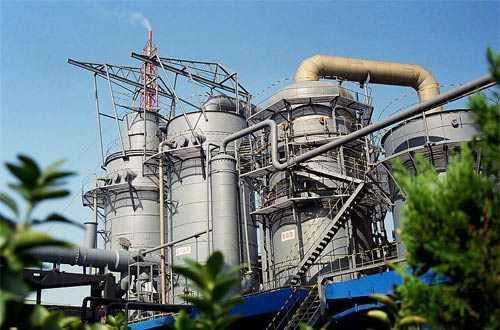
In modern industrial production, the purity of fluid media plays a decisive role in equipment lifespan, product quality, and production process stability. Shallow sand filters, as an efficient and practical filtration equipment, have been widely used in many industrial fields due to their unique design and reliable performance, becoming an indispensable key link in ensuring the normal operation of industrial systems.
Structure and working principle of shallow sand filter
1.Structural composition
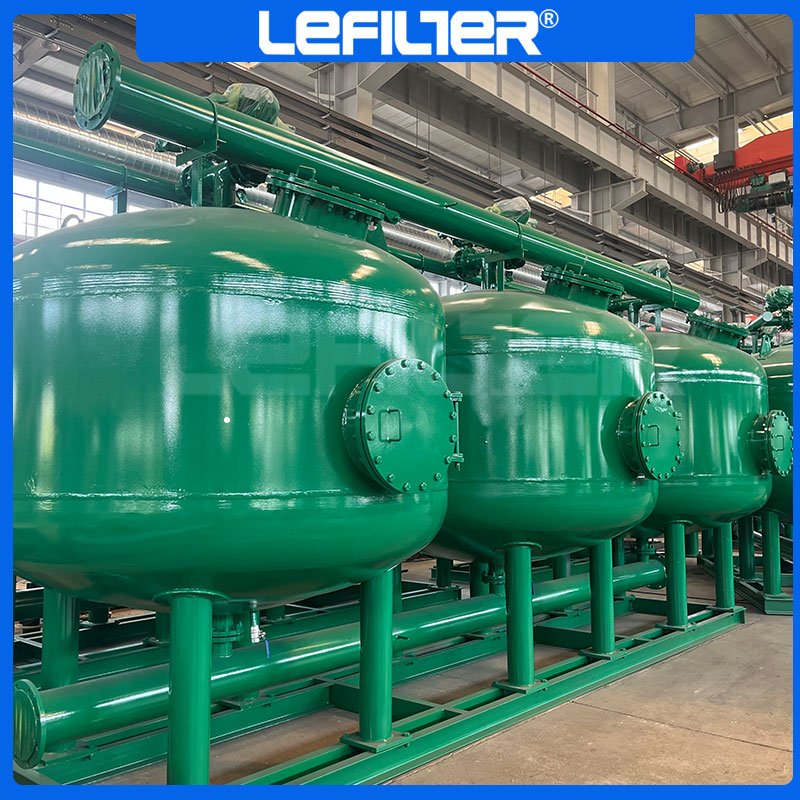
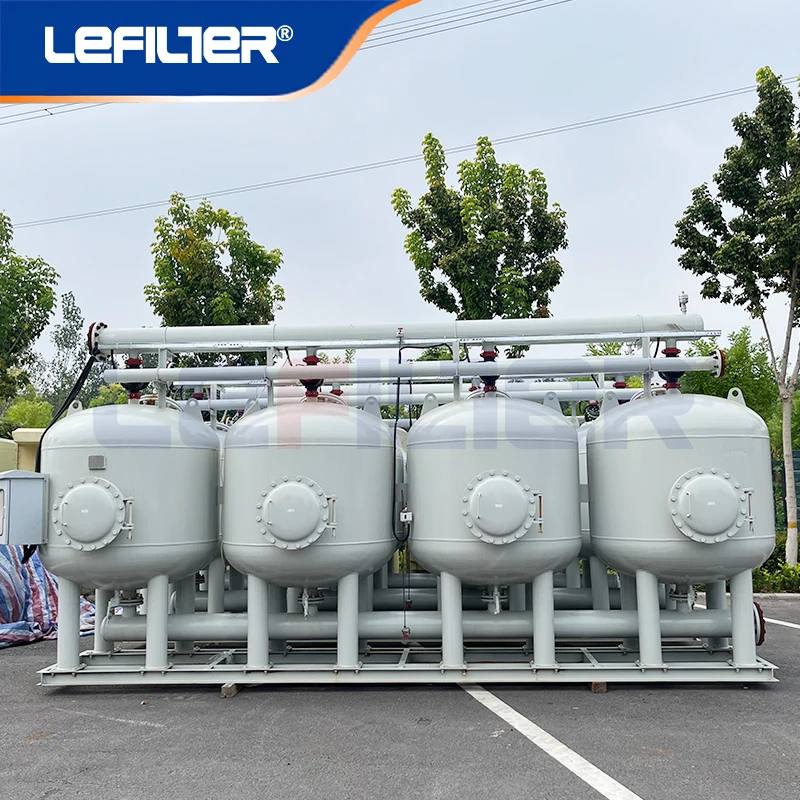
The shallow sand filter mainly consists of a filtering tank, a sand filter layer, a water distribution system, a water collection system, a backwash device, and a control system. The filter tank is usually made of corrosion-resistant materials to provide a closed space for the entire filtration process; The sand filter layer is the core filtration medium, and high-quality quartz sand is often used. Different particle size specifications are laid according to the filtration accuracy requirements, forming a multi-layer gradient filtration structure; The water distribution system ensures that the incoming water is evenly distributed at the top of the sand filter layer, achieving sufficient filtration contact, while the water collection system is responsible for collecting the filtered clean water.
2.working principle
During normal operation, the industrial fluid to be filtered is pumped to the top of the filter and evenly distributed on the surface of the sand filter layer through the water distribution system. The water flows through the filter layer from top to bottom, during which suspended particles and impurities are intercepted and adsorbed by quartz sand. Clean water enters the water collection system through the sand layer and eventually flows out of the filter, achieving the purpose of purification. As the filtration continues, the sand filter layer intercepts more impurities and resistance increases. When the inlet and outlet pressure difference reaches the set value or reaches the preset filtration time, the backwash device starts. The backwash water flows back into the sand filter layer from the bottom water collection system, causing the sand particles to fluidized and collide, peeling off the attached impurities and carrying them out of the filter discharge outlet with the backwash water flow. After cleaning, the filter returns to its filtering state, ensuring continuous and efficient filtration.
Application in the power industry
1.thermal power
The amount of cooling circulating water used in thermal power plants is huge, and impurities such as algae, microorganisms, and sediment in natural water are prone to adhere and grow on the surface of condenser copper pipes, forming biofouling and sediment deposits, reducing the heat transfer coefficient, and affecting the vacuum degree and power generation efficiency of the unit. Shallow sand filters pre filter circulating water, block most suspended impurities, cooperate with sterilization and algae removal treatment, maintain clean operation of the condenser, ensure stable power generation at full load of the unit, extend equipment cleaning cycle, reduce downtime for maintenance, and save a lot of operation and maintenance costs for thermal power
2.generation enterprises.
The preparation of boiler feedwater also relies on shallow sand filters. After initial filtration to remove sediment and colloids, the raw water enters deep purification processes such as ion exchange and reverse osmosis, effectively protecting the subsequent expensive and fine water treatment equipment, ensuring that the boiler inlet water quality meets strict standards, reducing the risk of boiler scaling and corrosion, and ensuring the safe and reliable operation of the thermal system in thermal power plants.
New energy generation (such as photovoltaic power generation)
The cooling system of photovoltaic power plants plays a key role in ensuring the efficient operation of photovoltaic panels. In some large photovoltaic power plants that use water cooling, shallow sand filters are used to filter the cooling circulating water, prevent dust and sand particles from accumulating in the cooling pipes, ensure smooth cooling water flow, stabilize the working temperature of the solar panels, improve photovoltaic power generation efficiency, extend the service life of power plant equipment, and help stabilize the output of new energy electricity.
Application in the metallurgical industry
1.Ironmaking and steelmaking processes
The blast system of ironmaking blast furnace has strict requirements for air quality. If suspended dust and impurities in the air enter the blast furnace, it will affect the permeability and combustion efficiency inside the furnace, and increase the coke ratio. Shallow sand filters finely filter the blast air, remove fine dust, optimize blast furnace operating conditions, and improve the production and quality of molten iron. In the steelmaking process, gas media such as argon and nitrogen used in the refining of molten steel are filtered through shallow sand to remove impurities, avoid secondary pollution of the steel, improve the purity of the steel, and meet the demand for high-quality steel in high-end manufacturing industries.
2.Rolling steel and metal surface treatment
During the circulation of rolling oil and emulsion in the steel rolling production line, a large amount of metal debris, iron oxide scale and other impurities are mixed in. If not filtered in time, it will affect the rolling accuracy and damage the rolling rolls. The shallow sand filter purifies the rolling medium in real time, ensuring its good lubrication and cooling performance, extending the service life of the rolling mill, and improving the surface quality of the steel. In the metal surface treatment workshop, such as electroplating and painting pre-treatment processes, the cleaning water is filtered to remove impurities, ensuring uniform and consistent treatment effects, and improving the appearance and corrosion resistance of metal products.
Advantages of Shallow Sand Filters
1.The filtering effect is stable and reliable
The gradient filtration structure constructed with multiple layers of quartz sand filter can adapt to impurities with different particle size distributions, ensuring stable and efficient filtration throughout the entire process, with minimal fluctuations in effluent quality, and meeting the strict water quality requirements of industrial production for a long time.
2.Easy to operate and maintain
The structural design is relatively simple, and the backwashing process has a high degree of automation. Operators only need to conduct regular inspections and adjust backwashing parameters according to pressure differences or time settings, reducing labor intensity and maintenance difficulty, and reducing reliance on professional skills.
3.Significant cost-effectiveness
The initial investment of the equipment is moderate, the operating energy consumption is low, and the subsequent equipment maintenance and replacement costs are reduced by efficient filtration. At the same time, economic benefits are indirectly created by extending the production cycle and improving product quality, with a high return on investment.
conclusion
Shallow sand filters, with their solid filtration performance, wide adaptability, and outstanding cost-effectiveness, have firmly established themselves in the industrial field, providing solid guarantees for the development of various industries. Although facing challenges, with the integration of technological innovation, the future will continue to break through on the path of intelligence and greening, continuously expand application boundaries, deeply empower industrial progress, and continue to write brilliant chapters.