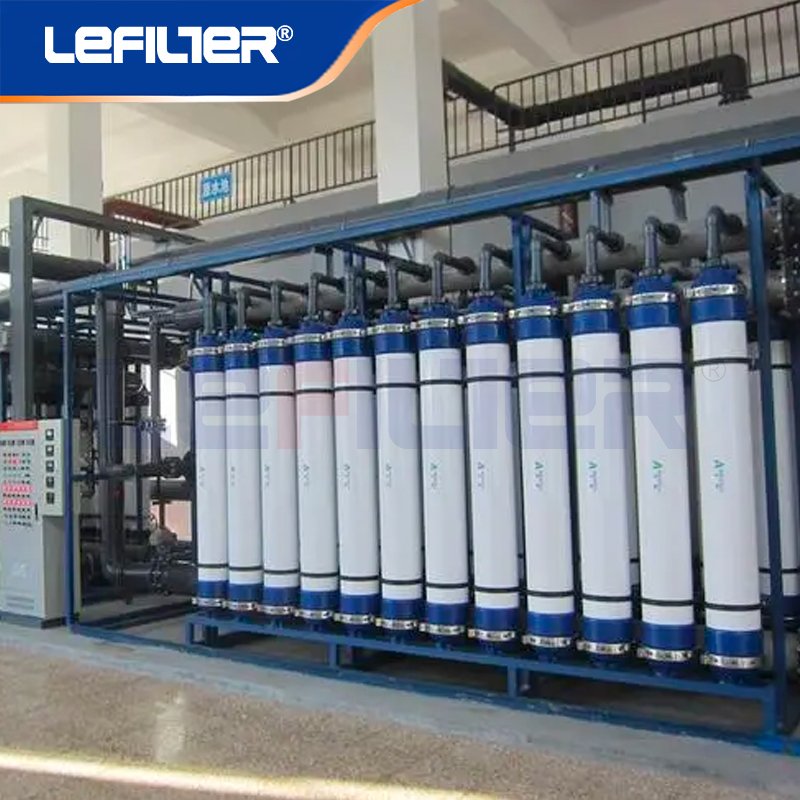
Reverse osmosis treatment equipment is used to process raw water through fine filters, granular activated carbon filters, compressed activated carbon filters, etc., and then pressurize it with a pump. Using a reverse osmosis membrane (RO membrane) with a pore size of 1/10000 μ m, it converts high concentration water into low concentration water, while isolating impurities such as industrial pollutants, heavy metals, bacteria, viruses, etc. that are mixed into the water in large quantities. This achieves the reasonable drinking standards and hygiene standards, and produces water that is clear to pure.
This reverse osmosis treatment equipment can be used not only for domestic water, but also for high specification water in industries such as chemical, food, etc. The main functions of this reverse osmosis treatment equipment are:
Removing discoloration: effectively removing various impurities, colloids and other solid impurities in water, improving turbidity;
Removing odors: effectively filtering out residual chlorine, trichloromethane, and other disinfection by-products to remove odors and improve taste;
Removing heavy metals: removing various heavy metals such as lead, mercury, arsenic, etc., while retaining minerals and trace elements in water;
Eliminating bacteria: 0.0001 micron RO reverse osmosis membrane technology intercepts the vast majority of bacteria to ensure the safety of drinking water;
Eradicating water alkali: Reverse osmosis desalination technology removes 99% of soluble substances in water, removes excessive calcium and magnesium ions, reduces hardness, and eliminates water alkali.
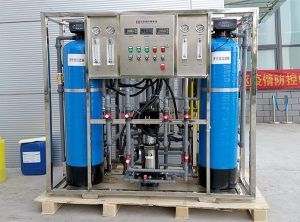
Process flow of reverse osmosis treatment equipment:
Raw water tank: stores raw water for settling large particles of sediment and other precipitable substances in water. Simultaneously buffering the impact of unstable water pressure in the original water pipe on the water treatment system. (such as pressure sensing reactions caused by low or high water pressure);
Raw water pump: constant system water supply pressure, stable water supply volume;
Multi media filter: a filter with multiple sand filter layers, mainly used to remove substances such as sediment, rust, colloidal substances, suspended solids, etc. with particles larger than 20 μ m in raw water. It can be controlled by manual valves or fully automatic controllers for a series of operations such as backwashing and forward flushing to ensure the quality of water production and extend the service life of the equipment;
Activated carbon filter: The system uses a fruit shell activated carbon filter, which can not only adsorb electrolyte ions but also perform ion exchange adsorption. Activated carbon adsorption can also reduce the oxygen demand (COD) of potassium permanganate from 15mg/L (O2) to 2-7mg/L (O2). In addition, due to the adsorption effect, the concentration of adsorbed and replicated on the surface increases, thus playing a catalytic role, removing pigments, odors, a large amount of biochemical organic matter, reducing residual chlorine value and pesticide pollutants in water, and removing trihalides (THM) and other pollutants in water;
Ionic softening system/dosing system: The softening/dosing system mainly removes scaling ions such as calcium and magnesium from water. When the raw water containing hardness ions passes through the resin layer inside the exchanger, the calcium and magnesium ions in the water are replaced by the sodium ions adsorbed by the resin. The resin adsorbs the calcium and magnesium ions, and the sodium ions enter the water. In this way, the water flowing out of the exchanger is softened water with hardness removed;
Precision filter: The use of precision filters can remove suspended solids, non curved particles, colloids, and other substances remaining in water, making the operation of the RO system and subsequent equipment safer and more reliable. The filter element is a 5 μ m melt blown filter element, designed to remove impurities larger than 5 μ m that are missed by the upper filtration unit. Prevent it from entering the reverse osmosis treatment equipment and damaging the surface of the membrane, thereby damaging the desalination performance of the membrane;
Reverse osmosis system: The reverse osmosis device uses sufficient pressure to separate the solvent (usually water) in the solution through a reverse osmosis membrane (or semi permeable membrane), which is called reverse osmosis because this process is opposite to the direction of natural osmosis. The reverse osmosis method can adapt to various types of raw water with high salt content, especially in water treatment projects with high salt content, and can achieve good technical and economic benefits. The reverse osmosis method has high desalination rate, high recovery rate, stable operation, small footprint, and easy operation. The reverse osmosis treatment equipment not only removes salt, but also removes most bacteria, colloids, and high molecular weight organic matter;
Ozone sterilizer/UV sterilizer (optional): kills bacteria generated by secondary pollution, thoroughly ensuring the hygiene indicators of finished water. Raw water → raw water tank → raw water pump → multi-media filter (quartz sand filter) → activated carbon filter → soft water processor (adding scale inhibitor device) → precision filter → high-pressure pump → primary reverse osmosis (RO) device → UV sterilization device (ozone sterilization device) → water point.
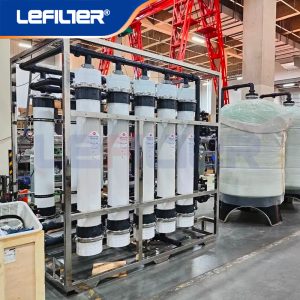
Advantages and characteristics of reverse osmosis treatment equipment:
The desalination rate of reverse osmosis treatment equipment is as high as 99.8%;
High water utilization efficiency and low energy consumption;
The rack piping and fittings are made of stainless steel and corrosion-resistant materials to ensure the durability and low maintenance cost of the system;
Advanced water quality testing and control, as well as sophisticated system maintenance solutions, ensure long-term stability of effluent quality;
Easy to operate and maintain, as long as there is electricity and water, direct drinking water can be supplied immediately after startup;
Equipment combination types can be implemented in various forms: bracket type, pry mounted type, pry cart type, container type, etc;
The efficient energy recovery system and overall optimized design greatly reduce energy consumption.