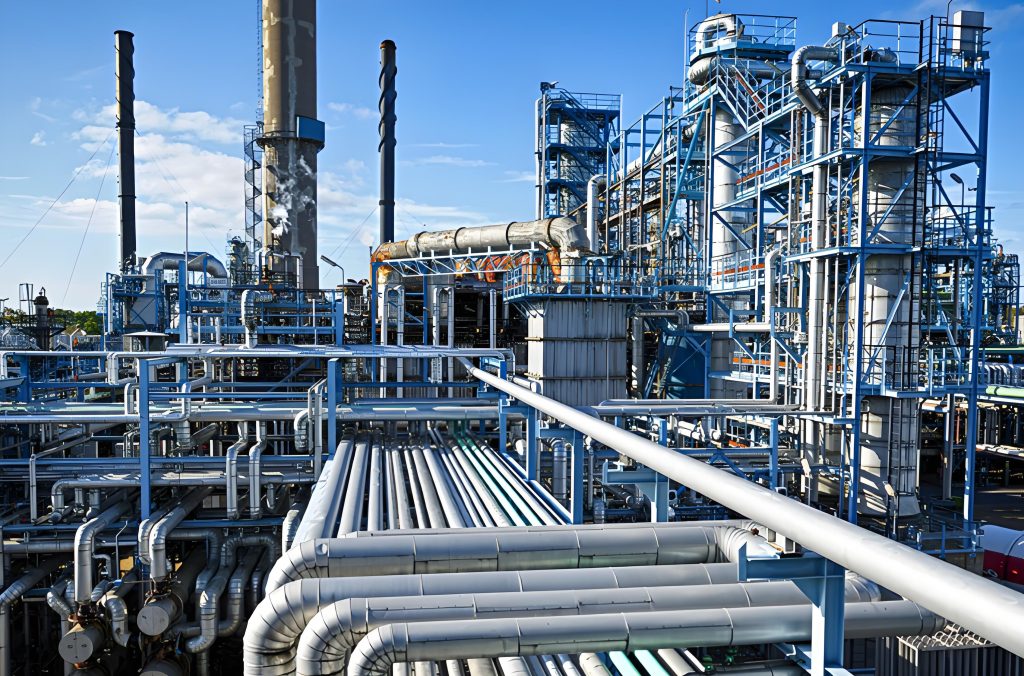
Industrial wastewater poses a huge challenge to the environment, containing a wide range of harmful pollutants such as heavy metals, organics, suspended solids, etc., which pose a threat to both natural ecosystems and human health. Filtration, as a core aspect of wastewater treatment, not only removes impurities and optimises industrial processes, but is also a key means of ensuring safe water quality and meeting environmental regulations.
The working principle of industrial water filters is based on the physical or chemical action of the fluid as it passes through the filter medium. Contaminants are captured by direct collision or molecular attraction as the water flows through narrow, tortuous paths. For example, sand filters use sand to intercept solid particles; activated carbon adsorbs organics and odours by virtue of its high surface area; and membrane filtration separates molecules of different sizes by means of a microscopic pore barrier, such as reverse osmosis membranes that block dissolved salts.
Filtering water in a plant is usually a four-step process: pumping the water to a filter (made of fabric, sand layer, activated carbon, etc.), capturing flocs and particles, and subsequently purifying it through disinfection or further treatment.

The lifespan of a filtration system varies significantly depending on the design and conditions of use. Activated carbon cartridges typically need to be replaced every 6-12 months, reverse osmosis membranes last 2-3 years under ideal conditions, and mechanical filtration media such as sand filters can be extended with regular backwashing.
The lifespan of a filtration system varies significantly depending on the design and conditions of use. Activated carbon cartridges typically need to be replaced every 6-12 months, reverse osmosis membranes last 2-3 years under ideal conditions, and mechanical filtration media such as sand filters can be extended with regular backwashing.
Maintenance strategies include regular inspection of wear parts, monitoring pressure and flow rate changes, cleaning or replacing filter media, and relying on a professional team for troubleshooting when necessary.
Choosing a filtration system requires consideration of water quality characteristics (e.g., contaminant type, pH, temperature), treatment efficiency, maintenance costs, and compliance requirements. For example, the food and beverage industry relies on activated carbon to improve taste, while the pharmaceutical industry favours membrane filtration for ultra-clean water; automated backwash systems may be chosen for high-flow scenarios to reduce manual intervention.

In addition, system costs need to be balanced between initial investment and long-term energy consumption and parts replacement costs to ensure economic viability.
In terms of environmental impact, effective filtration is directly related to ecological protection. It prevents pollutants from intruding into rivers and lakes and maintains the health of aquatic habitats; safeguards the safety of drinking water sources and reduces the risk to public health; and, at the same time, water reuse technology alleviates freshwater shortages and contributes to sustainable development. By optimising the filtration system, companies can both reduce their environmental footprint and enhance resource efficiency, achieving a win-win situation for both economy and ecology.