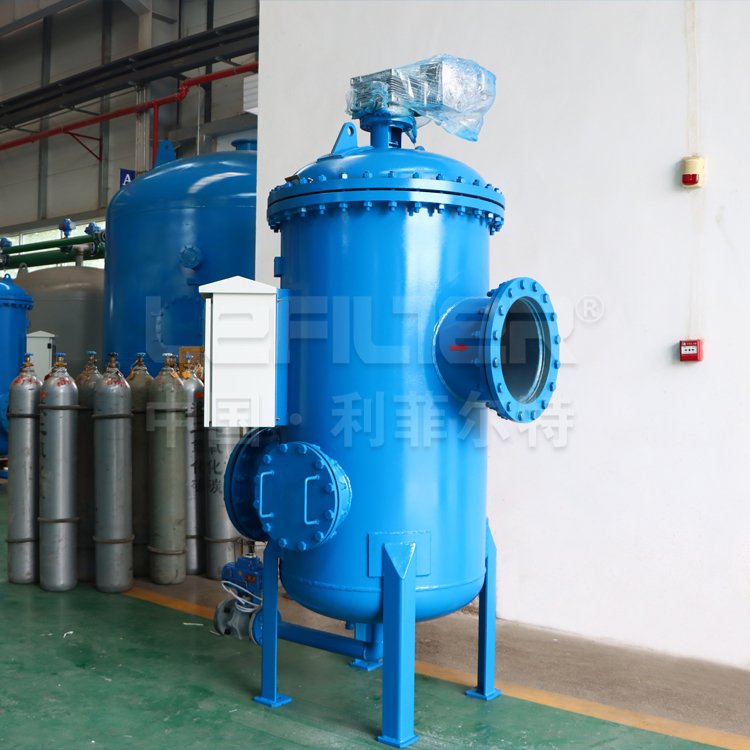
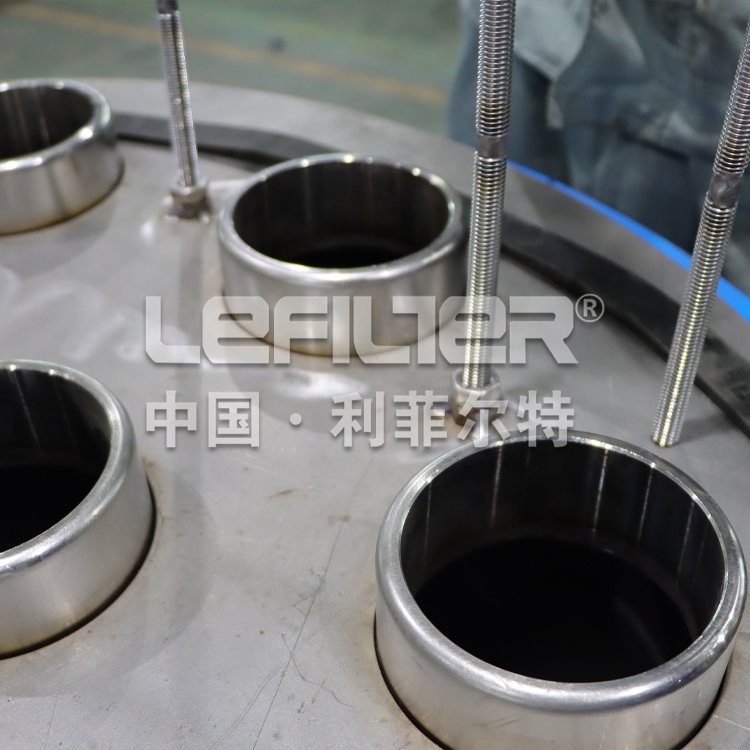
Industrial water self cleaning filter

Industrial water self cleaning filter

Introduction

In the realm of wastewater treatment, self – cleaning filter equipment has emerged as a revolutionary solution. With the increasing stringency of environmental regulations and the growing need for efficient water management in various industries, the demand for advanced filtration technologies has skyrocketed. Wastewater self – cleaning filter equipment is designed to address the complex challenges associated with removing contaminants from wastewater streams, ensuring that the treated water can be safely discharged or reused.
These filters are not only crucial for environmental protection but also for the sustainable operation of industrial processes. They play a vital role in safeguarding downstream treatment systems, preventing equipment damage caused by suspended solids, and reducing the consumption of chemicals in treatment processes. By continuously filtering and automatically cleaning themselves, these devices offer a high – level of convenience and reliability, making them an essential component in modern wastewater treatment plants.
Industrial water self cleaning filter

Advantages & Features

2.1 High Degree of Automation
One of the most significant advantages of wastewater self – cleaning filter equipment is its high level of automation. These filters are equipped with sensors and control systems that can detect the accumulation of impurities in the filter media. When the pressure differential across the filter reaches a pre – set value, or when a certain amount of time has elapsed, the self – cleaning process is automatically initiated. This eliminates the need for manual intervention, reducing labor costs and minimizing the risk of human error. For example, in large – scale industrial plants, the continuous operation of self – cleaning filters without the need for constant monitoring by operators allows for more efficient use of human resources.
2.2 Continuous Operation
Self – cleaning filters are designed to operate continuously, ensuring a steady flow of treated wastewater. Unlike traditional filters that need to be taken offline for cleaning, self – cleaning models can perform the cleaning process without interrupting the filtration process. This is achieved through innovative design features such as the use of multiple filter elements or the ability to isolate and clean individual sections of the filter while the rest remains in operation. In applications where a constant supply of clean water is essential, such as in power plants or manufacturing facilities, the continuous operation of self – cleaning filters is a key advantage.
2.3 High Filtration Efficiency
These filters are highly effective in removing a wide range of contaminants from wastewater. They can capture fine particles, suspended solids, and even some dissolved substances, depending on the type of filter media used. Filtration precision can range from as low as 10 microns to 3000 microns, allowing for customization based on the specific requirements of the wastewater treatment application. For instance, in the pharmaceutical industry, where extremely high – purity water is required, self – cleaning filters with fine – mesh filter media can effectively remove even the tiniest particles, ensuring that the treated water meets strict quality standards.
2.4 Reduced Maintenance
The self – cleaning mechanism significantly reduces the maintenance requirements of the filter equipment. Since the filters clean themselves automatically, there is no need to manually disassemble and clean the filter elements as frequently as in traditional filters. This not only saves time but also reduces the wear and tear on the equipment, extending its lifespan. Additionally, the use of high – quality materials in the construction of self – cleaning filters, such as corrosion – resistant stainless steel, further contributes to their durability and low maintenance needs. In harsh industrial environments, where exposure to corrosive chemicals is common, the use of such materials ensures the long – term reliability of the filter.
2.5 Adaptability to Different Wastewater Types
Wastewater self – cleaning filter equipment is highly adaptable and can be used to treat various types of wastewater, including those from industrial processes, municipal sewage systems, and agricultural runoff. Different models can be customized to handle specific contaminants and flow rates. For example, in the petrochemical industry, where wastewater may contain oil, grease, and heavy metals, specialized self – cleaning filters can be designed with filter media and cleaning mechanisms that are effective in removing these specific pollutants. In agricultural applications, filters can be adjusted to handle the high levels of organic matter and sediment present in runoff water.
2.6 Water Savings
Many self – cleaning filter designs optimize water usage during the cleaning process. Instead of using large volumes of clean water for backwashing, some models employ innovative techniques such as air – assisted cleaning or the use of a small amount of treated water from the outlet of the filter for cleaning. This not only conserves water resources but also reduces the overall cost of wastewater treatment. In regions where water is scarce, the water – saving feature of self – cleaning filters is of particular importance.
Structure Specification
 3.1 Filter Media
The filter media is a crucial component of the self – cleaning filter. Common types of filter media include stainless – steel wedge wire screens, perforated mesh, and fiber – based materials. Stainless – steel wedge wire screens are popular due to their durability and ability to capture a wide range of particle sizes. The wedge – shaped wires are arranged in a way that creates a narrow opening on the surface of the screen, which effectively traps impurities as the wastewater passes through. Perforated mesh is another option, with the aperture diameter typically ranging from 0.25 to 6 mm, depending on the filtration requirements. Fiber – based filter media, such as those made from nano – memory fibers, offer extremely high filtration accuracy, with pore sizes smaller than 10 μm.
3.2 Cleaning Mechanisms
  • Brush – Type Cleaning: In brush – type self – cleaning filters, a set of stainless – steel brushes is installed inside the filter. When the self – cleaning process is triggered, a gear – reduction motor drives the rotation of the brushes. The brushes then scrub the surface of the filter media, dislodging the accumulated impurities. An electric sewage valve, usually installed on the filter end – cover or bottom, is opened simultaneously to discharge the dirt. The cleaning time is typically around 1 minute, and the filter can operate without interrupting the water flow during this process. The pressure loss during sewage discharge is minimal, usually not exceeding 0.05 mpa, and the flow loss is less than 1%.
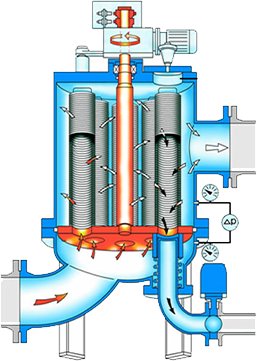
  • Suction – Type Cleaning: Suction – type self – cleaning filters use a sewage suction device for cleaning. The device is a hollow structure with several sewage suction pipes evenly distributed vertically along its axis. When the self – cleaning process starts, a blowdown valve is opened, creating a pressure difference between the inside of the filter and the outside atmosphere. This pressure difference causes the suction pipes to generate a strong suction force. The water flows in the reverse direction through the filter screen, flushing the impurities into the sewage suction device, which then discharges them through the blowdown valve. The dirt – suction device is driven by a two – way motor connected to a screw device, allowing it to move in a spiral motion and cover the entire inner surface of the filter screen.
  • Rotary Arm Cleaning: Rotary – arm self – cleaning filters are equipped with a rotary arm that moves across the surface of the filter media. The arm may be fitted with nozzles that spray a jet of water or air to dislodge the impurities. As the arm rotates, it cleans the filter surface in a systematic manner. The cleaning fluid (water or air) can be sourced from the treated water within the filter or an external supply, depending on the design.
  • Scraper – Type Cleaning: In scraper – type self – cleaning filters, a scraper mechanism is used to remove the accumulated solids from the filter surface. The scraper is typically attached to a moving part, such as a rotating drum or a reciprocating arm. As the filter operates, the scraper periodically comes into contact with the filter surface and scrapes off the impurities. The removed solids are then discharged through a separate outlet.
3.3 Housing and Frame
The housing of the self – cleaning filter is designed to be robust and durable, capable of withstanding the pressure and chemical composition of the wastewater. It is usually made of materials such as corrosion – resistant stainless steel, high – density polyethylene (HDPE), or fiberglass – reinforced plastic (FRP). The choice of material depends on factors such as the type of wastewater being treated, the operating pressure, and the environmental conditions. The frame provides structural support to the filter components and is also designed to be stable and long – lasting. In some cases, the housing may be insulated to prevent heat loss or to protect against extreme temperatures.
3.4 Control System
The control system of the self – cleaning filter is responsible for monitoring the operation of the filter and initiating the self – cleaning process. It typically includes sensors, such as pressure differential sensors, flow sensors, and level sensors. The pressure differential sensor measures the difference in pressure across the filter media, which indicates the level of impurity accumulation. When the pressure differential reaches a pre – set value, the control system sends a signal to activate the cleaning mechanism. Flow sensors are used to monitor the flow rate of the wastewater through the filter, ensuring that it remains within the design parameters. Level sensors may be used in some applications to detect the level of water in the filter or in associated tanks. The control system can be a simple timer – based system or a more complex programmable logic controller (PLC) – based system. PLC – based systems offer greater flexibility and can be programmed to respond to multiple input signals, allowing for more precise control of the filter operation.
Industrial water self cleaning filter
Working Principle
4.1 Filtration Phase
During the filtration phase, wastewater enters the self – cleaning filter through the inlet. The water then passes through the filter media, which acts as a barrier to trap suspended solids, particles, and other contaminants. The size of the particles that can be removed depends on the pore size or mesh size of the filter media. For example, if the filter media has a mesh size of 50 microns, particles larger than 50 microns will be intercepted by the filter. As the water continues to flow through the filter, the clean water exits through the outlet, while the impurities accumulate on the surface of the filter media, gradually forming a layer of filter cake.
4.2 Self – Cleaning Trigger
The self – cleaning process is triggered when certain conditions are met. The most common trigger is the pressure differential across the filter media. As the impurities accumulate on the filter media, the resistance to water flow increases, causing the pressure on the inlet side of the filter to rise relative to the outlet side. When the pressure differential reaches a pre – set value, which is typically set based on the characteristics of the filter and the nature of the wastewater, a pressure differential switch sends a signal to the control system. In some cases, the self – cleaning process may also be triggered based on a time – based schedule. For example, the filter may be programmed to clean itself every few hours, regardless of the pressure differential, to prevent the build – up of stubborn contaminants.
4.3 Self – Cleaning Process
Once the self – cleaning process is triggered, the cleaning mechanism specific to the filter design comes into action. In brush – type filters, the motor drives the rotation of the brushes, which scrub the surface of the filter media, dislodging the accumulated impurities. At the same time, the electric sewage valve opens, allowing the dirt to be flushed out of the filter. In suction – type filters, the pressure difference created by opening the blowdown valve causes the suction pipes to draw in water in the reverse direction, flushing the impurities from the filter screen into the suction device and then out through the blowdown valve. In rotary – arm and scraper – type filters, the respective cleaning components (rotary arm with nozzles or scraper) move across the filter surface, removing the impurities. The cleaning process typically takes a short period, usually less than a few minutes, after which the filter returns to its normal filtration mode.

Application Fields

Sucking type self-cleaning filters are used in a wide range of applications to ensure clean and efficient fluid systems:

  1. Water Treatment: In water treatment plants, these filters remove suspended solids, algae, and other contaminants from raw water, ensuring clean water for municipal and industrial use.

  2. Petrochemicals: In the petrochemical industry,filters protect equipment and processes by removing particulates from hydrocarbons, solvents, and other fluids.

  3. Food and Beverage: These filters are used to maintain the purity of ingredients and final products, ensuring compliance with strict hygiene and safety standards.

  4. Pharmaceuticals: In pharmaceutical manufacturing,filters remove contaminants from process fluids, ensuring product quality and preventing contamination.

  5. Power Generation: In power plants, these filters protect turbines, boilers, and cooling systems by removing debris and contaminants from water and other fluids.

  6. Agriculture: In agricultural applications,filters are used to purify irrigation water, ensuring the health and productivity of crops.


Scroll to Top