Introduction
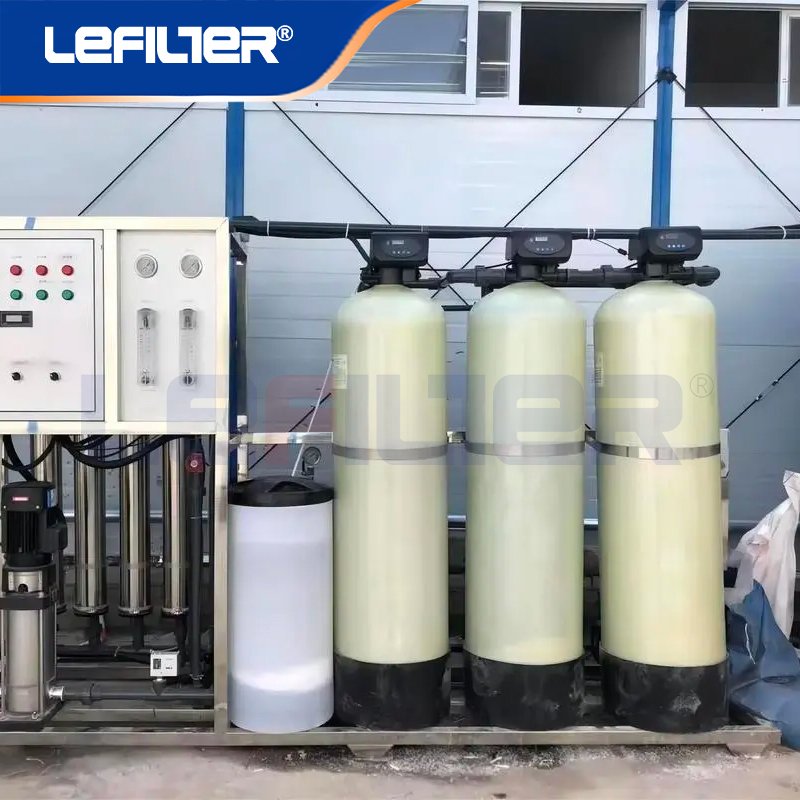
Reverse osmosis (RO) is a sophisticated and widely – utilized water treatment technology, and its single – stage variant, Single – stage Reverse Osmosis (Single – stage RO), has carved a niche for itself as a revolutionary force in the purification landscape. This innovative system has seen a surge in adoption across diverse industries and households alike, all thanks to its remarkable efficiency and unwavering reliability in purifying water. In a world where the demand for clean and safe water sources is escalating, comprehending the full capabilities and broad applications of Single – stage RO is of utmost importance. It holds the key to meeting the stringent water quality requirements in various sectors and ensuring a healthier living environment for everyone.
Principle of Single – stage Reverse Osmosis
At the heart of the Single – stage RO system is a semi – permeable membrane. The principle is based on reversing the natural osmosis process. In normal osmosis, water molecules move from an area of lower solute concentration to an area of higher solute concentration through a semi – permeable membrane. However, in Single – stage RO, external pressure is applied to the side with higher solute concentration (the feed water). This pressure forces water molecules to move through the semi – permeable membrane in the opposite direction, from the concentrated solution to the dilute solution. As a result, impurities, such as salts, heavy metals, bacteria, and viruses, are left behind on the feed side, while clean, purified water is collected on the permeate side.

Application Fields
Drinking Water Treatment
RO membranes are widely used in the production of bottled water and home water purification systems. They can remove heavy metals, such as lead and mercury, as well as harmful chemicals and microorganisms from tap water, providing clean and safe drinking water for consumers.
Industrial Water Treatment
In industries like power generation and electronics manufacturing, RO membranes are crucial. In power plants, they are used to produce high – purity water for boiler feedwater to prevent scale formation. In the electronics industry, RO – purified water is essential for manufacturing semiconductor chips, as even trace impurities can affect the performance of the chips.
Seawater Desalination
With the global shortage of freshwater resources, seawater desalination using RO membranes has become an increasingly important solution. RO – based desalination plants can convert seawater into potable water, providing a reliable water source for coastal areas and islands.
Textile Industry
In the textile industry, RO membranes play a significant role in wastewater treatment. They can separate dyes, sizing agents, and other pollutants from textile wastewater, enabling the recycling of water and reducing environmental pollution. Additionally, RO – purified water is used in textile production processes to ensure product quality.
Future Development Trends
Energy – efficient Membrane Development
As energy costs continue to rise, there is a growing focus on developing RO membranes that require less energy to operate. Researchers are exploring new materials and membrane structures to reduce the pressure required for reverse osmosis, thereby lowering energy consumption.
Integration with Other Technologies
Future RO membrane systems are likely to be integrated with other advanced water treatment technologies, such as nanofiltration and ion – exchange processes. This integration can enhance the overall performance of water treatment systems, making them more efficient and effective in removing a wider range of contaminants.
Expansion of Application Scenarios
With the continuous development of technology, the application scenarios of RO membranes are expected to expand. For example, they may be increasingly used in the treatment of industrial waste gases and in the field of food processing for more precise separation and purification processes.
In conclusion, reverse osmosis membranes have become an essential technology in various fields, and their continuous development and innovation will play a crucial role in meeting the global demand for clean water and high – quality industrial production.
Maintenance of RO Membranes
Regular Cleaning
Over time, RO membranes can become fouled by the accumulation of contaminants such as organic matter, scale, and microorganisms. Regular cleaning is essential to maintain their performance. Chemical cleaning agents, such as citric acid for scale removal and sodium hypochlorite for disinfection, are commonly used. However, the cleaning process must be carefully controlled to avoid damaging the membrane structure. For instance, the concentration and contact time of the cleaning agents need to be adjusted according to the type of fouling and the membrane material.
Monitoring and Replacement
Continuous monitoring of key parameters like flux, pressure drop, and salt rejection rate is crucial. A significant decline in these parameters may indicate membrane degradation or severe fouling. Based on the water quality and usage frequency, the membrane replacement cycle can vary. As a general rule, membranes in domestic applications may need replacement every 2 – 3 years, while in industrial settings with more challenging water conditions, replacement may be required every 1 – 2 years.
Market Status
Market Growth
The global market for reverse osmosis membranes has been experiencing steady growth in recent years. Driven by the increasing demand for clean water in various industries and the growing awareness of water conservation, the market size is expected to expand further. Asia – Pacific, in particular, has been a major growth engine, due to its large population, rapid industrialization, and the consequent high demand for water treatment solutions.
Competition Landscape
The market is highly competitive, with numerous manufacturers vying for market share. Leading companies are investing heavily in research and development to introduce innovative membrane products with better performance, longer lifespan, and lower cost. Smaller players often focus on niche markets, offering customized solutions to meet specific customer needs. This competition has not only spurred technological advancements but also led to price competitiveness, which benefits end – users.
In summary, reverse osmosis membranes are not only a core technology for water treatment but also a dynamic area in terms of maintenance, market development, and future innovation. Understanding these aspects is vital for both industries and consumers who rely on clean water sources.
Conclusion
reverse osmosis membranes have firmly established themselves as a cornerstone technology in the pursuit of clean water and sustainable industrial operations. Their unique working principle, exceptional characteristics, and wide – ranging applications have revolutionized water treatment across multiple sectors.
Related products