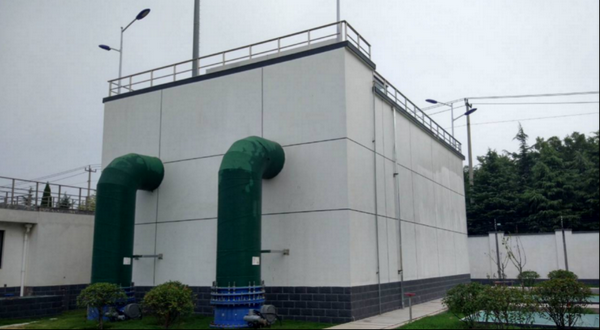
Preprocessing stage
Pre treatment is the core guarantee link of reverse osmosis system, aimed at removing impurities from raw water and protecting subsequent membrane components. The specific process includes:
(1). Raw water storage and primary filtration
Raw water tank: Buffer the fluctuation of inlet water pressure and preliminarily settle large particles of sediment, reducing the impact of equipment operation.
Multi media filter: using quartz sand, anthracite and other filter materials to remove suspended solids (particle size>20 μ m), rust and colloids, the effluent turbidity is reduced to below 5NTU.
Activated carbon filter: adsorbs residual chlorine, organic matter, and pigments (COD removal rate>50%) to prevent oxidative damage to the RO membrane.
Water quality regulation and fine filtration
(2). Softening treatment:
Use ion exchange resin or scale inhibitor (such as sodium hexametaphosphate) to reduce the concentration of calcium and magnesium ions and prevent membrane surface scaling.
Precision filter (security filter): equipped with a 5 μ m filter element to intercept residual particulate matter, ensuring that the inlet water pollution index (SDI) is less than 3 and meets the RO membrane inlet requirements.
Reverse osmosis host stage
The reverse osmosis host achieves efficient separation through high-pressure driving, and the core process is as follows:
(1). High voltage drive and membrane separation
High pressure pump: Provides 0.8-1.5MPa pressure to drive water flow through the RO membrane, with a system recovery rate controlled between 50% -75%.
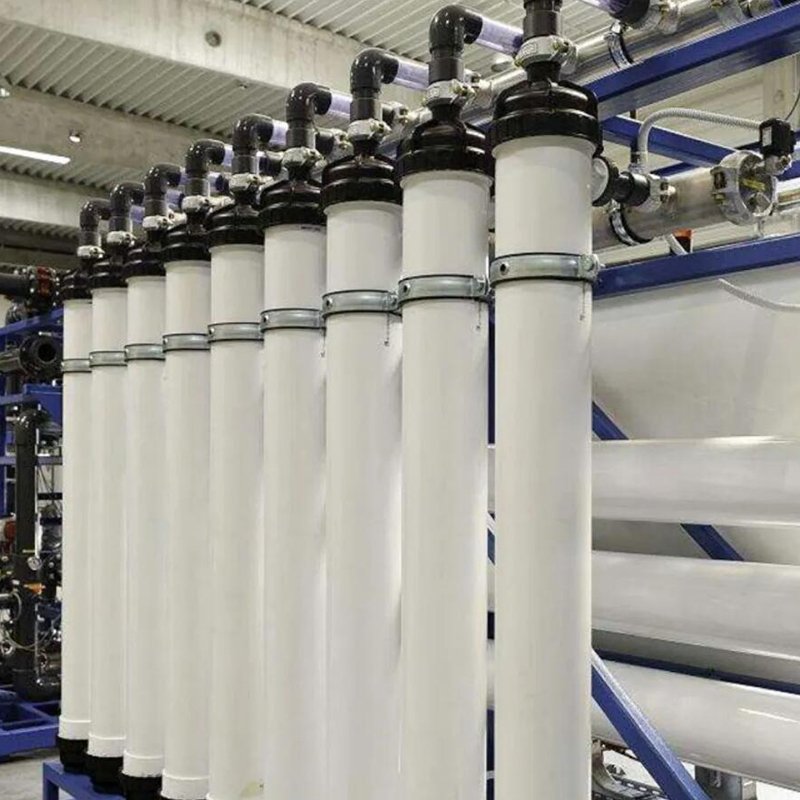
RO membrane module: using polyamide composite membrane (pore size 1/10000 μ m) to intercept soluble salts (desalination rate ≥ 98%), organic matter (molecular weight>200Da) and microorganisms, with a water production conductivity of ≤ 10 μ S/cm.
Control system: Integrated PLC and online monitoring instruments, real-time adjustment of pressure, flow rate, and pH value, triggering automatic flushing and fault alarms.
(2). Water production and concentrated water treatment
Water production end: Pure water is stored in a sterile water tank and used for process water or direct drinking water.
Concentrated water end: High salinity concentrated water (salt content>5000mg/L) can be reused in the pretreatment process or enter the evaporation crystallization system (ZLD process) to achieve zero liquid discharge.

RO membrane technical parameters:
Filtration accuracy: The pore size of the RO membrane is about 0.0001 microns, which can filter out impurities such as bacteria and viruses.
Flux: refers to the amount of water passing through an RO membrane per unit time, depending on factors such as membrane area, pressure, and water quality.
Desalination rate: The filtration efficiency of RO membranes for salts, usually expressed as a percentage, typically between 95% and 98%.
Pressure loss: The pressure difference required for water to pass through the RO membrane, and the smaller the pressure loss, the lower the energy consumption.
Molecular weight retention: The maximum molecular weight that an RO membrane can filter, which is crucial for selecting the appropriate RO membrane.
Membrane thickness: The thickness of an RO membrane, which typically has higher flux and lower salt resistance.
Replacement cycle: It is recommended to replace every 8-12 months, depending on the water quality and usage habits.
Post processing stage
Select advanced treatment processes based on water quality requirements:
(1). Preparation of ultrapure water
EDI Electrodeionization: Combining ion exchange resin with electric field to remove trace ions and prepare ultrapure water with a resistivity of ≥ 18M Ω· cm, suitable for electronic chip cleaning.
Mixed bed resin: further purify water quality and reduce conductivity to below 0.1 μ S/cm.
(2). Sterilization and Terminal Security
UV disinfection: inactivate bacteria and viruses (sterilization rate>99.99%) to ensure the safety of water producing microorganisms.
Ozone sterilization: used in direct drinking water systems to extend storage life and inhibit biofilm formation.
Micro porous filter: equipped with a 0.22 μ m terminal filter membrane to intercept potential particles and ensure water cleanliness
Typical process configuration scheme:
Option 1: Single stage reverse osmosis system
Raw water → Raw water tank → Multi media filtration → Activated carbon filtration → Softening → Precision filtration → High pressure pump → RO membrane → Pure water tank → Water point
Features: Suitable for raw water with conductivity ≤ 500 μ S/cm, the produced water meets the general industrial water demand (conductivity ≤ 10 μ S/cm)
Option 2: Dual stage reverse osmosis system
Raw water → pretreatment → primary RO → pH adjustment → secondary RO → EDI → UV radiation → microporous filtration → water point
Features: Two stage RO membranes are connected in series, with a water conductivity of ≤ 0.1 μ S/cm, meeting the standards for pharmaceutical injection water and electronic ultrapure water
Plan 3: Reverse osmosis+concentrated water recovery system
Concentrated water → High pressure pump → DTRO membrane → Evaporative crystallization → Salt recovery
Features: The system recovery rate has been increased to over 85%, achieving zero discharge of wastewater and salt resource utilization
Key process parameters and performance indicators
link | Core Indicators | Typical values |
pretreatment | SDI value of effluent | <3 |
ro membrane | Desalination rate | ≥98% |
Produced water quality | Conductivity (single-stage RO) | ≤10μS/cm |
System recovery rate | Industrial grade single-stage RO | 50%-75% |
energy consumption | Electricity consumption per ton of water (including energy recovery) | 0.8-1.2kWh/m³ |
Key points of maintenance and optimization
(1). Maintenance of membrane components
Chemical cleaning: Use citric acid (pH=3) or NaOH (pH=11) every quarter to clean the surface pollutants of the membrane and restore the flux to over 95%.
Replacement cycle: The lifespan of conventional RO membranes is 3-5 years, which can be shortened to 2-3 years in high temperature or high pollution water environments.
(2). Energy saving design
Energy recovery device: using the residual pressure of concentrated water to drive the booster pump, reducing the energy consumption of the high-pressure pump by 30% -40%.
Waste heat reuse: Recovering heat from high-temperature wastewater through a heat exchanger, preheating raw water with an energy-saving rate of over 25%
Application scenarios and cases
- Reuse of printing and dyeing wastewater
By using a two-stage RO system to remove dye molecules (retention rate>99%) and salt, the COD of recycled water is less than 10mg/L, meeting the GB4287-2012 emission standard.
Case: A printing and dyeing enterprise in Zhejiang saves 380000 tons of water annually and reduces water treatment costs by 1.8 million yuan.
- Preparation of electronic ultrapure water
Using RO+EDI process to prepare ultrapure water with a resistivity of ≥ 18M Ω· cm, ensuring no ion pollution during chip cleaning.
- Production of pharmaceutical purified water
The terminal is equipped with dual sterilization of ozone and ultraviolet radiation, and the produced water meets the sterile injection water standard of the Chinese Pharmacopoeia
conclusion
Reverse osmosis equipment achieves full process coverage from pretreatment to deep purification through modular design, and its process combination is flexibly adapted to meet the needs of multiple fields such as industry, healthcare, and food. In the future, the combination of intelligent monitoring and new material technology (such as graphene composite film) will further promote the efficient utilization of water resources and the achievement of sustainable development goals