Introduction
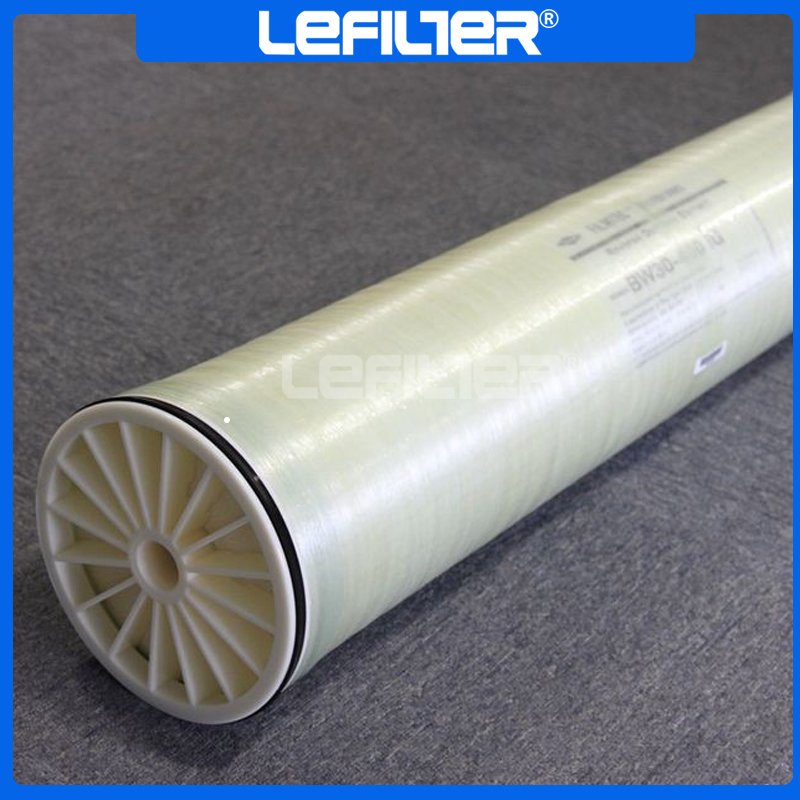
The reverse osmosis (RO) membrane a linchpin in water purification technology, is a marvel of modern engineering. It’s the silent workhorse that enables the transformation of impure water into a clean, usable resource across countless settings. Through continuous innovation in design and material science, this membrane has evolved to be a fundamental component in diverse industries’ water treatment processes.
Unveiling the Reverse Osmosis Membrane
At its essence, a reverse osmosis membrane is a selectively permeable barrier. Picture a fine – meshed net, but on an incredibly tiny scale. Its pores are minuscule, sized in the nanometer range. This precise sizing is no accident; it’s engineered to allow only the smallest of molecules, like water, to pass through while blocking a wide array of larger substances. When water laden with impurities such as salts, heavy metals, or organic compounds approaches the membrane, the minuscule pores act as a highly effective filter. For example, salt ions, which are relatively large compared to water molecules, are simply too big to fit through the pores and are thus left behind.
How It Works: The Intriguing Process
The operation of the reverse osmosis membrane hinges on a principle that defies the natural flow of osmosis. In regular osmosis, water moves spontaneously from an area with a lower concentration of dissolved substances (a dilute solution) to an area with a higher concentration (a concentrated solution) across a semi – permeable membrane. However, in reverse osmosis, we intervene. By applying external pressure to the concentrated side of the solution, we overpower the natural osmotic pressure. This forces the water molecules to do an about – face. They start flowing from the concentrated side, where there’s more “stuff” dissolved, through the membrane to the side with less dissolved material. As a result, contaminants get trapped on the concentrated side, and clean, purified water emerges on the other side, ready for use.
How It Works: The Intriguing Process
The operation of the reverse osmosis membrane hinges on a principle that defies the natural flow of osmosis. In regular osmosis, water moves spontaneously from an area with a lower concentration of dissolved substances (a dilute solution) to an area with a higher concentration (a concentrated solution) across a semi – permeable membrane. However, in reverse osmosis, we intervene. By applying external pressure to the concentrated side of the solution, we overpower the natural osmotic pressure. This forces the water molecules to do an about – face. They start flowing from the concentrated side, where there’s more “stuff” dissolved, through the membrane to the side with less dissolved material. As a result, contaminants get trapped on the concentrated side, and clean, purified water emerges on the other side, ready for use.
The Advantages That Set It Apart
Unrivaled Filtration Precision
One of the most remarkable aspects of the reverse osmosis membrane is its unrivaled filtration precision. It can remove contaminants with astonishing accuracy. In the pharmaceutical industry, where the tiniest impurity can have significant consequences, these membranes are indispensable. They can filter out impurities down to the molecular level, ensuring that the water used in drug formulation and manufacturing is of the highest purity. This level of precision safeguards the quality and effectiveness of medications, ultimately protecting patients’ health.
Exceptional Durability
Reverse osmosis membranes are built to last. Constructed from robust materials, they can endure the rigors of continuous use in challenging environments. In large – scale water treatment plants, where they are exposed to a constant stream of water with varying levels of contaminants, these membranes maintain their integrity over long periods. Their durability means fewer replacements, which is not only cost – effective but also reduces the downtime associated with maintenance. This reliability is a huge advantage for industries that rely on a consistent supply of purified water.
Environmentally – Friendly Filtration
Another significant advantage is that reverse osmosis membranes offer an environmentally – friendly filtration method. Since they operate without the need for chemical additives, they avoid introducing potentially harmful chemicals into the water or the environment. In the food and beverage industry, this is particularly important. For instance, in the production of bottled water, using chemical – free reverse osmosis membranes ensures that the final product is free from any chemical residues. This not only preserves the natural taste and quality of the water but also aligns with consumers’ growing preference for clean, chemical – free products.
Diverse Applications of Reverse Osmosis Membranes
Transforming Drinking Water at Home
In households, reverse osmosis membranes have become a popular choice for improving the quality of tap water. Many families install under – sink reverse osmosis systems. These compact units use the membrane to remove a variety of contaminants, such as chlorine, lead, and sediment. By doing so, they not only make the water taste better but also make it safer to drink. In public places like offices and schools, larger – scale reverse osmosis systems equipped with these membranes are being installed to provide clean, fresh water for everyone.
Empowering Industrial Processes
In the Food and Beverage Realm
In the food and beverage industry, reverse osmosis membranes play a multifaceted role. In the production of fruit juices, they can be used to concentrate the juice. By removing water while retaining the valuable nutrients, flavors, and antioxidants, these membranes help create more concentrated, flavorful products. In breweries, they purify the water used in the brewing process. This ensures that the beer has a consistent taste and quality batch after batch. And in the production of bottled water, they are essential for meeting the strictest quality standards.
For Pharmaceutical Advancements
The pharmaceutical industry relies heavily on reverse osmosis membranes to produce high – purity water. Water is used in every step of drug manufacturing, from cleaning equipment to formulating active ingredients. The ultra – pure water provided by these membranes is crucial for ensuring the safety and efficacy of medications. It helps prevent any contamination that could affect the quality of the drugs, which is of utmost importance in the healthcare field.
In the Electronics Manufacturing Arena
In the electronics industry, where the quality of water is critical for manufacturing semiconductor chips and other delicate components, reverse osmosis membranes are a must. Even the smallest impurity in water can cause defects in electronic components. These membranes’ ability to produce extremely pure water is essential for maintaining the performance and reliability of electronic devices, from smartphones to computers.
Conclusion
In conclusion, the reverse osmosis membrane is a technological wonder. Its unique structure and working principle enable it to offer high – precision filtration, exceptional durability, and an environmentally – friendly approach to water purification. Whether it’s enhancing the quality of our drinking water at home, powering industrial processes, or contributing to the global effort to make seawater usable, this membrane has proven its value time and time again. As technology continues to progress, we can expect reverse osmosis membranes to become even more efficient, cost – effective, and widely applicable, further contributing to a cleaner, more sustainable world.