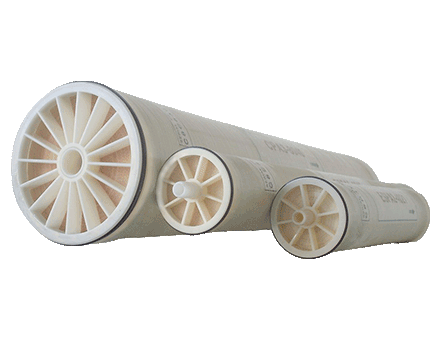
In the pursuit of clean and pure water, the Reverse Osmosis (RO) membrane has emerged as a crucial technology. This article will delve into the details of the RO membrane, including its product introduction, working principle, product composition, technical parameters, and application industries.
I. Product Introduction
The RO membrane is a highly efficient filtration membrane that is designed to remove a wide range of contaminants from water. It is widely used in various water purification systems, from household water filters to large-scale industrial water treatment plants. The RO membrane is capable of producing high-quality water that meets strict purity standards, making it an essential component in many applications where clean water is required.
One of the significant advantages of the RO membrane is its ability to remove even the smallest particles and dissolved substances from water. It can effectively filter out impurities such as salts, heavy metals, bacteria, viruses, and other contaminants, providing clean and safe water for consumption and other uses.
II. Working Principle
The working principle of the RO membrane is based on the process of reverse osmosis. Reverse osmosis occurs when a pressure is applied to a solution on one side of a semi-permeable membrane, causing the solvent (usually water) to move from the more concentrated solution (with impurities) to the less concentrated solution (the purified water side).
The RO membrane has a very fine pore structure that allows only water molecules to pass through while blocking the passage of most other substances. The applied pressure overcomes the natural osmotic pressure, forcing the water to flow in the opposite direction and leaving the contaminants behind. This process results in the production of purified water with a very low concentration of impurities.
III. Product Composition
The RO membrane is typically composed of several key components:
- Membrane material: The most common membrane material used in RO membranes is a thin film composite (TFC) material, which consists of a thin layer of an active polymer film on top of a porous support layer. The active layer is responsible for the selective filtration, while the support layer provides mechanical strength.
- Support structure: The membrane is usually supported by a porous structure, such as a polyester or polypropylene fabric, to enhance its durability and stability.
- End caps and spacers: End caps are used to seal the ends of the membrane module and connect it to the piping system. Spacers are placed between the membranes to ensure proper water flow distribution and prevent membrane fouling.
- Housing: The membrane is housed in a protective casing, which provides mechanical protection and helps to maintain the integrity of the membrane during operation.

IV. Technical Parameters
Several technical parameters are important to consider when evaluating the performance of an RO membrane:
- Permeate flow rate: This is the rate at which purified water passes through the membrane and is usually measured in gallons per day (GPD) or liters per hour (L/h). It indicates the productivity of the membrane.
- Rejection rate: The rejection rate represents the percentage of contaminants that are blocked by the membrane. A higher rejection rate indicates better filtration performance. For example, a high-quality RO membrane may have a salt rejection rate of 95% or more.
- Operating pressure: The pressure required to drive the reverse osmosis process. It varies depending on the membrane type and the quality of the feed water. Generally, higher pressures are needed for more efficient filtration but may also lead to increased energy consumption.
- pH range: The RO membrane has a specific pH range within which it can operate effectively. Operating outside this range may affect the membrane’s performance and lifespan.
- Temperature tolerance: The membrane can function within a certain temperature range. Extreme temperatures can damage the membrane and reduce its filtration efficiency.
V. Application Industries
The RO membrane has found extensive applications in various industries due to its excellent water purification capabilities:
- Drinking water production: RO membranes are widely used in household and commercial water purification systems to provide clean and safe drinking water. They are also used in municipal water treatment plants to improve the quality of the water supply.
- Industrial processes: Many industries rely on high-quality water for their operations. The RO membrane is used in the electronics industry for rinsing and manufacturing processes to ensure the purity of water used in the production of semiconductors and other electronic components. It is also used in the pharmaceutical industry to prepare purified water for drug manufacturing.
- Food and beverage industry: RO membranes are used in the production of bottled water, soft drinks, and other food and beverage products to remove impurities and ensure the quality and safety of the final product.
- Wastewater treatment: RO membranes can be used in wastewater treatment plants to further purify the treated wastewater and make it suitable for reuse in industrial processes or for discharge into the environment with lower pollutant levels.
In conclusion, the Reverse Osmosis (RO) membrane is a remarkable product that plays a vital role in water purification. Its unique working principle, combined with its specific product composition and technical parameters, makes it highly effective in removing contaminants and producing high-quality water. Its wide range of applications across different industries highlights its importance in meeting the growing demand for clean and pure water. Understanding the characteristics and capabilities of the RO membrane is essential for anyone involved in water treatment and purification processes, whether it be for residential, commercial, or industrial use.