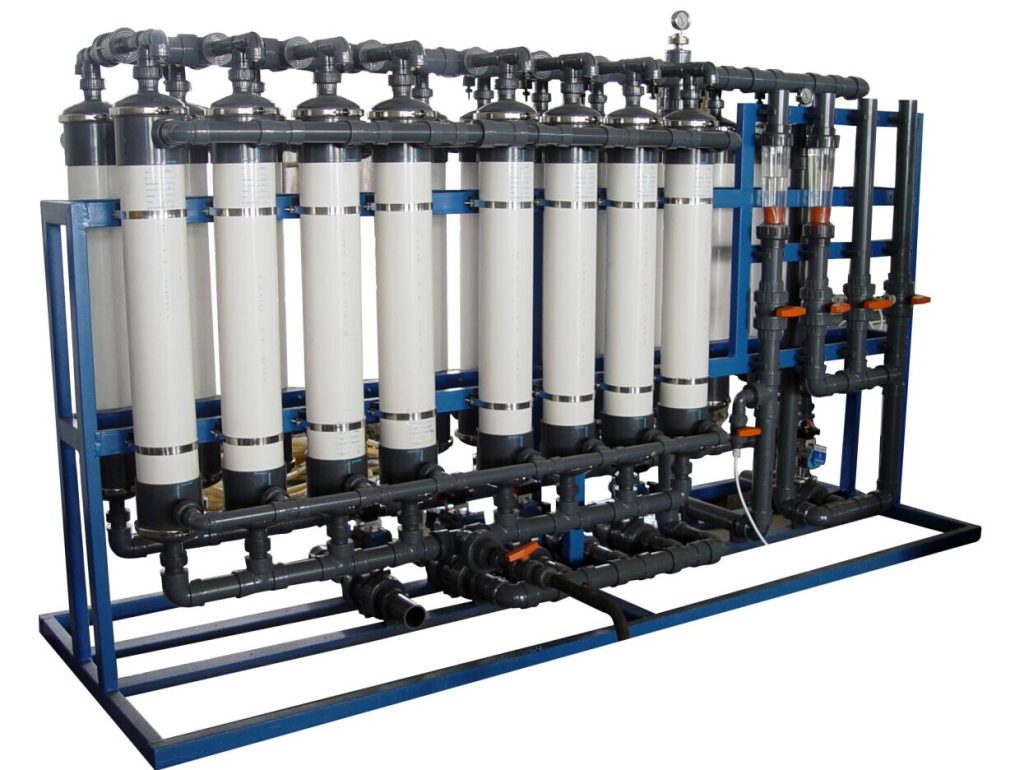
Pretreatment system maintenance
(I) Maintenance of filter equipment
Sand filter maintenance
Regularly check the operating pressure difference of the sand filter. As the sand filter operates, the filter layer will retain a large amount of impurities, resulting in an increase in the pressure difference between the inlet and outlet water. When the pressure difference reaches a certain value (usually 0.05-0.1MPa), the sand filter needs to be backwashed. When backwashing, the intensity and time of the backwashing should be controlled. Generally, the backwashing intensity is 12-15L/(m²・s) and the time is 3-5 minutes to ensure that the impurities in the filter layer are effectively washed away, but the filter material will not be washed away.
Every once in a while (such as half a year to a year), it is necessary to open the sand filter to check the condition of the filter material, such as whether there is agglomeration, loss, etc. If the filter material is found to be seriously contaminated or the performance is reduced, the filter material should be replaced in time.
Precision filter maintenance
The filter element in the precision filter needs to be replaced regularly. The replacement cycle of the filter element depends on the water quality of the raw water and the operating flow of the filter. Generally speaking, when the filter inlet and outlet pressure difference reaches 0.07-0.1MPa or the service life of the filter element reaches the specified time (such as 3-6 months), the filter element needs to be replaced. When replacing the filter element, pay attention to the operating specifications to avoid contaminating the filter element and the inside of the filter.
After each replacement of the filter element, the filter should be tested for integrity to ensure that there are no leaks.
(II) Maintenance of activated carbon adsorber
Activated carbon replacement
The activated carbon in the activated carbon adsorber will gradually lose its adsorption capacity over time and with the increase of adsorption capacity. When the removal rate of activated carbon for organic matter decreases significantly (judged by regularly testing the organic matter content of the inlet and outlet water) or the activated carbon has been used for a certain period of time (usually 1-2 years), the activated carbon needs to be replaced.
When replacing the activated carbon, first drain the water in the adsorber, then carefully remove the old activated carbon and fill it with new activated carbon. When filling, pay attention to the filling density and uniformity of the activated carbon to avoid gaps or blockages.
Regular cleaning
Although the activated carbon adsorber is mainly used for adsorption, some impurities may be deposited on the surface of the activated carbon during operation. Clean the activated carbon adsorber regularly (such as once a quarter) by flushing with low-pressure water to remove surface impurities and improve the adsorption efficiency of the activated carbon.
(III) Softener maintenance
Resin regeneration monitoring
The ion exchange resin in the softener needs to be regenerated regularly. The exchange capacity of the resin is determined by detecting the hardness of the softener’s outlet water. When the outlet water hardness approaches or exceeds the set value (such as 0.03mmol/L), the resin needs to be regenerated. For time-controlled softeners, they should be checked and adjusted according to the set regeneration time cycle; for flow-controlled softeners, the regeneration timing should be accurately determined based on the accumulated flow.
During the resin regeneration process, attention should be paid to the concentration, flow rate and regeneration time of the regeneration liquid (such as sodium chloride solution). The regeneration liquid concentration is generally 5% – 10%, and the regeneration flow rate should be reasonably set according to the specifications of the softener and the amount of resin. The regeneration time is usually 30 – 60 minutes.
Resin maintenance and replacement
Backwash the resin regularly to remove dirt and broken resin particles on the resin surface. When backwashing, the backwash water flow rate should be controlled at about 10-15m/h. If the resin is found to be obviously worn, poisoned (such as contaminated by iron ions, etc.) or the exchange capacity is seriously reduced, the resin should be revived or replaced.
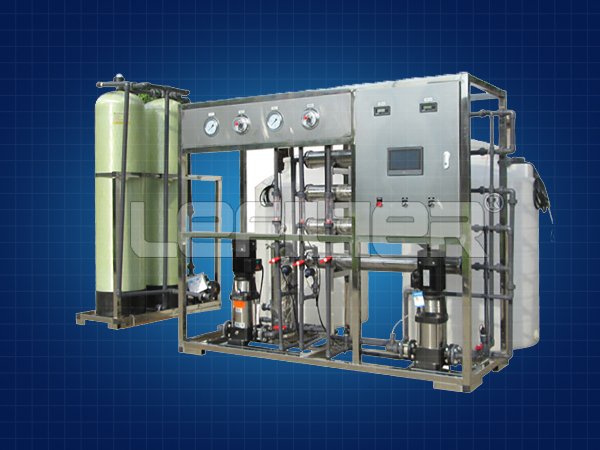
Reverse osmosis membrane assembly maintenance
(I) Cleaning of membrane assembly
Judgment of cleaning timing
Judgment of whether the membrane assembly needs to be cleaned by monitoring the operating parameters of the reverse osmosis equipment. When the water inlet pressure of the membrane assembly increases by 10%-15% compared with the initial operation, or the water output decreases by 10%-15%, or the desalination rate decreases by 2%-3%, the membrane assembly usually needs to be cleaned.
In addition, the water quality of the inlet and outlet of the membrane assembly can also be analyzed. If the content of pollutants such as organic matter, microorganisms or inorganic salts in the water increases abnormally, the membrane assembly should also be considered for cleaning.
Cleaning method
Select a suitable cleaning solution according to the type of pollutant. For inorganic salt scale pollution, the commonly used cleaning liquid is an acidic solution (such as 0.2% hydrochloric acid solution). During cleaning, the temperature of the cleaning liquid should be controlled at 25-35°C and the cleaning time should be 30-60 minutes. For organic pollution, alkaline solution (such as 0.1% sodium hydroxide and 0.025% sodium dodecyl sulfate mixed solution) can be used for cleaning. The cleaning temperature and time are similar to acid cleaning.
During the cleaning process, a low-flow circulation cleaning method should be adopted. First, the cleaning liquid is slowly injected into the membrane assembly, and then circulated at a lower flow rate (usually 1/3-1/2 of the normal operating flow rate) to avoid excessive pressure shock to the membrane assembly. After cleaning, the membrane assembly should be thoroughly rinsed with clean water until the pH value and conductivity of the rinse water return to normal.
(II) Storage of membrane components
Short-term storage (1-3 days)
If the reverse osmosis equipment needs to be shut down for a short period of time (1-3 days), the membrane components can be immersed in a protective solution containing 0.5%-1% sodium bisulfite to prevent the growth of microorganisms. At the same time, the water inlet valve, water outlet valve and concentrated water valve of the equipment should be closed to keep the membrane components full of protective solution.
Long-term storage (more than 3 days)
For long-term shutdown (more than 3 days), more stringent membrane component preservation measures are required. First, the membrane components should be thoroughly cleaned to remove pollutants on the membrane surface. Then, the membrane components should be immersed in a protective solution containing 1%-1.5% sodium bisulfite and 18%-20% glycerol. This protective solution can form a protective film on the membrane surface to prevent the membrane from drying, microbial growth and chemical corrosion. During the storage period, the level and concentration of the protective solution should be checked regularly (such as once a month), and the protective solution should be replenished or replaced in time if necessary.
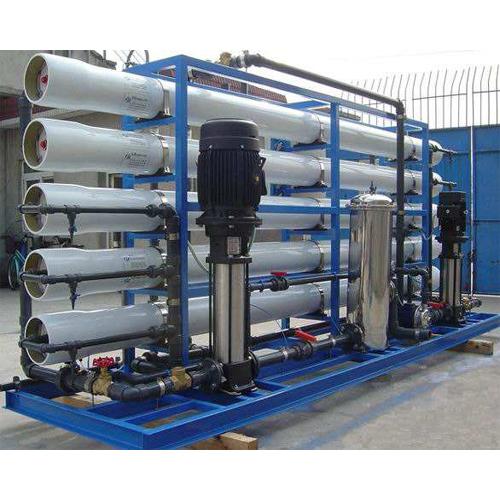
High-pressure pump maintenance
(I) Operating parameter monitoring
Pressure monitoring
Regularly check the inlet and outlet pressures of the high-pressure pump. During normal operation, the inlet pressure should remain stable and the outlet pressure should reach the operating pressure required by the reverse osmosis equipment. If the inlet pressure is found to be abnormally low, it may be due to blockage or leakage in the water inlet pipeline; if the outlet pressure is abnormally high or low, it may be due to wear of the pump impeller, damage to the seal, or changes in pipeline resistance.
The pressure sensor installed at the inlet and outlet of the pump monitors the pressure changes in real time and records the data for analysis of the operating status of the pump.
Flow monitoring
It is also very important to monitor the flow of the high-pressure pump. Changes in flow may affect the operating effect of the reverse osmosis equipment. If the flow rate drops, there may be problems such as blockage at the suction end of the pump, blockage or wear of the impeller. By installing a flow meter at the outlet of the pump, the flow rate is accurately measured and compared with the design flow rate of the equipment. If the flow deviation exceeds ±5%, the pump needs to be checked and adjusted.
(II) Regular maintenance
Mechanical seal inspection
The mechanical seal of the high-pressure pump is a key component. Check the wear of the mechanical seal regularly (such as every 3-6 months). If the sealing surface is found to be worn, scratched or leaking, the mechanical seal should be replaced in time. When replacing the mechanical seal, follow the operating specifications to ensure that the seal is installed correctly to avoid leakage again.
Lubricant replacement
Replace the lubricant regularly according to the operating time of the pump and the requirements of the instruction manual. Generally speaking, the lubricant needs to be replaced after the high-pressure pump has been running for 2000-3000 hours. When replacing the lubricant, drain the old oil first, then clean the oil cavity with clean oil, and then add new lubricant to the specified oil level.
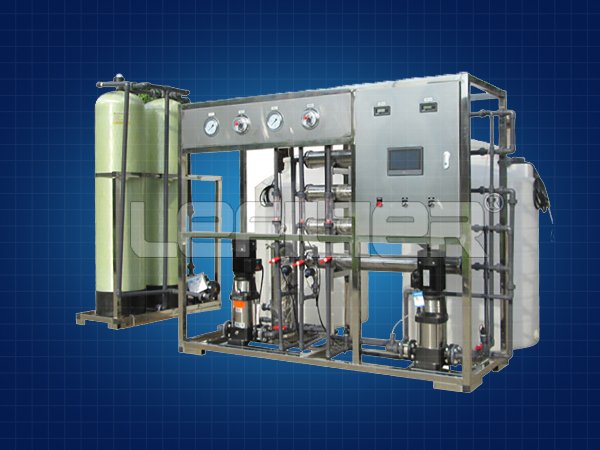
Control system maintenance
(I) Parameter calibration
Pressure sensor calibration
Regularly calibrate the pressure sensor in the reverse osmosis equipment control system. The calibration cycle is generally half a year to one year. The pressure sensor can be calibrated with a standard pressure source to ensure the accuracy of the pressure sensor measurement. During the calibration process, follow the sensor calibration procedure to adjust the zero point and range of the sensor so that the measurement error is controlled within ±2%.
Flow sensor calibration
The calibration of the flow sensor is also very important. The flow sensor can be compared and calibrated with a standard flow meter. The calibration cycle is similar to that of the pressure sensor. After calibration, ensure that the measurement error of the flow sensor does not exceed ±3% to ensure the accuracy of the equipment operating parameters.
(II) Electrical system inspection
Line inspection
Regularly check the electrical circuits of the control system to see if the circuits are damaged, aged, short-circuited, etc. Pay special attention to checking the lines connecting high-pressure pumps, valves, sensors and other equipment, because these lines are in the key parts of high voltage or signal transmission. If there is a problem with the line, repair or replace the line in time.
Electrical component inspection
Check the electrical components in the control system, such as relays, contactors, controllers, etc. Check whether these components are overheated, damaged or have poor contact. For components with potential faults, replace them in time to ensure the normal operation of the control system.