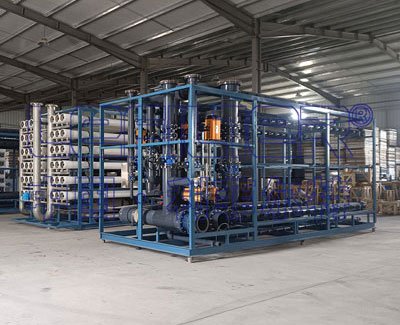
Through core technologies such as reverse osmosis and distillation, seawater desalination equipment converts high – salinity seawater into potable freshwater, effectively alleviating water shortages. With high – efficiency production and stable performance, it becomes a reliable water supply solution for islands, ships, and coastal areas.

I. Product Introduction
Seawater desalination equipment refers to the devices specifically designed for desalinating seawater. There are mainly two methods for desalinating seawater, namely distillation and reverse osmosis.
II. Working Process (Taking Reverse Osmosis Technology as an Example)
III. Product Features
| Key Advantages | Description |
|---|---|
| High – efficiency Desalination | Adopts high – desalination reverse osmosis membranes, with a salt removal rate of 99.5% and a product water salinity <500mg/L, meeting WHO drinking water standards. |
| High Adaptability Design | Can adapt to different sea area salinities (15,000 – 45,000mg/L) and harsh water quality conditions, ensuring stable water production. |
| Energy – saving Technology | Integrated with an energy recovery system, reducing energy consumption by 30% compared to traditional equipment, with power consumption as low as 3 – 4kWh per ton of water. |
| Modular Integration | Adopts a container – type modular design, facilitating transportation and installation. The daily water production of a single device ranges from 5 – 10,000 tons, and multiple units can be connected in parallel for capacity expansion. |
| Intelligent Monitoring System | Equipped with a PLC automatic control system, which real – time monitors parameters such as water quality, pressure, and flow rate, provides fault warnings, and automatically adjusts the operating status. |

IV. Technical Parameters

V. Application Fields
| Industry/Scenario | Application Scenarios | Core Value |
|---|---|---|
| Island Life | Daily water supply for island residents | Solves the problem of freshwater scarcity on islands, ensures residents’ quality of life, and promotes island economic development. |
| Maritime Shipping | Freshwater replenishment for ocean – going ships | Meets the water needs of crew members and ship equipment, reduces dependence on shore – based replenishment, and enhances navigation autonomy. |
| Coastal Industries | Production water for petrochemical, power, and other enterprises | Provides a stable water source for water – intensive industries, reduces dependence on municipal water supply, and eases regional water stress. |
| Emergency Relief | Temporary water supply during floods, droughts, and other disasters | Quickly responds to sudden water shortages, provides safe drinking water to affected areas, and meets emergency rescue needs. |
VI. FAQ
VII. Conclusion
Seawater desalination equipment stands out as a crucial solution to global water shortages, thanks to its excellent saline – water conversion ability, energy – efficient operation, and wide applicability. Whether it is to ensure the livelihoods of island residents, support ocean shipping, or serve water – intensive industries, stable water supply can be achieved through customized configurations. In the future, with innovations in membrane materials and the upgrading of intelligent technologies, seawater desalination equipment will further reduce costs and improve efficiency, providing sustainable freshwater resource guarantees for more regions.
If you are interested in this product or have any questions, please feel free to contact us at any time.