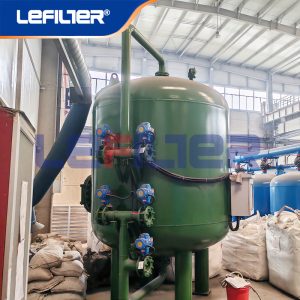
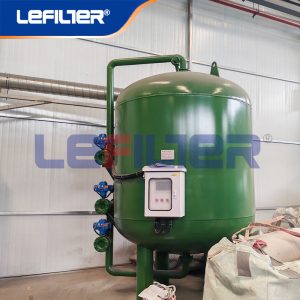
The pre-filter protection for the reverse osmosis (RO) system
In the process of filtering water, activated carbon is often used to remove contaminants and impurities. Carbon is probably the most absorbent material known to man, and it is uniquely efficient because of thousands of tiny pores that can absorb. For example, a pound of activated carbon provides 125 acres of filtering surface area. The carbon is positively charged to attract negatively charged impurities such as chlorine, chemicals and volatile organic compounds.
Most carbon water filters are either made with granular activated carbon (GAC), or powdered block carbon material. Those with carbon block are the most effective, since there is a larger ratio of activated carbon surface area to water, and also because the powdered block form is denser and water travels through it more slowly. The larger surface area created by the block carbon, and the more time the water is in contact with the carbon, the more contaminants are removed.
High efficiency;lower operating expense;lower maintaining charges;lower one-time investment;lower head loss;lower requirement for inflow water quality;stable effluent quality;brilliant filtration,easy to reorganize & expand,smaller land covering,good appearance
The residual clorine in the water after being filtered by active carbon filter is no more than 0.1PPM
Working Temperature:5-60℃
Working pressure: ≤0.6MPa
Operating Parameters
Working style: pressure style
Operating style: Current top-down
Filter speed: 6-10m/h(remove iron),5-8m/h(remove manganese)
Operation period: it depends on raw water condition, not less than 8 hours