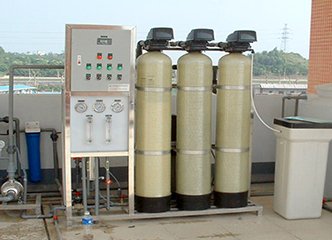
Use of softened water equipment
(I) Installation and commissioning
Installation environment
The softened water equipment should be installed in a dry and well-ventilated place indoors, avoiding direct sunlight and rain. The installation site should have enough space to facilitate the operation, maintenance and repair of the equipment. At the same time, ensure that the equipment is installed horizontally to ensure uniform water flow in the resin tank.
For large-scale industrial softened water equipment, the installation site should also take into account the convenience of connecting the raw water supply pipeline and the softened water output pipeline, as well as the perfection of drainage facilities, because wastewater will be discharged during the resin regeneration process.
Pipeline connection
When connecting the inlet pipe and the outlet pipe, use appropriate pipes and fittings and ensure good sealing. Generally speaking, the inlet pipe should be connected to the raw water supply source, such as the municipal tap water pipeline, and the outlet pipe should be connected to the equipment or water point that requires softened water.
For softened water equipment using flow control, a flow meter needs to be installed to accurately measure the raw water flow. When connecting the pipeline, operate in accordance with the requirements of the equipment manual to avoid wrong connection of the pipeline and affect the normal operation of the equipment.
Debugging steps
After the equipment is installed, the first thing to do is to check the water flow, open the water inlet valve, slowly inject water into the equipment, and check whether there is any leakage at the pipe connection. If leakage is found, the water inlet valve should be closed in time and repaired.
Then, according to the hardness of the raw water and the requirements of the equipment, set the parameters of the controller, such as operation cycle, regeneration time, flow rate, etc. For time-controlled equipment, it is necessary to set appropriate working time and regeneration interval time; for flow-controlled equipment, it is necessary to set the cumulative flow rate to regenerate.
Next, start the equipment for trial operation and observe the operating status of the equipment, including water inlet pressure, water quality, etc. In the early stage of trial operation, the equipment may need to be adjusted several times until a satisfactory softening effect is achieved.
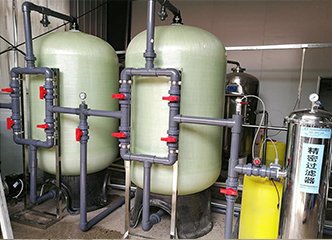
(II) Daily operation
Start and stop
When starting the softening water equipment, first open the water inlet valve to allow raw water to enter the resin tank. Then, according to the degree of automation of the equipment, start the equipment’s operation mode automatically or manually. For fully automatic softening water equipment, just press the start button and the equipment will run according to the preset program.
When it is necessary to stop the equipment from running, such as for equipment maintenance or long-term non-use, close the water inlet valve first, and then perform the corresponding operations according to the requirements of the equipment. For fully automatic equipment, specific shutdown procedures may be required to protect the internal components of the equipment.
Water quality monitoring
It is very important to monitor the outlet water quality of the softening water equipment regularly. You can use a water hardness test kit or a professional water quality analysis instrument to detect the hardness of softened water. Generally speaking, the hardness of softened water should meet the relevant standards or user requirements.
If it is found that the outlet water quality does not meet the requirements, it may be due to decreased resin exchange capacity, equipment failure, or changes in raw water quality. It is necessary to conduct timely investigation and treatment, such as checking whether the resin needs to be regenerated and whether the valve of the equipment is working properly.
Water consumption statistics
For softening water equipment with flow type control, water consumption should be counted regularly. Understand the operation of the equipment by checking the flow meter reading of the equipment or the flow statistics data in the controller.
If it is found that the water consumption increases or decreases abnormally, it may be due to leakage inside the equipment, unstable raw water flow, or changes in user water habits. Timely inspection and adjustment are required to ensure the normal operation of the equipment.
(III) Resin regeneration operation
Regeneration timing judgment
When the exchange capacity of the ion exchange resin decreases, resulting in an increase in the hardness of the softened water, the resin needs to be regenerated. For time-controlled equipment, regeneration can be performed according to the preset regeneration time; for flow-controlled equipment, the regeneration timing is determined based on the accumulated treated water volume.
In addition, the need for regeneration can also be determined by regularly testing the effluent water quality. If the effluent water hardness approaches or exceeds the specified value, the regeneration program should be started.
Regeneration process
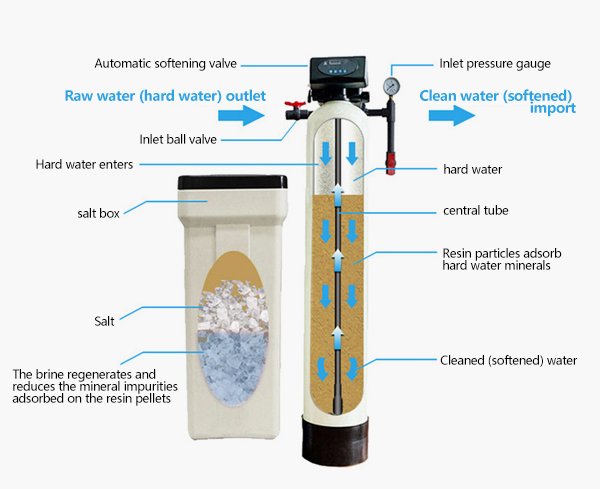
During the regeneration process, first ensure that there is enough salt in the salt tank. Then, start the regeneration program according to the operating instructions of the equipment. For downstream regeneration equipment, the regeneration liquid (brine) enters from the top of the resin tank and flows through the resin layer from top to bottom; for countercurrent regeneration equipment, the regeneration liquid enters from the bottom of the resin tank and flows through the resin layer from bottom to top.
During the regeneration process, pay attention to the flow rate, pressure and other parameters of the regeneration liquid to ensure that the regeneration process is carried out normally. After the regeneration is completed, the resin should be rinsed to remove the residual regeneration liquid and restore the resin to normal working condition.

Precautions for using softening water equipment
(I) Raw water quality
Water quality fluctuation response
Raw water quality may fluctuate, such as a sudden increase in raw water hardness or other impurities. If the raw water hardness increases, the resin regeneration cycle may be shortened, and the equipment operating parameters need to be adjusted in time.
If the raw water contains impurities such as silt, rust, etc., it may clog the water distributor in the resin tank or the gaps between the resin particles, affecting the operation of the equipment. Therefore, before the raw water enters the softening water equipment, you can consider installing a pre-filter to perform preliminary filtration on the raw water.
Special substance treatment
If the raw water contains oxidizing substances such as residual chlorine, it may oxidize the ion exchange resin and reduce the service life of the resin. In this case, an activated carbon filter can be installed in the raw water inlet pipeline to remove oxidizing substances such as residual chlorine.
For special substances such as heavy metal ions in the raw water, corresponding treatment measures need to be taken according to the specific situation, such as installing a special heavy metal removal device before the softening water equipment.
(II) Equipment maintenance
Resin maintenance
Ion exchange resins need to be backwashed regularly to remove dirt and broken resin particles on the resin surface. During backwashing, pay attention to controlling the backwash water flow rate to avoid damaging the resin layer due to too fast a flow rate or failing to achieve the cleaning effect due to too slow a flow rate.
After long-term use, if the resin exchange capacity is found to have decreased significantly, the resin may need to be revived or replaced. The resin revivification process can be carried out using special chemicals in accordance with certain operating procedures.
Equipment component inspection
Regularly check the various components of the equipment, such as resin tanks, salt boxes, valves, pipes, etc. Check whether the resin tank is damaged or corroded; whether the stirring device in the salt box is working properly; whether the valve is well sealed and flexible to open and close; whether the pipe is leaking, etc.
For the controller in the equipment, it is necessary to calibrate it regularly to ensure the accuracy of its control parameters. At the same time, keep the controller clean to avoid dust, water vapor, etc. affecting its normal operation.
(III) Safe operation
Safe use of chemical agents
During the resin regeneration process, chemical agents such as salt (sodium chloride) will be used. When storing and using these chemical agents, relevant safety regulations must be followed. Salt should be stored in a dry and ventilated place to avoid moisture and agglomeration.
If other special regeneration agents are used, their chemical properties must be understood to prevent leakage of the agents from causing harm to the human body and the environment. When preparing the regeneration agent solution, the operation must be carried out in the correct proportion and appropriate protective equipment, such as gloves, goggles, etc.
Electrical safety
The controller and other components in the softening water equipment involve electrical parts. During the installation, maintenance and operation of the equipment, electrical safety must be ensured. The equipment should be well grounded to prevent electric shock accidents.
When repairing or inspecting electrical components, the power supply must be cut off first to avoid live operation. At the same time, the electrical circuit must be checked regularly to ensure that there are no safety hazards such as damage and short circuit in the circuit.