Introduction
With increasing concerns over water quality and scarcity, Reverse Osmosis (RO) membranes have become an essential technology in water purification. These membranes are renowned for their ability to remove contaminants and provide clean, safe drinking water. This article explores the product description, working principles, components, technical specifications, and application fields of RO membranes, highlighting their significance in various industries and everyday life.
Product Description
RO membranes are semi-permeable filters designed to remove a wide range of contaminants from water, including dissolved salts, organic compounds, and microorganisms. They are widely used in residential, commercial, and industrial applications to ensure water meets stringent quality standards. RO membranes are known for their high efficiency, durability, and ability to produce purified water with minimal energy consumption.
Working Principle
The operation of RO membranes is based on the principle of reverse osmosis, a process that involves the movement of water through a semi-permeable membrane from a region of higher solute concentration to a region of lower solute concentration. Here’s a step-by-step explanation of how RO membranes work:
- Feed Water Intake: Contaminated water is pumped into the RO system and passes through a pre-filter to remove large particles and sediment.
- Pressurization: The water is then pressurized to overcome the natural osmotic pressure, forcing it through the semi-permeable RO membrane.
- Filtration: As the water passes through the membrane, contaminants are retained on one side while clean water permeates to the other side. The semi-permeable membrane allows only water molecules to pass through, trapping dissolved salts, organic molecules, and other impurities.
- Concentrate Discharge: The rejected contaminants, known as the concentrate or brine, are flushed away from the membrane surface and discharged from the system.
- Purified Water Collection: The purified water, now free from most contaminants, is collected for storage or immediate use.
Product Composition
RO membranes are composed of several critical components that contribute to their high performance:
- Membrane Material: The primary material used in RO membranes is typically thin-film composite (TFC) or cellulose acetate. TFC membranes are preferred for their higher rejection rates and resistance to chemical attack.
- Support Layers: The membrane is supported by additional layers, including a porous support layer, a non-woven fabric layer, and a protective outer layer. These layers provide structural integrity and support to the delicate membrane material.
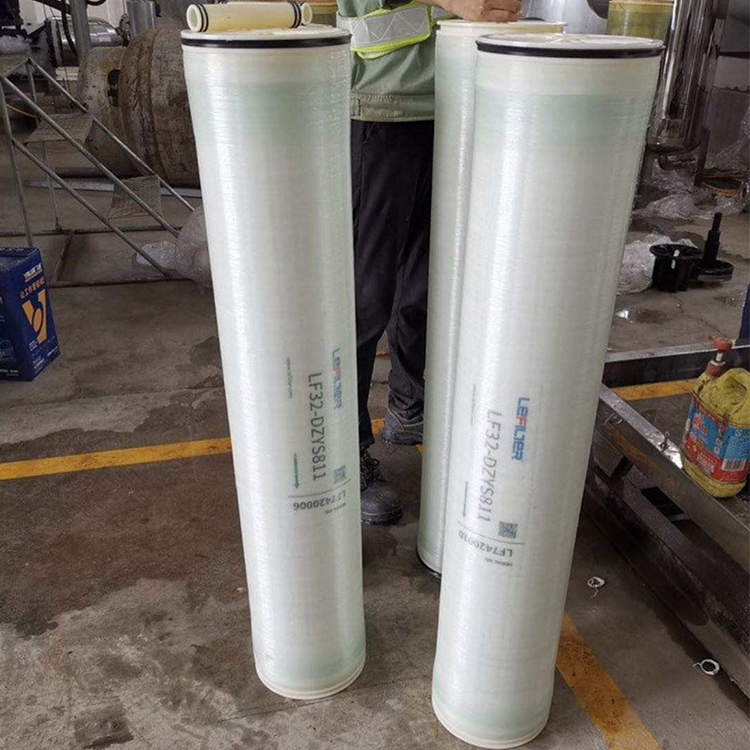
- Membrane Elements: RO membranes are often assembled into elements or modules, which consist of one or multiple membrane sheets wound around a central tube. This spiral-wound configuration maximizes the surface area for filtration while maintaining a compact design.
- End Caps and Seals: These components ensure a secure fit within the RO housing and prevent leaks, maintaining the efficiency of the filtration process.
Technical Specifications
RO membranes come with a range of technical specifications to meet diverse application needs. Key specifications include:
- Membrane Type:
- Thin-Film Composite (TFC): Known for high rejection rates and durability.
- Cellulose Acetate: Offers good performance but with lower chemical resistance.
- Rejection Rate:
- Typically, RO membranes can remove up to 99% of dissolved salts, heavy metals, and other contaminants, depending on the feed water quality and operating conditions.
- Flow Rate:
- The flow rate of RO membranes varies depending on their size and design. Standard residential membranes can produce 50-100 gallons per day (GPD), while industrial membranes can handle several thousand GPD.
- Operating Pressure:
- Residential RO systems typically operate at pressures ranging from 40 to 100 psi. Industrial systems may require higher pressures, up to 800 psi, to achieve optimal performance.
- Temperature Range:
- RO membranes are designed to operate within a specific temperature range, usually between 40°F and 113°F (4°C to 45°C), to maintain their integrity and performance.
- pH Range:
- The pH tolerance of RO membranes typically ranges from 2 to 11, allowing them to handle various water chemistries.
Application Fields
RO membranes are versatile and used across numerous industries due to their efficiency and reliability. Here are some common application fields:
Residential Water Purification
RO membranes are widely used in household water filtration systems to provide clean, safe drinking water. They remove contaminants such as chlorine, lead, nitrates, and other harmful substances, ensuring the health and safety of families.
Industrial Water Treatment
In industrial settings, RO membranes are used to purify process water, boiler feed water, and cooling tower water. They help in reducing scaling, corrosion, and fouling, thereby extending the lifespan of equipment and improving operational efficiency.
Desalination
RO membranes play a crucial role in desalination plants, converting seawater into potable water. This is particularly important in regions with limited freshwater resources, providing a sustainable solution to water scarcity.
Food and Beverage
The food and beverage industry uses RO membranes to ensure the purity and quality of water used in production processes. This is essential for maintaining product consistency and complying with health and safety regulations.
Pharmaceuticals
In pharmaceutical manufacturing, RO membranes are used to produce high-purity water required for drug formulation and other critical processes. They ensure that the water meets stringent quality standards, free from contaminants that could affect product efficacy.
Conclusion
RO membranes are a cornerstone of modern water purification technology, offering unparalleled efficiency and reliability in removing contaminan.