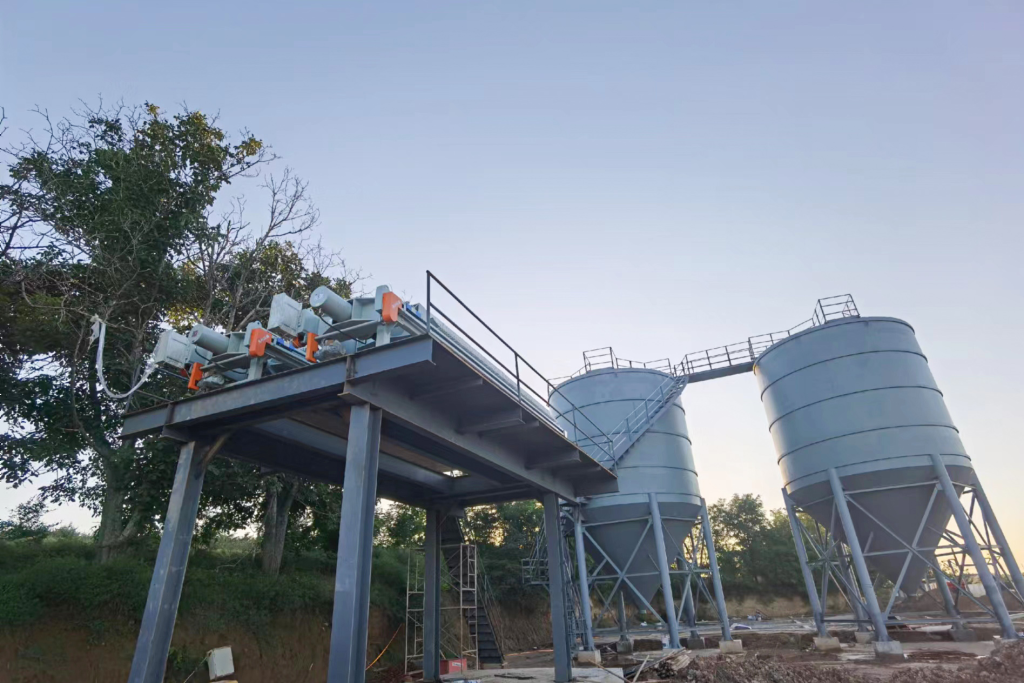
The difference between sand filter and activated carbon filter
- Differences in filtration principles
sand filter
Sand filters are mainly based on physical filtration principles. The core filter material is quartz sand, and there are certain pores between quartz sand particles. When water containing impurities passes through the sand filter, larger suspended particles, such as sand, rust, algae, etc., will be intercepted on the surface of the sand layer or in the sand layer because their particle size is larger than the pores between the quartz sand particles. in the pores inside. This interception function is similar to a sieve, blocking out large particles of impurities.
At the same time, there is also a certain degree of precipitation during the sand filtration process. Because the water flow slows down when passing through the sand layer, some denser particles will settle in the sand layer under the action of gravity. Moreover, the surface of quartz sand has a certain charge, which can also adsorb some charged colloidal particles to further remove impurities in the water.
For example, in the pretreatment stage of a water plant, raw water first passes through a sand filter, and a large amount of sediment and suspended solids are removed, significantly reducing the turbidity of the water, laying the foundation for subsequent in-depth treatment.
activated carbon filter
The working principle of activated carbon filter is mainly adsorption. Activated carbon has a highly developed pore structure with pore sizes ranging from micropores (less than 2nm), mesopores (2 – 50nm) to macropores (greater than 50nm). This special structure gives activated carbon a huge specific surface area, providing a large number of active sites for adsorption.
When water passes through the activated carbon filter, organic matter, residual chlorine, odor substances and some heavy metal ions in the water will be adsorbed in the pores of the activated carbon. For the adsorption of organic matter, it is mainly through intermolecular forces such as van der Waals forces. For example, dissolved organic compounds in water, such as humic acid, pesticide residues, etc., will be adsorbed by activated carbon.
For the removal of residual chlorine, some reducing functional groups on the surface of activated carbon can chemically react with chlorine and reduce it to chlorine ions, thereby eliminating residual chlorine in the water. In drinking water treatment, activated carbon filters can effectively improve the taste and smell of water and remove harmful substances in the water.
- Differences in filter material characteristics
sand filter
The filter material of sand filter is usually quartz sand, which has the characteristics of high hardness and good chemical stability. The main component of quartz sand is silica (SiO₂), and its hardness is about 7 (Mohs hardness), which makes it difficult to be worn and broken during the long-term filtration process, and can maintain good particle shape and pore structure.
The density of quartz sand is relatively high, generally around 2.6 – 2.7g/cm³, which prevents it from being easily washed away by water flow during backwashing. Its color is usually white or colorless and transparent, and no harmful substances will be released into the water during the filtration process.
Different specifications of quartz sand are used for different filtration requirements. For example, coarse sand (larger particle size) can be used for preliminary filtration to intercept larger particles; fine sand (smaller particle size) is used for higher water quality requirements. Fine filtration to remove smaller suspended particles.
activated carbon filter
Activated carbon raw materials come from a wide range of sources, including wood, coconut shells, coal, etc. Coconut shell activated carbon has high strength and adsorption performance, and its pore structure is more developed. Coal-based activated carbon has a relatively low cost and a large output.
The specific surface area of activated carbon is very large. For example, the specific surface area of high-quality coconut shell activated carbon can reach more than 1000 – 1500m²/g. Its appearance is generally black powder or granular. The particle sizes of granular activated carbon vary, and the common sizes are about 1-5mm, which is convenient for filling in filters.
However, the mechanical strength of activated carbon is lower than that of quartz sand, and it is easily broken during the impact and backwash of water flow, producing powder. If these powders enter the water, they will affect the water quality, so you need to pay attention during use and maintenance.
- Comparison of filtering effects
sand filter
Sand filters mainly have a good removal effect on suspended solids in water. It can effectively reduce the turbidity of water, and the removal rate can reach more than 90% for particle impurities whose particle size is larger than the pores of the sand layer. For example, when treating surface water containing large amounts of sediment, sand filters can reduce the sediment content in the water from hundreds of mg/L to tens of mg/L or even lower.
However, sand filters have limited ability to remove dissolved organic matter, residual chlorine and odor substances from water. For example, for chemical oxygen demand (COD) in water, if it is mainly caused by dissolved organic matter, a sand filter may only remove about 10% – 30%.
activated carbon filter
Activated carbon filters are excellent at removing organic matter, residual chlorine, and odors. For small molecular organic compounds in water, such as benzene, toluene and other volatile organic compounds, the adsorption removal rate of activated carbon can reach 80% – 95%. For residual chlorine in the water, the removal rate can reach more than 95%, which can effectively improve the taste of the water and make the water chlorine-free.
However, activated carbon filters are not as effective at removing large particles of suspended solids as sand filters. If the water contains a large amount of large particle impurities such as sediment, these impurities may quickly block the pores of the activated carbon and reduce the adsorption efficiency of the activated carbon. Therefore, in practical applications, activated carbon filters usually need to be used in conjunction with pretreatment equipment such as sand filters.
- Differences in backwashing process
sand filter
The backwashing of the sand filter is mainly to remove impurities trapped in the sand layer during the filtration process. During backwashing, the impurities in the sand layer are washed out through the reverse flow of water. Due to the high hardness of quartz sand, the intensity of backwash can be relatively large.
The frequency of backwashing is generally determined based on the quality of the incoming water and the flow rate of the filter. If the impurity content of the incoming water is high and the filtration flow rate is large, the frequency of backwashing needs to be increased accordingly. Typically, sand filter backwash cycles can range from hours to days.
During the backwashing process, care needs to be taken to prevent the sand layer from being disrupted and to maintain the flatness and pore structure of the sand layer. If the sand layer is disturbed, the filtering effect may be reduced and a short circuit may occur, that is, water flows out of the filter without being fully filtered.
activated carbon filter
The purpose of backwashing the activated carbon filter is to restore the adsorption capacity of the activated carbon. Since the mechanical strength of activated carbon is low, the intensity of backwashing should be moderate to avoid breakage of activated carbon particles. The water flow rate of backwash is generally lower than that of sand filter.
Backwashing of activated carbon filters also needs to consider the adsorption saturation of activated carbon. When the activated carbon is saturated with adsorption, it is difficult to restore its adsorption performance even if backwashing is performed. At this time, the activated carbon needs to be replaced. The backwash cycle is generally longer than that of a sand filter and may range from days to weeks, depending on the incoming water quality and the adsorption capacity of the activated carbon.
- Differences in application scenarios
sand filter
Sand filters are widely used in the pretreatment stage of various water treatments. In water plants, it is the first filtration process, used to remove large particle impurities such as sediment and suspended solids in raw water, providing a better water quality foundation for subsequent coagulation, sedimentation, disinfection and other processes.
In industrial circulating cooling water systems, sand filters are used to remove impurities in the cooling water to prevent impurities from depositing in pipes and equipment and affecting heat exchange efficiency. In swimming pool water treatment, sand filters are also used to filter impurities in the water and keep the swimming pool water clean.
activated carbon filter
Activated carbon filters are mainly used for advanced treatment of drinking water to remove residual chlorine, organic matter and odors in the water, and improve the quality of drinking water. In the food and beverage industry, it is used to treat process water and ensure the taste and quality of products.
In the field of sewage treatment, activated carbon filters are used for in-depth treatment and reuse of sewage to remove refractory organic matter and heavy metal ions in sewage, so that the treated sewage meets reuse standards or discharge standards.