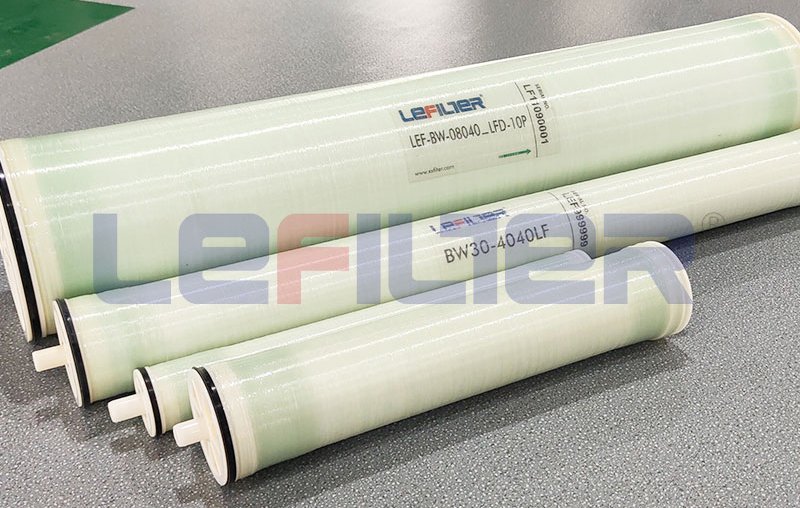
1. Definition and core technology of anti-pollution reverse osmosis membrane
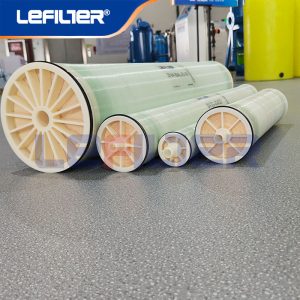
Anti-pollution reverse osmosis membrane is a membrane separation technology optimized for complex water quality environment. Its core technologies include:
- Material innovation
– Use PES, modified polyamide and other materials to enhance chemical stability and anti-pollution.
– The membrane surface is electrically neutral to reduce the adsorption of charged pollutants. - Structural optimization
– Wide flow channel design: Increase the width of the water flow channel to reduce the risk of pollutant accumulation.
– Spiral winding structure: LEFILTER membrane disperses water flow impact through a uniform support layer to reduce membrane surface pollution. - Surface treatment technology
– Inhibit microbial attachment by reducing the roughness of the membrane surface.
2. Core advantages and performance
- 1. Anti-pollution ability
– Maintain a stable desalination rate (>99%) in water sources containing high concentrations of organic matter, colloids or biological pollution.
– Outstanding anti-biological pollution performance, reducing the probability of bacterial adsorption by 30%-50%. - Convenience of cleaning and maintenance
– Supports a wide pH cleaning range (pH1-12), adapts to strong acid/alkali cleaning agents, and has high recovery efficiency.
– The frequency of chemical cleaning is reduced by 50% compared with ordinary membranes, and the operating cost is reduced. - Economic efficiency and lifespan
– The lifespan can reach 5-7 years (ordinary membranes are 3-5 years).
– Water production is increased by 20%-30%, reducing unit water treatment energy consumption.
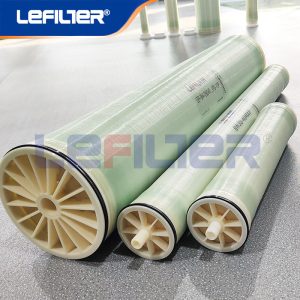
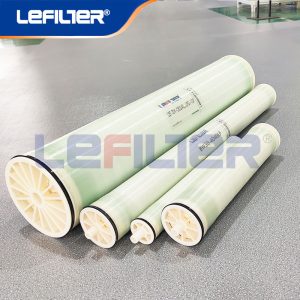
3. Main application areas
- Industrial water treatment
– Reuse of high-salt wastewater: Treat wastewater from petrochemical and metallurgical industries to achieve 0 emission goals.
– Pure water preparation: For high-purity water production in the industries to ensure equipment anti-scaling and product safety. - Municipal and environmental protection
– Seawater desalination: Anti-pollution membrane has a desalination rate of >99.5% in seawater desalination. Waste heat recovery technology is used to reduce energy consumption.
– Wastewater resource utilization: Treat municipal sewage and slightly polluted surface water to meet recycled water standards. - Food and medical
– Beverage water purification, dairy product filtration.
– Medical pure water system to ensure sterile water quality.
4. Globalization and customization
– Domestic membranes are accelerating to replace imports, reducing costs by 20%-30%.
– Customized membrane components for different water qualities.
Through technological iteration and scenario adaptation, anti-pollution reverse osmosis membranes be a key solution in water treatment.