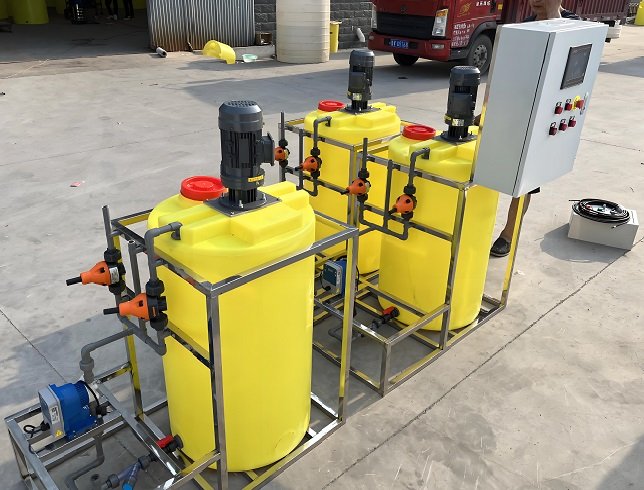
Product Introduction
An automatic chemical dosing device is a sophisticated industrial system designed to deliver precise, automated injection of chemicals into fluid streams for processes like water treatment, wastewater management, and industrial manufacturing. Operating on the principle of closed-loop control and metered delivery, the device uses sensors, controllers, and actuators to monitor process parameters (e.g., flow rate, pH, turbidity) and adjust chemical dosage in real time. This eliminates manual errors, ensures regulatory compliance, and optimizes chemical usage, making it indispensable in scenarios where accurate chemical application is critical for process efficiency and environmental safety.
Working Principle
- Sensing and Data Acquisition
The system integrates multiple sensors to monitor the target fluid:- Flow Meters: Measure water or process fluid flow rates to determine baseline dosage needs.
- Analytical Sensors: Detect parameters like pH, chlorine residual, or total dissolved solids (TDS), sending real-time data to the controller.
- Level Sensors: Monitor chemical storage tank levels to trigger refill alerts.
- Control Logic and Dosage Calculation
A programmable logic controller (PLC) or microprocessor processes sensor data and executes pre-set algorithms:- Proportional Dosing: Dosage is proportional to flow rate (e.g., 10 ppm of flocculant per cubic meter of water).
- Feedback Control: Adjusts dosage based on analytical sensor readings (e.g., increasing acid injection when pH exceeds setpoint).
- Timer-Based Dosing: Schedules regular injections for consistent chemical treatment in stable processes.
- Actuation and Chemical Delivery
The system uses metering pumps or peristaltic pumps to deliver chemicals:- Positive Displacement Pumps: Ensure accurate flow rates, even with viscous chemicals.
- Variable Frequency Drives (VFDs): Adjust pump speed in real time based on control signals.
- Mixing Nozzles: Disperse chemicals uniformly into the fluid stream to maximize reaction efficiency.
Structural Design and Components
- Chemical Storage System
- Tanks: Made of HDPE, stainless steel, or fiberglass, with capacities from 50L to 10,000L, equipped with:
- Anti-corrosion linings for aggressive chemicals (e.g., sulfuric acid).
- Venting systems and overflow protection.
- Agitators: Keep suspended chemicals (e.g., polymer flocculants) homogeneous.
- Tanks: Made of HDPE, stainless steel, or fiberglass, with capacities from 50L to 10,000L, equipped with:
- Metering and Pumping Unit
- Metering Pumps: Diaphragm or piston types with flow rates from 0.1 L/h to 1,000 L/h, featuring:
- Electronic stroke adjustment for precise flow control.
- Pressure relief valves to prevent over-pressurization.
- Flow Meters: Magnetic, ultrasonic, or paddlewheel types to monitor chemical flow.
- Metering Pumps: Diaphragm or piston types with flow rates from 0.1 L/h to 1,000 L/h, featuring:
- Control and Monitoring System
- PLC/HMI Panel: Displays real-time data, allows manual override, and stores historical records.
- Communication Interfaces: Modbus, Ethernet, or wireless protocols for integration with plant SCADA systems.
- Alarm Systems: Audio-visual alerts for low chemical levels, pump failures, or dosage deviations.
- Safety and Protection Features
- Leak Detection Sensors: Trigger alarms in case of chemical spills.
- Emergency Shut-off Valves: Isolate the system in case of malfunctions.
- Backflow Prevention Devices: Prevent chemical contamination of the water supply.
Application Scenarios
- Water Treatment Plants
- Coagulation and Flocculation: Automatically dose alum or polyaluminum chloride (PAC) to remove suspended solids.
- Disinfection: Inject chlorine or sodium hypochlorite to meet drinking water standards (e.g., 0.5–1.0 mg/L residual chlorine).
- pH Adjustment: Add caustic soda or sulfuric acid to maintain pH between 6.5–8.5 for distribution systems.
- Wastewater Treatment
- Biological Nutrient Removal: Dose methanol or acetate as carbon sources for denitrification.
- Sludge Conditioning: Inject polymer flocculants to improve dewatering efficiency in sludge thickeners.
- Odor Control: Add hydrogen peroxide or sodium permanganate to neutralize sulfides in sewer systems.
- Industrial Processes
- Cooling Tower Treatment: Dose scale inhibitors (e.g., polyphosphates) to prevent calcium carbonate deposition.
- Boiler Water Treatment: Inject oxygen scavengers (e.g., sodium sulfite) to reduce corrosion.
- Food & Beverage: Add citric acid for pH control in beverage production or chlorine for equipment sanitization.
Technical Advantages
- Precision and Consistency
- Dosage accuracy within ±2% of setpoint, far exceeding manual dosing (±10–15% error).
- Maintains stable chemical concentrations, critical for processes like reverse osmosis pre-treatment.
- Energy and Cost Savings
- Reduces chemical usage by 15–30% through real-time adjustment, saving $10,000–$50,000 annually for medium-sized plants.
- Low-power components (e.g., VFDs) consume 20–30% less electricity than traditional systems.
- Remote Monitoring and Automation
- Enables remote access via mobile apps or web portals for parameter adjustment and fault diagnosis.
- Integrates with IoT platforms to predict maintenance needs (e.g., pump wear based on runtime data).
- Safety and Compliance
- Minimizes operator exposure to hazardous chemicals (e.g., hydrogen sulfide).
- Generates detailed dosing records for regulatory audits (e.g., EPA reporting requirements).
Maintenance and Operation Considerations
- Routine Inspections
- Monthly: Check chemical tank levels, inspect pump seals for leaks, and calibrate sensors (e.g., pH probes).
- Quarterly: Verify flow meter accuracy using volumetric tests, clean mixing nozzles to prevent clogging.
- Pump and Valve Maintenance
- Diaphragm Pumps: Replace diaphragms every 6–12 months or after 8,000 hours of operation.
- Check Valves: Clean or replace if stuck, ensuring unidirectional flow to prevent backflow.
- Software and Calibration
- Annual: Update controller firmware, re-calibrate analytical sensors using standard solutions.
- Data Logging: Review historical dosing trends to optimize setpoints (e.g., reduce dosage during low-flow periods).
- Safety System Testing
- Semi-Annual: Test leak detection sensors and emergency shut-off functions to ensure compliance with safety standards.
Conclusion
Automatic chemical dosing devices have revolutionized industrial chemical application by combining precision control with operational efficiency. Their ability to adapt to real-time process changes, reduce chemical waste, and enhance safety makes them essential in water/wastewater treatment, manufacturing, and environmental protection. As Industry 4.0 technologies advance, future systems will integrate AI-driven predictive dosing, self-diagnostic capabilities, and seamless cloud connectivity, further optimizing resource utilization and supporting sustainable industrial practices.
If you are interested in this product or have any questions, please feel free to contact us at any time.