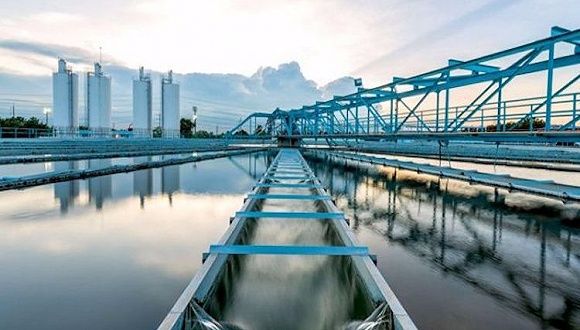
The basic principle of Industrial Wastewater Treatment And Solution
1. Prioritize the use of non-toxic production processes to replace or reform backward production processes, and try to eliminate or reduce the generation of toxic and harmful wastewater during the production process.
2. In the process of using toxic raw materials and producing toxic intermediates and products, strict operation and supervision should be carried out to eliminate dripping, reduce losses, and use reasonable processes and equipment as much as possible.
3. Wastewater containing highly toxic substances, such as some heavy metals, radioactive substances, high concentrations of phenol, and cyanide, should be separated from other wastewater to facilitate the processing and recovery of useful substances.
4. Wastewater with large flow rate and light pollution should be properly treated and recycled, and should not be discharged into sewers to avoid increasing the load of urban sewers and urban sewage treatment.
5. Organic wastewater similar to urban sewage, such as food processing wastewater, sugar manufacturing wastewater, and papermaking wastewater, can be discharged into the urban sewage system for treatment.
6. Some biodegradable toxic wastewater, such as phenol and cyanide wastewater, should be treated first and then discharged into urban sewers according to the allowed discharge standards, and then further biochemically treated.
7. Toxic wastewater containing difficult to biodegrade should be treated separately and should not be discharged into urban sewers. The development trend of industrial wastewater treatment is to recycle wastewater and pollutants as useful resources or implement closed-circuit circulation.
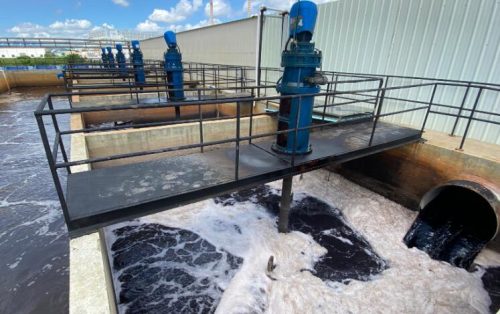
Sewage treatment according to its role can be divided into physical, biological and chemical methods.
1, physical method: the main use of physical separation of sewage in the non-soluble substances, in the treatment process does not change the chemical nature. Commonly used gravity separation, centrifugal separation, reverse osmosis, air flotation. Physical method of treatment structures are simpler, more economical, used for village and town water capacity, self-purification ability, sewage treatment is not required to a high degree of the case.
2, biological method: the use of microbial metabolism, the sewage is dissolved or colloidal state of organic matter decomposition and oxidation of stable inorganic substances, so that sewage is purified. Commonly used are activated sludge and biofilm method. Biological method of treatment than the physical method to a higher degree.
3, chemical method: is the use of chemical reactions to treat or recover sewage dissolved substances or colloidal substances of the method. Commonly used are coagulation, neutralization method, redox method, ion exchange method. Chemical treatment method is good, high cost, mostly used as a biochemical treatment of the effluent, for further treatment to improve the quality of the effluent.
Reaction formula:
Anode: Fe – 2e → Fe2+ E (Fe / Fe2+) = 0.44V
Cathode: 2H“ + 2e →H2 E (H” / H2) = 0.00V
When oxygen is present, the cathode reaction is as follows:
O2 + 4H﹢ + 4e → 2H2O E (O2) = 1.23V
O2 + 2H2O + 4e → 4OH- E(O2/OH-) = 0.41V
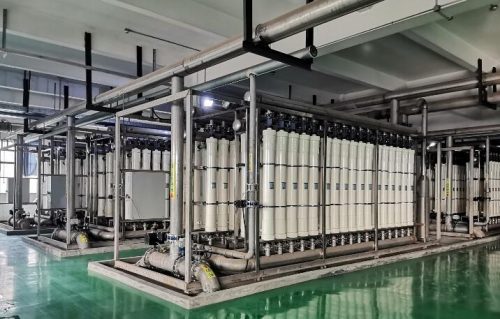
Sewage treatment can be divided into primary treatment, secondary treatment and tertiary treatment according to the degree of treatment.
Primary treatment is mainly to remove the suspended solids in the sewage, commonly used physical method. After primary treatment of wastewater BOD removal rate of only 20%, is still not suitable for discharge, but also must be secondary treatment.
The main task of secondary treatment is to substantially remove the colloidal and dissolved organic matter in the state of sewage, BOD removal rate of 80% to 90%. Generally after secondary treatment of sewage can meet the discharge standards, commonly used biofilm treatment method.
The purpose of tertiary treatment is to further remove some special pollutants, such as fluoride, phosphorus removal, etc., belongs to the depth of treatment, commonly used chemical method.
Sewage process selection requirements: the existing primary treatment process to strengthen the treatment effect of the transformation of the transformation should be based on the actual situation, make full use of the existing treatment facilities, the existing hospitals in the application of more septic tanks, contact tanks in the structure or mode of operation to transform, if necessary, additional part of the facilities, as far as possible to improve the treatment effect, in order to meet the discharge standards of hospital sewage treatment.
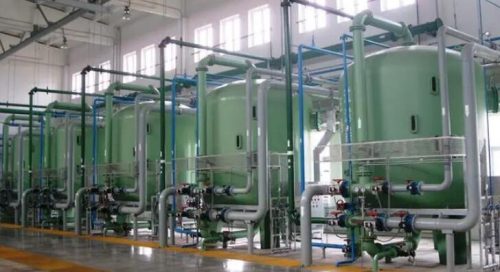
Industrial water treatment is an essential process in a number of industries, including manufacturing, energy production, and healthcare. The core purpose of this technology is to effectively remove impurities, pollutants, minerals, and other harmful components from industrial water or wastewater to meet the quality requirements of a particular industrial process or to ensure the reuse and safe discharge of water resources. With the increasing awareness of environmental protection and the strictness of relevant laws and regulations, industrial water treatment plays an extremely important role in maintaining ecological balance and promoting green and sustainable development.
In industrial activities, the use of water involves several processes such as cooling, heating, evaporation and washing. As a result, raw or natural water usually needs to undergo stringent treatment before it enters the industrial system to suit different process requirements. The main issues of water quality management during treatment include preventing equipment scaling, controlling corrosion, avoiding microbial growth and reducing pollutant discharge.
In practice, depending on the needs and application context of a particular industrial sector, the design of industrial water treatment systems often requires comprehensive consideration of the combination of different technologies and their economics, safety and sustainability. This requires water treatment engineers with interdisciplinary knowledge background and extensive practical experience to ensure that the water treatment system can be efficient, stable operation, while complying with relevant environmental norms and standards.
Nitrates are a common by-product of many industrial activities, particularly in fertilizer production, agricultural operations, combustion processes, and certain chemical and pharmaceutical manufacturing processes. Because nitrate is highly soluble and not easily removed by chemical means, its treatment has become a major challenge in industrial wastewater management. Excessive nitrate concentrations may not only lead to groundwater contamination and children’s health problems, but also trigger eutrophication of water bodies and weaken ecosystem stability.
Reverse osmosis is a type of filtration that uses a membrane small enough to allow water to pass through and block impurities or harmful compounds from it. RO can be used to produce purer water for anything from drinking water systems to industrial boilers. The ability to treat high concentrations of nitrate wastewater has shown high efficiency especially in the treatment of industrial wastewater with high salinity.
Related Products:
3M High Flow Filter
Pall High Flow Filter
Parker High Flow Filter