Introduction
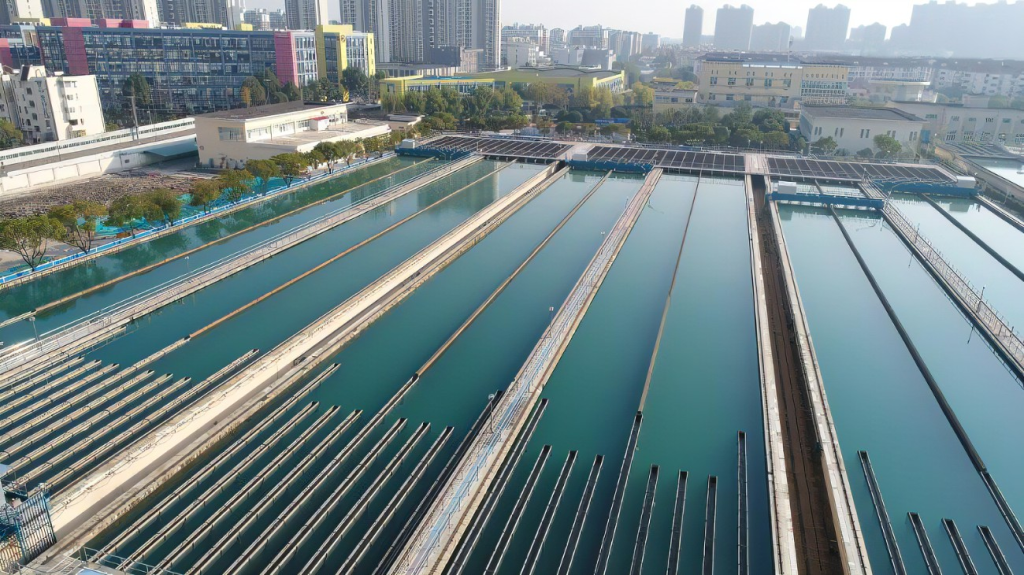
Reverse osmosis (RO) membrane technology is an efficient membrane separation technology, which is widely used in many fields such as seawater desalination, brackish water desalination, industrial pure water preparation, sewage treatment and reuse. The correct selection of RO membrane is crucial to ensure the efficient operation of the system, reduce costs and meet water quality requirements.
Factors to consider in RO membrane selection
(I) Water quality characteristics
Water source type
Surface water: Surface water usually contains more suspended solids, organic matter, microorganisms and soluble salts. If it is surface water such as rivers and lakes, its water quality varies greatly seasonally, and it may contain more silt and organic matter during the rainy season. In this case, the RO membrane needs to have good anti-pollution ability, be able to effectively remove various impurities and microorganisms, and prevent rapid clogging of the membrane.
Groundwater: Groundwater is relatively stable, but may contain higher concentrations of minerals such as calcium, magnesium, iron, manganese, etc. These minerals are easy to form scale on the surface of the RO membrane, affecting the performance of the membrane. Therefore, the selection of RO membranes for groundwater needs to consider its ability to remove hardness ions and heavy metal ions, as well as its anti-scaling performance.
Seawater: The salt content in seawater is extremely high, usually around 3.5%. RO membranes used for seawater desalination need to be able to withstand high-salinity influent water and have the characteristics of high desalination rate and high flux to reduce desalination costs.
Water quality indicators
Salinity: Select a suitable RO membrane according to the salinity of the influent water. For low-salinity brackish water (salinity is generally 1000-10000mg/L), a conventional low-pressure RO membrane can be selected; for high-salinity seawater (salinity is about 35000mg/L), a high-pressure seawater desalination RO membrane is required.
Organic matter content: If the organic matter content in the water is high, such as humic acid, fulvic acid, etc., it is necessary to select an RO membrane with good resistance to organic pollution. The surface of this type of membrane is usually specially treated, such as using a hydrophilic coating to reduce the adsorption of organic matter on the membrane surface.
Microbial indicators: The presence of microorganisms (bacteria, viruses, algae, etc.) in water can cause biological contamination to the RO membrane. The selected RO membrane should be able to effectively retain microorganisms and be easy to clean to restore the performance of the membrane.
(II) Water treatment volume requirements
Small applications
In homes or small commercial places, such as home drinking water preparation, small coffee shops or drinking water systems in offices, the water treatment volume is relatively small, generally ranging from tens of liters to hundreds of liters per hour. For this situation, a small RO membrane assembly can be selected, such as a rolled RO membrane filter element, which has a compact structure and is easy to install and maintain.
Medium-sized applications
The water supply system of medium-sized industrial enterprises and small communities may treat water volumes ranging from several cubic meters to tens of cubic meters per hour. It is necessary to select a medium-sized RO membrane system, which may consist of multiple membrane assemblies in parallel or series to meet the requirements of water treatment volume, while considering the system’s footprint and operating costs.
Large-scale applications
The water treatment of large municipal water supply and large industrial enterprises (such as power plants, petrochemical plants, etc.) may reach hundreds or even thousands of cubic meters per hour. In this case, a large RO membrane array is required, including multiple large RO membrane pressure vessels, and the system design should be optimized to improve the overall operating efficiency and reduce energy consumption and costs.
(III) Membrane material
Cellulose acetate membrane (CA membrane)
CA membrane is one of the RO membrane materials used in the early days. It has good hydrophilicity and has a good removal effect on certain low molecular weight organic matter. However, the chemical stability of CA membrane is relatively poor, it is easily corroded by acids and alkalis, and its performance will decrease at high temperatures. Its operating temperature is generally limited to 30-40°C, and it is mainly suitable for some small water treatment systems that do not have particularly high requirements for water quality and have relatively mild inlet water quality.
Polyamide membrane (PA membrane)
PA membrane is currently the most widely used RO membrane material. It has high desalination rate, high mechanical strength and good chemical stability. PA membrane has good retention capacity for various salts, organic matter and microorganisms, and can adapt to a wide pH range (generally 2 – 11) and high temperature (generally up to 45 – 50°C). However, PA membrane is easily damaged by oxidants (such as chlorine), so the influent needs to be dechlorinated when used.
(IV) Membrane module form
Rolled membrane module
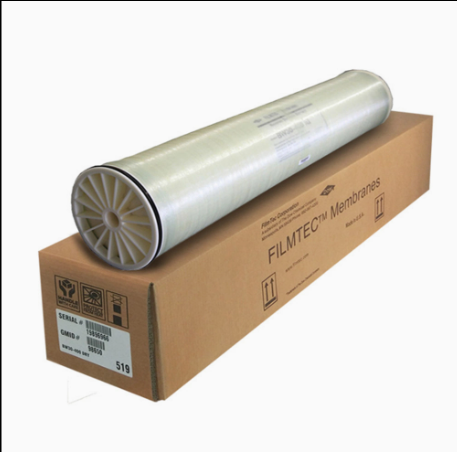
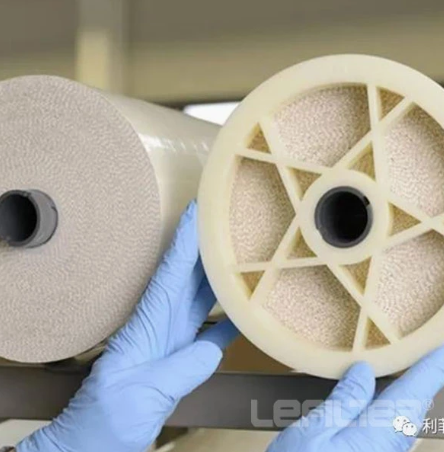
Rolled membrane module is the most common form of RO membrane module. It consists of a membrane sheet, a flow guide net and a central tube, etc., with a high membrane filling density and a large membrane area per unit volume, so it can provide a high water yield. The water flow channel of the rolled membrane module is relatively narrow, and concentration polarization is prone to occur, but this effect can be alleviated through reasonable system design (such as controlling the flow rate, increasing the inlet pressure, etc.). It is suitable for water treatment systems of various sizes, especially in large-scale industrial and municipal water supply treatment.
Hollow fiber membrane module
The membrane of the hollow fiber membrane module is in the shape of a hollow fiber and has a very high membrane filling density. Its advantages are compact structure, small footprint, and no support material is required due to the self-supporting effect of the fiber membrane. However, the cleaning of hollow fiber membrane components is relatively difficult. Once individual fiber membranes are damaged, the performance of the entire component may be affected. It is suitable for occasions with high water quality requirements, good inlet water quality and small water treatment volume, such as some high-end drinking water preparation systems.
Plate membrane components
The plate membrane component consists of a flat membrane and a spacer. Its advantages are easy membrane cleaning and easy membrane replacement. However, the membrane filling density of the plate membrane component is relatively low, and the water output per unit volume is small. Therefore, it is less used in large-scale water treatment systems. It is mainly suitable for small experimental devices or small water treatment projects with high flexibility requirements.
(V) Operating conditions
Pressure requirements
The operation of RO membranes requires a certain pressure drive. Different types of RO membranes and treatment objects require different operating pressures. For example, when low-pressure RO membranes are used to treat low-salinity brackish water, the operating pressure is generally 1-3MPa; while when high-pressure seawater desalination RO membranes treat seawater, the operating pressure may be as high as 5-8MPa. When selecting the model, it is necessary to determine the appropriate operating pressure range based on the inlet water quality, the performance parameters of the membrane components and the processing requirements. Too high a pressure will increase energy consumption and equipment costs, while too low a pressure may not achieve the expected desalination and filtration effects.
Temperature influence
Temperature has a significant effect on the performance of RO membranes. Generally speaking, the flux of RO membranes increases with increasing temperature because the viscosity of water decreases with increasing temperature. However, too high a temperature may affect the chemical stability and service life of the membrane. Different RO membrane materials have their own suitable temperature ranges, such as the CA membrane and PA membrane mentioned above. When selecting the model, the temperature characteristics of the inlet water should be considered. For water sources with large temperature changes, temperature adjustment measures may be required, or RO membranes with better temperature adaptability may be selected.
(VI) Cost factors
Membrane purchase cost
RO membranes of different types, brands and specifications vary greatly in price. Generally speaking, high-performance, special-purpose RO membranes (such as high-pressure RO membranes for seawater desalination) are relatively expensive, while some RO membranes used for small civilian applications are relatively cheap. On the premise of meeting the treatment requirements, it is necessary to comprehensively consider the purchase cost of the membrane and select a product with high cost performance.
Operating cost
Operating cost includes energy consumption, the use of chemical agents (such as antiscalants, cleaning agents, etc.), and the frequency of membrane replacement. RO membranes with high desalination rate and high flux may reduce energy consumption, but if they are expensive and the replacement frequency is high, the overall operating cost may increase. In addition, some RO membranes may require special chemical agents for maintenance, which will also increase the operating cost. When selecting, it is necessary to evaluate the operating costs of different membranes and select RO membranes with low long-term operating costs.
Selection steps
(I) Water quality analysis
First, conduct a comprehensive water quality analysis of the raw water, including determination of salinity, hardness, organic matter content, microbial indicators, pH value, temperature, etc. This will help determine the removal object of the RO membrane, the requirements for the membrane’s anti-pollution ability and chemical stability, and whether pretreatment is required.
(II) Determine the amount of water to be treated
Determine the amount of water to be treated by the RO membrane system based on the actual water demand or treatment scale. This will determine the number of membrane components and the scale of the system.
(III) Select membrane material and component form
Comprehensively consider factors such as water quality, water volume, and operating conditions to select the appropriate membrane material and component form. For example, if you are treating seawater and the water volume is large, you can choose a polyamide spiral high-pressure RO membrane component.
(IV) Determine operating conditions
According to the performance parameters of the membrane and the treatment requirements, determine the appropriate operating conditions such as operating pressure and temperature. At the same time, consider whether some auxiliary measures are needed, such as heating or cooling equipment to adjust the temperature, and adding a booster pump to meet the pressure requirements.
(V) Cost evaluation
Cost evaluation of different RO membrane selection schemes, including membrane purchase cost, installation cost, operating cost (energy consumption, reagent use, membrane replacement, etc.) and maintenance cost. Select the RO membrane selection scheme with the lowest cost and that meets the treatment requirements.
Conclusion
The selection of RO membranes is a complex process that requires comprehensive consideration of water quality characteristics, water volume requirements, membrane materials, membrane component form, operating conditions, and cost factors. Through scientific and reasonable selection steps, the RO membrane that best suits a specific application scenario can be selected, thereby ensuring the efficient and stable operation of the RO membrane system and meeting the water treatment needs of different fields.