Introduction
In the realm of water treatment and filtration, the multi-media filter stands as a reliable and efficient solution. It is a device that has been designed to handle a variety of filtration tasks with precision and effectiveness. This article will delve into the details of the multi-media filter, covering its product introduction, working principle, product composition, technical parameters, and application industries.
Product Introduction
The multi-media filter is a filtration system that is capable of removing a wide range of impurities from water. It is used to improve the quality of water by eliminating particles, sediments, and other contaminants. It is suitable for both industrial and residential applications where clean water is essential. This filter is known for its versatility and ability to handle different water qualities and flow rates.

Working Principle
The working principle of the multi-media filter is based on the principle of depth filtration. When water enters the filter, it passes through multiple layers of different filter media. These media have different porosities and particle sizes. The larger particles and sediments are initially trapped in the upper layers of the filter media, which are usually coarser. As the water continues to move deeper into the filter, the finer particles are captured by the more densely packed and finer filter media. This sequential filtration process ensures that a wide range of contaminants are effectively removed, resulting in clean and purified water on the other side of the filter.
Product Composition
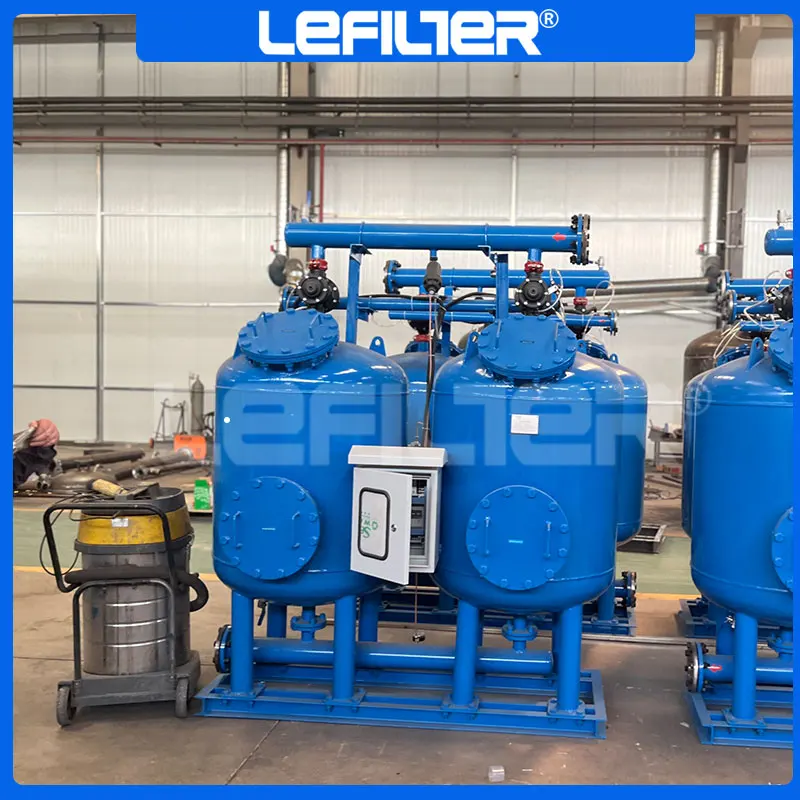
- Filter Tank: The filter tank is the outer shell that holds the filter media and provides a sealed environment for the filtration process. It is usually made of materials such as stainless steel or fiberglass, which are durable and resistant to corrosion. The tank is designed to withstand the pressure of the water flow and the weight of the filter media.
- Filter Media: The filter media is the core component of the multi-media filter. It typically consists of multiple layers of different materials. Commonly used filter media include sand, gravel, anthracite coal, and activated carbon. The sand and gravel provide initial mechanical filtration, trapping larger particles. Anthracite coal has a higher density and can remove finer particles and some impurities through adsorption. Activated carbon is excellent for adsorbing organic compounds, odors, and colors from the water.
- Inlet and Outlet Pipes: The inlet pipe is used to introduce the water to be filtered into the filter tank, while the outlet pipe allows the filtered water to exit. These pipes are designed to ensure a smooth and even flow of water through the filter.
- Valves: Valves are used to control the flow of water into and out of the filter, as well as to regulate the backwashing process. Backwashing is necessary to clean the filter media periodically and maintain its filtration efficiency.
Technical Specifications
- Filtration Rate: The filtration rate is the speed at which water can pass through the filter. It is measured in gallons per minute (GPM) or cubic meters per hour (m³/h). The filtration rate depends on the size of the filter, the type of filter media, and the quality of the water being filtered. A typical filtration rate for a multi-media filter can range from 5 to 20 GPM or 1 to 5 m³/h.
- Pressure Drop: The pressure drop is the difference in pressure between the inlet and outlet of the filter. It is an important indicator of the filter’s performance. As the filter media accumulates contaminants, the pressure drop increases. A significant increase in pressure drop indicates that the filter needs to be backwashed. The acceptable pressure drop range usually varies from 5 to 15 psi.
- Filter Bed Depth: The depth of the filter bed is the height of the layer of filter media. A sufficient filter bed depth is essential to ensure effective filtration. The typical filter bed depth can range from 18 to 36 inches.
- Backwashing Flow Rate: During the backwashing process, a certain flow rate of water is required to flush out the accumulated contaminants. The backwashing flow rate is usually higher than the filtration rate and can range from 10 to 20 GPM or 2 to 5 m³/h.
- Backwashing Duration: The backwashing duration is the time period for which the backwashing process is carried out. It typically lasts from 5 to 10 minutes to ensure thorough cleaning of the filter media.
Application Fields
- Water Treatment Plants: Multi-media filters are widely used in municipal and industrial water treatment plants. They are used in the pretreatment stage to remove sediments and impurities from raw water before further treatment processes such as reverse osmosis or disinfection.
- Industrial Processes: In various industries such as manufacturing, chemical, and power generation, clean water is required for processes such as cooling, boiler feed, and product manufacturing. Multi-media filters are used to ensure the quality of the water used in these processes, preventing equipment damage and improving product quality.
- Irrigation Systems: In agricultural irrigation, multi-media filters are used to remove dirt, sand, and other particles from the water to prevent clogging of the irrigation nozzles and ensure even distribution of water.
- Aquaculture: In fish farming and aquaculture, clean water is crucial for the health and growth of the fish. Multi-media filters are used to filter the water in fish tanks and ponds, removing impurities and maintaining a clean and healthy environment for the fish.
- Residential Water Treatment: Multi-media filters can also be used in residential water treatment systems to improve the quality of drinking water and protect household appliances such as water heaters and washing machines from sediment buildup.
Conclusion
In conclusion, the multi-media filter is a versatile and efficient filtration solution that plays a vital role in ensuring clean and safe water in various applications. Its unique working principle and composition, along with its specific technical parameters, make it suitable for a wide range of industries. By understanding its capabilities and applications, we can better utilize this technology to meet our water treatment needs and improve the quality of water in different settings. Whether it is for industrial processes, agricultural use, or residential applications, the multi-media filter continues to be an important tool in the field of water treatment.