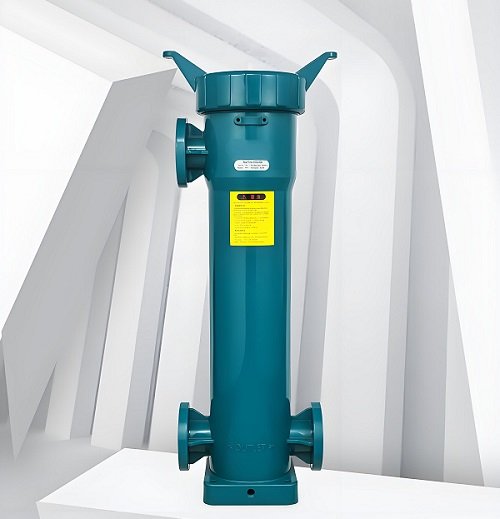
Product Introduction
The one-piece moulded bag filter stands as a testament to filtration innovation, combining a seamless housing with a high-performance filter bag to deliver consistent solid-liquid separation. Its monolithic moulded structure eliminates the vulnerabilities of traditional multi-component designs, ensuring leak-proof operation and enhanced durability. Designed to accommodate filter bags with micron ratings from 0.5 to 200, this filter efficiently removes suspended solids, colloids, and particulates from various fluids, making it an indispensable solution in industries such as water treatment, oil & gas, and pharmaceutical manufacturing.
Structural Design and Key Components
- Monolithic Housing Benefits
- Material Options:
- Polypropylene (PP): Corrosion-resistant for acidic/alkaline fluids (pH 1–14), operating at temperatures up to 80°C.
- Stainless Steel (316L): Suitable for high-pressure (up to 1.6 MPa) and high-temperature (up to 150°C) applications, ideal for harsh industrial environments.
- Moulding Precision: Injection-moulded PP housings feature uniform wall thickness, while stainless steel housings use seamless welding to eliminate leak paths, ensuring structural integrity.
- Material Options:
- Integrated Filtration Elements
- Support Basket: A perforated stainless steel basket inside the housing supports the filter bag, preventing collapse under pressure and ensuring consistent flow.
- Bag Sealing Mechanism: A top collar with a food-grade gasket creates a tight seal, preventing unfiltered fluid bypass. In sanitary applications, the design meets 3-A Sanitary Standards.
- Intelligent Monitoring & Safety Features
- Optional Add-Ons:
- Pressure transmitters for remote monitoring via PLC or SCADA systems.
- Turbidity sensors to alert when filtrate clarity falls below setpoints.
- Safety Enhancements: Explosion-proof housings (ATEX-certified) for flammable fluids, with grounding studs to prevent static buildup.
- Optional Add-Ons:
Application Scenarios
- Streamlined Filtration Process
The one-piece design optimizes fluid dynamics for efficient separation:- Fluid Inlet & Distribution: Contaminated fluid enters through the side or top inlet, guided by the moulded housing to evenly distribute across the filter bag.
- Particle Interception: As fluid passes through the filter bag, solids are retained on the inner or outer surface (depending on flow direction), while clarified fluid exits through the outlet. The filtration efficiency is determined by the bag’s micron rating and construction.
- Pressure Differential Control: A built-in pressure gauge monitors the drop across the bag. When pressure reaches 0.1–0.3 MPa (indicating clogging), the bag is replaced to maintain optimal flow and filtration efficiency.
- Advanced Bag Technology
- Bag Materials & Construction: Manufactured from polyester, polypropylene, or PTFE, with moulded seams (no stitching) to prevent bypass. Key types include:
- Depth Filtration Bags: Layered media for high dirt-holding capacity, suitable for removing a wide range of particle sizes.
- Surface Filtration Bags: Membrane-coated for precise particle retention, ideal for applications requiring consistent filtrate clarity.
- Flow Uniformity: The one-piece housing ensures laminar flow through the bag, maximizing the use of filtration area and minimizing dead zones.
- Bag Materials & Construction: Manufactured from polyester, polypropylene, or PTFE, with moulded seams (no stitching) to prevent bypass. Key types include:
- Efficient Maintenance Protocol
- Quick Bag Replacement: The hinged cover or clamp ring design allows filter bag replacement in under 5 minutes without tools. A sanitary seal ensures minimal downtime and prevents cross-contamination.
- Drip Prevention: The housing’s inclined bottom and drain port minimize residual fluid spillage during maintenance, enhancing safety and cleanliness.
Technical Advantages
- Leakage Reduction
- The one-piece design eliminates 90% of potential leak points compared to flanged filters, validated by helium leak tests showing <10⁻⁹ mbar·L/s leakage rates.
- Superior Dirt-Holding Capacity
- Depth-loaded bags can retain up to 30 kg/m² of solids, outperforming cartridge filters by 4–6 times in cumulative dirt retention, reducing replacement frequency.
- Cost-Effective Operation
- Bag replacement costs are 40–60% lower than cartridge filters, with a case study in a beverage plant demonstrating $150,000 annual savings in consumables.
- Space and Weight Optimization
- The compact design occupies 50% less floor space than multi-housing systems, with PP housings weighing 70% less than equivalent stainless steel traditional filters.
Application Scenarios
- Water Treatment & Recycling
- Reverse Osmosis (RO) Pre-Filtration: 5-micron PTFE bags remove silt and colloids from feed water, protecting RO membranes from fouling and extending their lifespan by 40%.
- Industrial Wastewater Treatment: Polypropylene bags with 20-micron rating remove oil and fine particulates from manufacturing wastewater, enabling 80% water reuse in cooling systems.
- Oil & Gas Processing
- Produced Water Treatment: In oilfields, 10-micron polyester bags remove suspended solids and oil droplets from produced water, meeting reinjection standards and reducing disposal costs.
- Lubricant Filtration: PTFE-lined bags filter contaminants from hydraulic oils in offshore platforms, extending equipment life and reducing maintenance by 30%.
- Pharmaceutical Manufacturing
- Process Fluid Filtration: 0.5-micron PTFE bags remove particulates from drug solutions, ensuring product purity meets USP/NF standards.
- Clean-in-Place (CIP) Systems: Stainless steel housings with smooth interiors facilitate easy sanitization, meeting GMP requirements for pharmaceutical production.
Technical Advantages
- Leakage Prevention
- The one-piece design reduces leak points by 75% compared to flanged filters, validated by pressure decay tests showing <0.5% pressure loss over 30 minutes.
- High Dirt-Holding Capacity
- Depth-loaded bags can retain up to 25 kg/m² of solids, outperforming traditional cartridge filters by 3–5 times in cumulative dirt retention.
- Cost-Effective Operation
- Bag replacement costs are 30–50% lower than cartridge filters, with a case study in a chemical plant showing $90,000 annual savings in consumables.
- Space Optimization
- The compact design occupies 40% less floor space than multi-housing systems, making it ideal for retrofitting in limited industrial areas.
Maintenance and Operation Guidelines
- Routine Inspections
- Daily: Monitor pressure gauges and replace bags when differential pressure exceeds 0.2 MPa.
- Monthly: Inspect housing for corrosion (stainless steel) or stress cracks (PP), especially in high-temperature applications.
- Bag Replacement Best Practices
- Hygienic Procedures: In food/pharma applications, disinfect the housing interior with sterile water before installing a new bag.
- Static Control: Use anti-static gloves when handling PTFE bags to prevent membrane damage from electrostatic discharge.
- Performance Optimization
- Flow Rate Management: Maintain fluid velocity below 1.5 m/s to prevent bag damage and ensure even filtration.
- Pre-Filtration Strategy: Install a 50-micron pre-filter in highly contaminated streams to extend main bag life by 2–3 times.
Conclusion
The one-piece moulded bag filter embodies the pinnacle of filtration technology, combining structural integrity with operational efficiency to address critical industry needs. Its seamless design eliminates traditional pain points like leakage and complex maintenance, making it a reliable choice for processes where fluid purity and system uptime are non-negotiable. As materials science and industrial automation advance, future iterations may integrate self-cleaning membranes and IoT-enabled predictive maintenance, further enhancing its role in smart manufacturing and sustainable resource management. This technology not only optimizes current industrial workflows but also sets a standard for efficient, eco-friendly filtration—reducing waste, minimizing energy consumption, and supporting the circular economy in the era of Industry 4.0.
If you are interested in this product or have any questions, please feel free to contact us at any time.