introduction
introduction
In today’s water treatment field, reverse osmosis (RO) membrane technology has become one of the key core technologies due to its excellent separation performance and wide range of applications. RO membranes can efficiently remove various impurities from water, providing high-quality purified water for people. They play an irreplaceable role in fields such as drinking water treatment, industrial water treatment, and seawater desalination. This article will provide an in-depth introduction to the working principle, characteristics, types, application fields, and future development trends of RO membranes.

RO membrane technical parameters:
Filtration accuracy: The pore size of the RO membrane is about 0.0001 microns, which can filter out impurities such as bacteria and viruses.
Flux: refers to the amount of water passing through an RO membrane per unit time, depending on factors such as membrane area, pressure, and water quality.
Desalination rate: The filtration efficiency of RO membranes for salts, usually expressed as a percentage, typically between 95% and 98%.
Pressure loss: The pressure difference required for water to pass through the RO membrane, and the smaller the pressure loss, the lower the energy consumption.
Molecular weight retention: The maximum molecular weight that an RO membrane can filter, which is crucial for selecting the appropriate RO membrane.
Membrane thickness: The thickness of an RO membrane, which typically has higher flux and lower salt resistance.
Replacement cycle: It is recommended to replace every 8-12 months, depending on the water quality and usage habits.
Characteristics of RO membrane
- Ultra – fine Filtration Precision
- Variable Flux
- High Desalination Rate
- Low – pressure – loss Advantage
- Molecular – weight – based Separation
- Thickness – related Performance
- Replacement – cycle Consideration
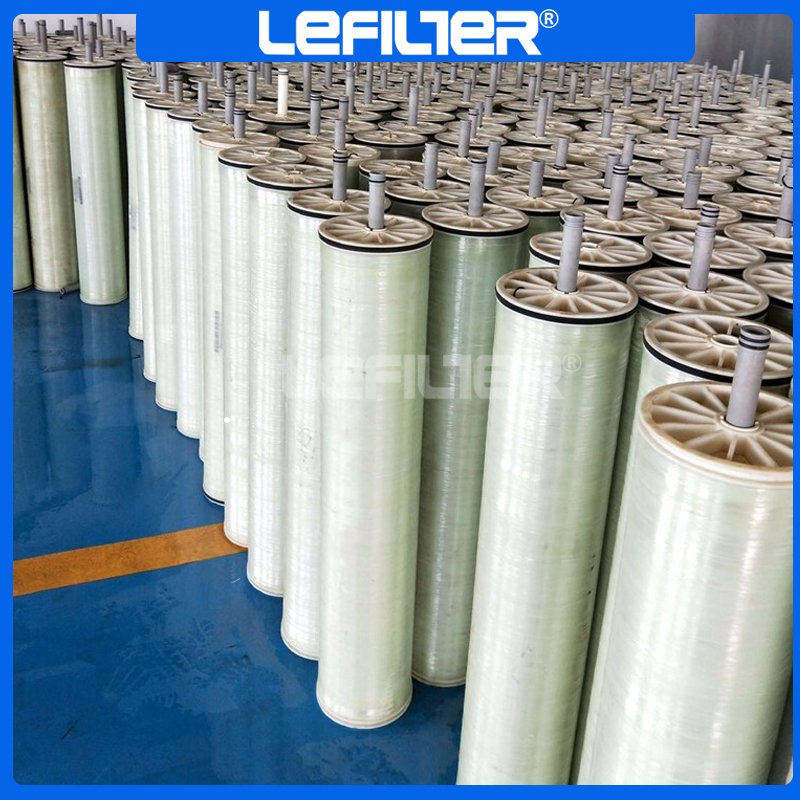
Application areas of RO membrane
- Textile Wastewater Treatment
- In the textile industry, a large amount of wastewater is generated during the production process, which contains various dyes, sizing agents, and other chemical substances. RO membranes can effectively separate these pollutants from the wastewater. By doing so, they enable the recycling of treated water back into the production line, reducing the overall water consumption of textile factories. For example, some large – scale textile mills use RO membrane – based wastewater treatment systems to purify over 80% of their wastewater, which can then be reused for processes like fabric rinsing.
- High – Quality Water Supply for Textile Production
- High – quality water is essential for many textile production processes, especially in dyeing and finishing. RO membranes can remove trace impurities, heavy metals, and minerals from the water source. This ensures that the dyes can be evenly absorbed by the fabrics, resulting in more consistent color tones and better color fastness. In the production of high – end silk fabrics, for instance, RO – purified water is used to prevent any potential water – borne impurities from affecting the delicate texture and luster of the silk.
- Production of Special – Functional Textiles
- When manufacturing special – functional textiles such as waterproof, breathable, or antibacterial fabrics, precise control of the chemical composition in the fabric – treating solutions is required. RO membranes are used to purify the water and other solvents used in these processes. For example, in the production of antibacterial textiles, the water used in the antibacterial agent – impregnation process needs to be free of contaminants that could interfere with the antibacterial properties. RO – filtered water helps maintain the effectiveness of the antibacterial treatment.
- Industrial Textile Applications
- In the production of industrial textiles like filter materials, RO membranes can be used to clean the water used in the manufacturing process. High – quality water ensures that the filter materials have consistent pore sizes and filtering performance. In the production of geotextiles, RO – treated water can help in better adhesion of the fibers, enhancing the overall strength and durability of the geotextiles.