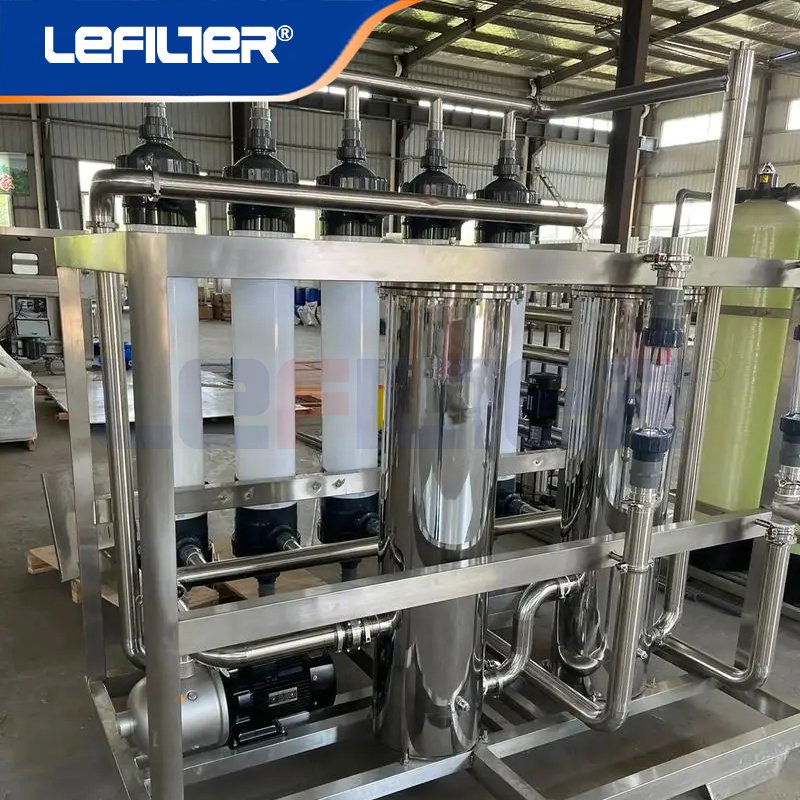
The Indispensable Role of Reverse Osmosis in Modern Water Treatment
As global populations grow and industrial demands surge, access to high-purity water has become a critical driver of economic development and public health. Reverse osmosis (RO) systems have emerged as the gold standard for meeting this need, capable of transforming virtually any water source—seawater, brackish groundwater, or industrial wastewater—into ultra-pure water with total dissolved solids (TDS) as low as 1 ppm. Unlike traditional methods that rely on chemicals or excessive energy, RO achieves this through precision membrane technology, making it both efficient and sustainable.
What makes RO systems irreplaceable is their versatility:
- They desalinate seawater in arid coastal regions, turning undrinkable saltwater into a viable drinking water source.
- They recycle industrial wastewater, cutting freshwater use by 60–80% in manufacturing plants.
- They produce ultra-pure water for life sciences and electronics, where even trace contaminants can ruin products or experiments ( Global Water Security Report , 2024).
The Engineering of Reverse Osmosis: From Membranes to Systems
- Core Components of RO Systems
A reverse osmosis system is a sophisticated assembly of components working in unison to achieve purification:
- Pretreatment Subsystem: Protects RO membranes from damage, including:
- Microfiltration/Ultrafiltration: Removes suspended solids >0.1 μm to prevent membrane fouling.
- Chlorine Removal: Activated carbon or sodium metabisulfite dosing eliminates chlorine, which degrades polyamide membranes.
- Scale Inhibition: Anti-scalant chemicals (e.g., phosphonates) prevent mineral deposits (calcium sulfate, silica) from forming on membranes.
- High-Pressure Pump: Delivers feedwater at 10–80 bar, depending on TDS—15–30 bar for brackish water (1,000–10,000 ppm TDS) and 50–80 bar for seawater (30,000–40,000 ppm TDS).
- RO Membrane Elements: Spiral-wound thin-film composite (TFC) membranes, with a polyamide active layer that rejects 95–99.9% of dissolved ions. Each element (4–8 inches in diameter, 40–60 inches long) treats 1–5 m³/h of water.
- Pressure Vessels: Durable housings (fiberglass or stainless steel) that hold 3–8 membrane elements in series, maximizing contact time between water and membrane.
- Concentrate and Permeate Valves: Regulate flow to control recovery (50–80%)—the ratio of permeate to feedwater—and prevent membrane damage from excessive concentration ( RO System Design Manual , 2023).
- The Science of Membrane Separation
Reverse osmosis operates on a simple but powerful principle: using pressure to overcome osmosis, the natural tendency of water to flow from low-solute to high-solute solutions. Here’s how it works at the molecular level:
- Water molecules (0.27 nm) pass through the membrane’s dense polyamide layer, which contains pores smaller than 0.1 nm.
- Dissolved ions (e.g., Na⁺ = 0.19 nm, Cl⁻ = 0.36 nm) are rejected by a combination of charge repulsion (the polyamide layer is negatively charged) and steric hindrance (physical blocking).
- Rejected contaminants accumulate in the “concentrate” stream, which is either discharged or further processed to recover minerals (e.g., salt) ( Membrane Science and Engineering , 2024).
System Configurations: Tailored to Purity and Flow Needs
- Single-Pass vs. Multi-Pass Systems
RO systems are designed to meet specific purity requirements:
- Single-Pass RO: Produces water with TDS 10–100 ppm, suitable for:
- Irrigation in salt-affected soils.
- Cooling tower makeup water (prevents scaling).
- General industrial processes (e.g., textile dyeing).
- Double-Pass RO: Permeate from the first pass undergoes a second RO treatment, reducing TDS to 1–10 ppm for:
- Pharmaceutical purified water (USP standards).
- Cosmetics manufacturing (prevents product contamination).
- Triple-Pass RO: Used in ultra-sensitive applications like:
- Laboratory reagent water (TDS <0.1 ppm).
- Laser cutting (where mineral deposits damage equipment) ( RO System Configuration Guide , 2024).
- Membrane Array Design for Flow and Efficiency
Membranes are arranged in arrays to balance flow rate and pressure:
- Parallel Arrays: Multiple pressure vessels operate side-by-side to increase flow. A municipal plant treating 50,000 m³/day might use 50 parallel vessels, each holding 6 membrane elements.
- Series Arrays: Vessels are connected in sequence to increase pressure, enhancing salt rejection—critical for seawater desalination.
- Hybrid Arrays: Combine parallel and series configurations to meet both flow and purity needs. For example, a food processing plant might use 4 parallel vessels in the first stage (high flow) and 2 series vessels in the second (high purity) ( Industrial RO Sizing Handbook , 2023).
Industry Applications: Where RO Systems Drive Progress
- Desalination: Turning Seawater into a Resource
In water-scarce coastal regions, RO systems are lifelines:
- Municipal Desalination: Plants like Israel’s Sorek Plant (624,000 m³/day) use RO to supply 40% of the country’s drinking water, reducing reliance on rain-fed sources.
- Offshore Oil Platforms: RO systems desalinate seawater for crew use and drilling operations, eliminating the need for expensive water transport ( Desalination Technology Today , 2024).
- Electronics and Semiconductor Manufacturing
The semiconductor industry demands water purity at the molecular level, and RO systems deliver:
- Ultra-Pure Water (UPW): RO paired with deionization (DI) produces water with TDS <0.05 ppm and <1 particle/mL (≥0.05 μm), critical for cleaning silicon wafers. A leading chipmaker reported a 25% increase in yield after upgrading to a triple-pass RO system ( Electronics Manufacturing Water Guide , 2023).
- Photovoltaic (Solar Panel) Production: RO water ensures uniform coating of solar cells, improving energy efficiency by 3–5%.
- Agriculture: Sustaining Crops in Saline Soils
In regions with brackish irrigation water, RO systems protect crop health:
- Greenhouse Farming: RO-treated water (TDS <500 ppm) prevents salt buildup in soil, increasing yields of sensitive crops like tomatoes and lettuce by 15–20%.
- Vineyards: Reduces TDS in irrigation water to <1,000 ppm, preserving grape quality and wine flavor ( Sustainable Agriculture Water Management , 2024).
Future Trends: Making RO Smarter and More Sustainable
Energy Recovery: New isobaric devices (e.g., Pelton wheels) recover 95% of energy from concentrate, cutting seawater RO energy use to <2 kWh/m³ by 2030.
- Self-Cleaning Membranes: Nanoparticle coatings (e.g., titanium dioxide) reduce biofouling, extending cleaning intervals by 2–3x.
- AI-Driven Optimization: Machine learning algorithms analyze feedwater quality and system data to adjust pressure, recovery, and cleaning schedules in real time, reducing operating costs by 15–20% ( RO Technology Innovation Report , 2024).
- Decentralized Systems: Compact, solar-powered RO units (500–5,000 L/day) bring clean water to remote communities, eliminating reliance on centralized infrastructure.
Conclusion: Reverse Osmosis as a Pillar of Global Water Resilience
Reverse osmosis systems have redefined what’s possible in water treatment, turning once-unusable water sources into valuable assets. Their ability to deliver high-purity water efficiently, sustainably, and at scale makes them indispensable in a world grappling with water scarcity and industrial growth.
- Troubleshooting Common RO Issues
Symptom | Cause | Solution |
Permeate TDS spiking | Membrane damage or O-ring failure | Replace faulty elements; inspect seals |
Low permeate flow | Pump inefficiency or clogged filters | Repair/replace pump; change pretreatment cartridges |
High concentrate TDS | Excessive recovery rate | Reduce recovery to 70% (from 80%); increase anti-scalant dose |
Conclusion
Reverse osmosis systems have redefined what’s possible in water treatment, turning once-unusable water sources into valuable assets. Their ability to deliver high-purity water efficiently, sustainably, and at scale makes them indispensable in a world grappling with water scarcity and industrial growth.
From desalinating seawater for megacities to producing ultra-pure water for cutting-edge semiconductors, RO systems prove that membrane technology is more than a filtration method—it’s a catalyst for progress. As innovations like low-energy membranes and AI monitoring continue to advance, RO will play an even larger role in ensuring water security for communities, industries, and ecosystems worldwide.
In a future where water is both a challenge and an opportunity, reverse osmosis systems stand as a testament to human ingenuity—proving that with the right technology, we can turn the world’s water challenges into solutions.
If you are interested in this product or have any questions, please feel free to contact us at any time.