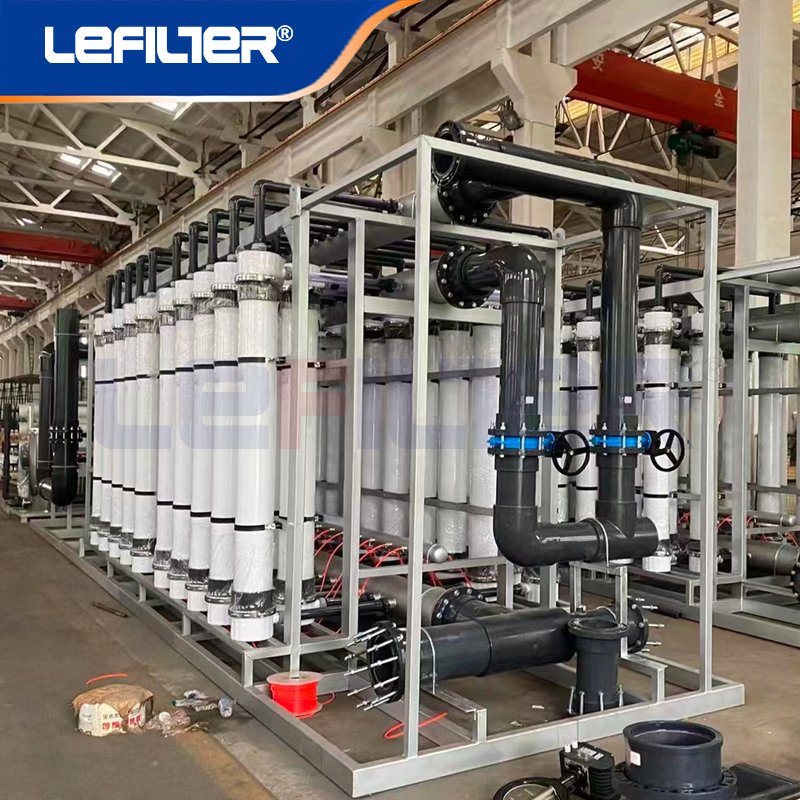
The Critical Role of Reverse Osmosis in Addressing Global Water Challenges
As industries expand and freshwater scarcity intensifies, the need for reliable, high-purity water has become a global priority. Reverse osmosis (RO) systems rise to this challenge by transforming contaminated or brackish water into ultra-pure water, removing 95–99% of dissolved salts, organic compounds, and microorganisms. Unlike traditional purification methods such as distillation— which is energy-intensive—or ion exchange— which generates chemical waste—RO achieves this with minimal chemical use, making it a sustainable choice for diverse applications, from municipal water treatment to advanced manufacturing.
What distinguishes RO systems is their versatility:
- They desalinate seawater (35,000 ppm TDS) to produce drinking water, critical for coastal regions with limited freshwater.
- They purify industrial wastewater for reuse, reducing reliance on freshwater sources by up to 70%.
- They generate ultra-pure water (TDS <1 ppm) for sensitive processes like pharmaceutical manufacturing and semiconductor production ( Global Water Technology Review , 2024).
The Science and Engineering Behind Reverse Osmosis Systems
A reverse osmosis system is a marvel of precision engineering, with each component working in harmony to achieve high-purity water:
- Pretreatment Module: Prepares feedwater to protect RO membranes from damage and fouling:
- Multi-media filters: Remove suspended solids (5–10 μm) like silt and clay.
- Activated carbon filters: Adsorb chlorine, chloramines, and organic compounds that degrade membrane integrity.
- Antiscalant injection systems: Add polymers (e.g., polyphosphates) to prevent mineral scaling (calcium carbonate, sulfate) on membranes.
- High-Pressure Pump: Delivers feedwater at pressures ranging from 10–80 bar—tailored to feedwater salinity (e.g., 15 bar for brackish water, 60–80 bar for seawater)—to overcome osmotic pressure.
- RO Membrane Elements: Spiral-wound thin-film composite (TFC) membranes, typically made of polyamide, with a dense active layer (0.1–0.2 μm thick) that rejects contaminants. These membranes allow water molecules (0.27 nm) to pass while blocking ions (e.g., Na⁺, Cl⁻) and larger molecules.
- Pressure Vessels: Durable housings (usually fiberglass or stainless steel) that hold 2–8 membrane elements in series, ensuring efficient water-membrane contact.
- Post-Treatment Systems: Polish RO permeate for specific applications, such as:
- UV disinfection: Ensures microbial safety for drinking water.
- Deionization (DI): Reduces residual TDS to <0.1 ppm for semiconductor manufacturing ( RO System Engineering Handbook , 2024).
Customizing RO Systems for Specific Industries
- Municipal Water Treatment and Desalination
RO systems are transforming how cities access clean water:
– Brackish Water Desalination: In inland regions with salty groundwater (1,000–10,000 ppm TDS), RO produces drinking water with TDS <500 ppm, meeting WHO standards. A city in Texas reduced its reliance on imported water by 40% after installing a 50,000 m³/day brackish RO plant.
– Seawater Desalination: Coastal cities like Dubai and Singapore use large-scale RO systems to convert seawater into potable water. Dubai’s Jebel Ali plant, one of the world’s largest, produces 300,000 m³/day, supplying 50% of the city’s needs ( Municipal Desalination Case Studies , 2023).
- Industrial Applications: Protecting Processes and Products
Industries depend on RO systems to ensure product quality and equipment longevity:
– Power Generation: RO produces high-purity boiler feedwater (TDS <10 ppm) to prevent scale buildup in turbines, reducing maintenance costs by 30–50%. A coal-fired power plant in China cut annual downtime by 200 hours after switching to RO from ion exchange.
– Food and Beverage: RO removes unwanted minerals from process water, enhancing the taste and consistency of products like beer, bottled water, and dairy. A craft brewery in Germany reported a 15% improvement in beer clarity after installing an RO system ( Industrial Water Treatment Guide , 2024).
– Pharmaceuticals: RO is a critical step in producing USP Purified Water and Water for Injection (WFI), with double-pass systems achieving TDS <1 ppm and microbial counts <1 CFU/100 mL ( Pharmaceutical Water Systems Manual , 2023).
Optimizing RO System Performance: Key Parameters and Best Practices
To maximize efficiency, minimize downtime, and extend membrane life, RO systems require careful monitoring and adjustment of key parameters:
– Recovery Rate: The percentage of feedwater converted to permeate (typically 50–80%). Higher recovery (e.g., 75%) reduces water waste but increases scaling risk, so it’s balanced with anti-scalant dosing and periodic cleaning.
– Flux Rate: The volume of water passing through the membrane per unit area (15–25 L/m²·h). Excessive flux ( >30 L/m²·h ) causes rapid fouling, while low flux reduces productivity.
– Salt Rejection: Calculated as [(Feed TDS – Permeate TDS)/Feed TDS] × 100. For TFC membranes, rejection rates are typically 95–99% for monovalent ions (Na⁺, Cl⁻) and 98–99.9% for divalent ions (Ca²⁺, Mg²⁺) ( RO Performance Optimization Guide , 2024).
Membrane Maintenance: Preventing Fouling and Extending Lifespan
RO membranes (lifespan: 2–5 years) are the system’s most critical component, requiring proactive care:
– Regular Flushing: Daily low-pressure flushing (without chemical additives) removes loose contaminants, preventing buildup on membrane surfaces.
– Chemical Cleaning: Performed every 1–3 months to address specific fouling types:
– Mineral Scale: 1–2% citric acid or hydrochloric acid (pH 2–3) to dissolve calcium or magnesium deposits.
– Organic Fouling: 0.5–1% sodium hydroxide (NaOH) at 30–35°C to break down oils, humics, and biofilms.
– Biofouling: Chlorine dioxide or peracetic acid (for chlorine-tolerant membranes) to kill bacteria and algae ( RO Membrane Maintenance Handbook , 2023).
Conclusion
Reverse osmosis systems have revolutionized water treatment, enabling access to high-purity water in regions and industries once limited by resource constraints. Their ability to transform brackish water, seawater, and wastewater into usable resources makes them indispensable in addressing global water scarcity and industrial growth.
As technology advances, RO systems will become even more efficient, sustainable, and accessible—powered by innovative membranes, smart controls, and renewable energy integration. Whether in a coastal desalination plant, a pharmaceutical facility, or a small community water system, they represent more than a purification method: they are a lifeline for progress, ensuring that clean, high-purity water remains available for generations to come.
In a world where water is both a resource and a challenge, reverse osmosis systems stand as a testament to human ingenuity—proving that with the right technology, even the saltiest or most contaminated water can become a source of opportunity.
If you are interested in this product or have any questions, please feel free to contact us at any time.