Introduction:
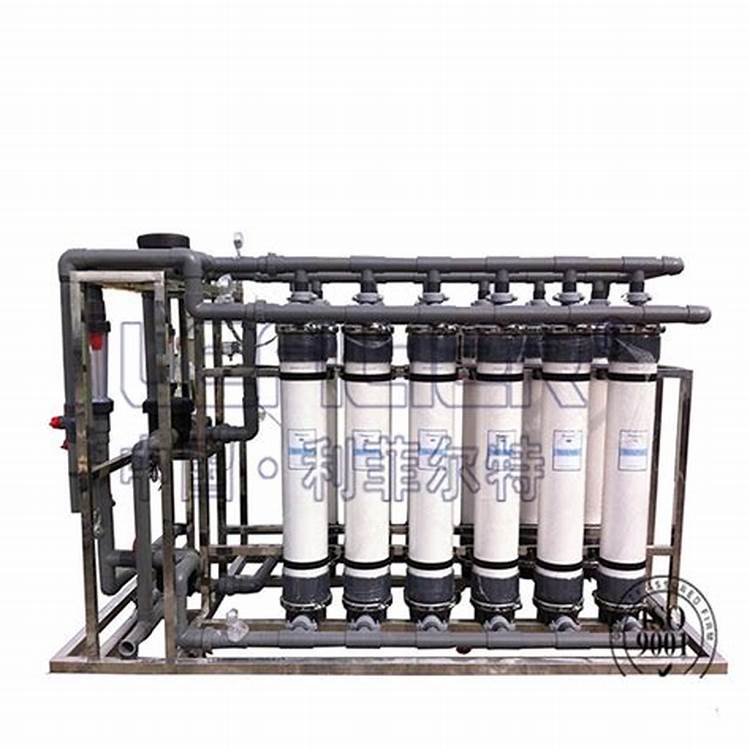
Ultrafiltration is a membrane separation technology driven by pressure difference, which is widely used in water treatment, food, pharmaceutical, bioengineering and other fields. The correct selection of ultrafiltration equipment is crucial to ensure the efficient operation of the system, meet the treatment requirements and control costs.
Factors to consider in the selection of ultrafiltration equipment
Treatment water quality requirements
Type of water source
If surface water is treated, the water may contain more suspended solids, organic matter, microorganisms and other impurities. For example, water in rivers, lakes and reservoirs may be polluted by agricultural runoff, industrial discharge and domestic sewage. At this time, the ultrafiltration equipment needs to have a strong anti-pollution ability to cope with complex water quality conditions.
For groundwater, its water quality is relatively stable, but it may contain high hardness, iron, manganese and other minerals. Ultrafiltration equipment needs to be able to effectively remove possible colloidal substances, while considering compatibility with subsequent treatment processes (such as softening).
Target water quality standards
In drinking water treatment, ultrafiltration must meet the requirements of removing bacteria, viruses, turbidity and other indicators. For example, according to relevant drinking water standards, the turbidity of ultrafiltration effluent should be less than 0.1NTU.
In terms of industrial circulating water reuse, it is necessary to remove suspended solids, macromolecular organic matter, etc. in the water to prevent equipment scaling, corrosion and microbial growth.
Processed water volume
The treated water volume is a key factor in the selection of ultrafiltration equipment. If it is a small household or commercial drinking water treatment system, the treatment volume may range from tens to hundreds of liters per hour. In this case, you can choose a small ultrafiltration device, such as a household ultrafiltration water purifier, which has a relatively small flux and a compact structure.
For large municipal water supply or industrial wastewater treatment projects, the treatment volume may reach hundreds or even thousands of cubic meters per hour. At this time, it is necessary to select a large ultrafiltration membrane assembly, and multiple sets of equipment may be connected in parallel or in series to meet the requirements of the treated water volume.
Membrane material
Polysulfone membrane
Polysulfone membrane has good chemical stability, mechanical strength and heat resistance. It has good tolerance to most organic solvents and acids and alkalis, and is suitable for a variety of water quality conditions. In the pharmaceutical and food industries, it is widely used due to its relatively low pollution tendency and good biocompatibility.
Polyethersulfone membrane
The performance of polyethersulfone membrane is better than that of polysulfone membrane in some aspects, such as it has higher flux and better anti-pollution ability. In the field of water treatment, especially for sewage containing high organic matter and microorganisms, polyethersulfone membrane can maintain high filtration efficiency for a long time.
Ceramic membrane
Ceramic membrane has excellent chemical stability, acid and alkali resistance and high temperature resistance. It has a long service life, but the cost is relatively high. In some special industrial applications, such as chemical and high-temperature wastewater treatment, ceramic membrane has obvious advantages.
Membrane module form
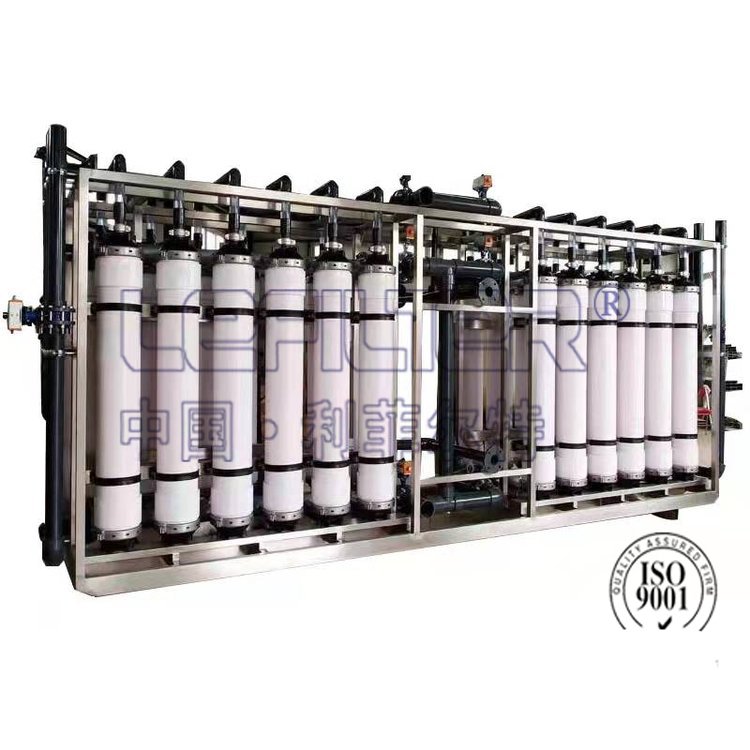
Hollow fiber membrane module
Hollow fiber membrane module has a high membrane filling density, a large membrane surface area per unit volume, and can provide a high filtration flux. Its structure is compact and suitable for large-scale water treatment projects. However, hollow fiber membranes are easily blocked by pollution and are relatively difficult to clean.
Rolled membrane module
The manufacturing process of the rolled membrane module is relatively mature and the cost is low. Its water flow channel is narrow and concentration polarization is prone to occur, but it is widely used in some occasions where the water quality requirements are not particularly high and the treatment volume is moderate.
Plate membrane assembly
Plate membrane assembly is easy to clean and maintain, and the replacement cost of the membrane is relatively low. It is suitable for treating liquids with high concentrations of solid particles or easy to form dirt, but the filling density of the membrane is relatively low.
Operating pressure
Different ultrafiltration membranes and treatment objects require different operating pressures. Generally speaking, the operating pressure is between 0.1-0.6MPa. Lower operating pressure can reduce energy consumption, but may affect the filtration flux. When selecting, it is necessary to determine the appropriate operating pressure range based on the performance parameters of the membrane and the requirements for the water quality to be treated. For example, for some cleaner water sources, a lower operating pressure can meet the treatment requirements, while for solutions with higher concentrations of solutes or colloids, a higher operating pressure may be required.
Cleaning method and maintenance requirements
Ultrafiltration equipment will inevitably cause membrane fouling during operation, so the cleaning method needs to be considered. Common cleaning methods are chemical cleaning and physical cleaning.
For some membrane materials that are easily affected by chemical agents, such as some special polyethersulfone membranes, mild cleaning agents need to be selected for chemical cleaning. For some ceramic membranes with good chemical resistance, stronger acid and alkali cleaning agents can be used.
Equipment maintenance requirements include the replacement cycle of membrane components and the convenience of equipment maintenance. If the maintenance cost of the equipment is too high, it will affect the economic benefits of the entire project.
Selection steps
Water quality analysis
First, conduct a comprehensive water quality analysis of the raw water, including the determination of suspended solids, organic matter, microorganisms, hardness, pH and other indicators. This will help determine the pretreatment requirements of the ultrafiltration equipment and the selection of membrane materials. For example, if the organic content in the raw water is high, it may be necessary to select a membrane material with strong anti-pollution ability and consider adding pretreatment processes such as activated carbon adsorption.
Determine the treatment water volume and flux requirements
According to the actual water demand or treatment scale, determine the treatment water volume of the ultrafiltration equipment. Then, based on the performance parameters of the membrane component, calculate the required membrane flux. The calculation of membrane flux should take into account factors such as changes in water quality, operating time, and cleaning cycle. Generally speaking, in order to ensure the stable operation of the equipment, the design flux should be lower than the rated flux of the membrane component.
Select membrane material and component form
Consider factors such as water quality, treated water volume, operating pressure, and cleaning method to select the appropriate membrane material and component form. For example, if high-temperature wastewater is being treated, ceramic membranes may be a better choice; if it is large-scale drinking water treatment, hollow fiber membrane components may be more suitable.
Determine equipment configuration
Determine the number of membrane components based on the treated water volume and the flux of the selected membrane components. At the same time, consider the supporting facilities of the equipment, such as the inlet pump, outlet pump, cleaning device, control system, etc. The flow rate and head of the inlet pump must meet the requirements of the operating pressure and treated water volume of the ultrafiltration equipment, and the cleaning device must be able to effectively clean the membrane components.
Cost evaluation
Cost evaluation of the selection of ultrafiltration equipment, including equipment purchase cost, installation cost, operating cost (including energy consumption, membrane replacement, cleaning agent, etc.) and maintenance cost. On the premise of meeting the treatment requirements, select the equipment selection plan with the highest cost performance.
Conclusion
The selection of ultrafiltration equipment is a complex process, which requires comprehensive consideration of factors such as treatment water quality requirements, treatment water volume, membrane material, membrane component form, operating pressure, cleaning method and maintenance requirements. Through detailed water quality analysis, reasonable selection steps and comprehensive cost evaluation, it is possible to select the most suitable ultrafiltration equipment for a specific application scenario, thereby ensuring the efficient and stable operation of the ultrafiltration system and meeting the water treatment needs in different fields.