1. Basic Definition
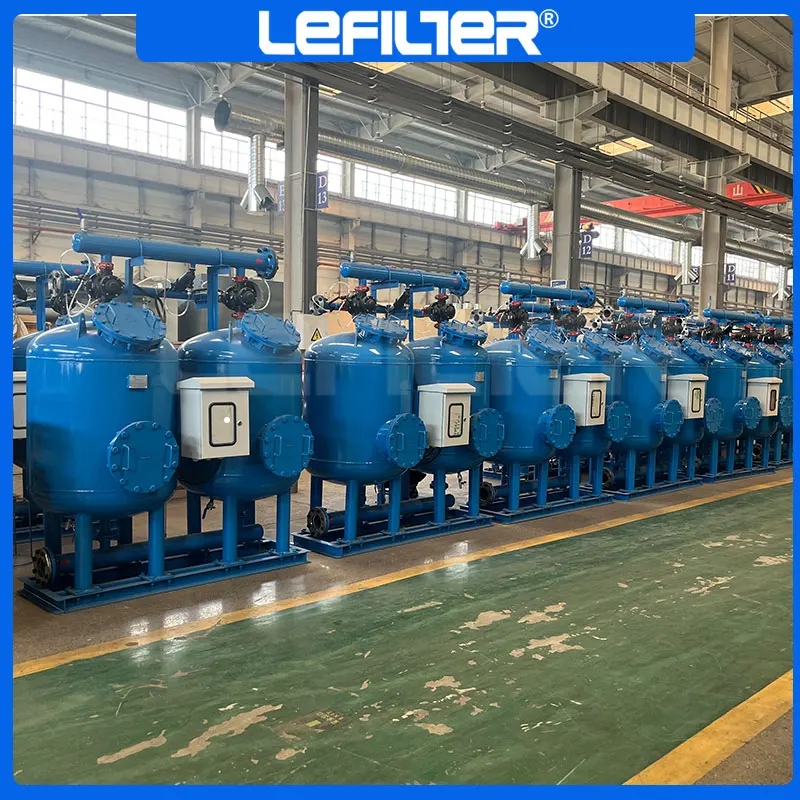
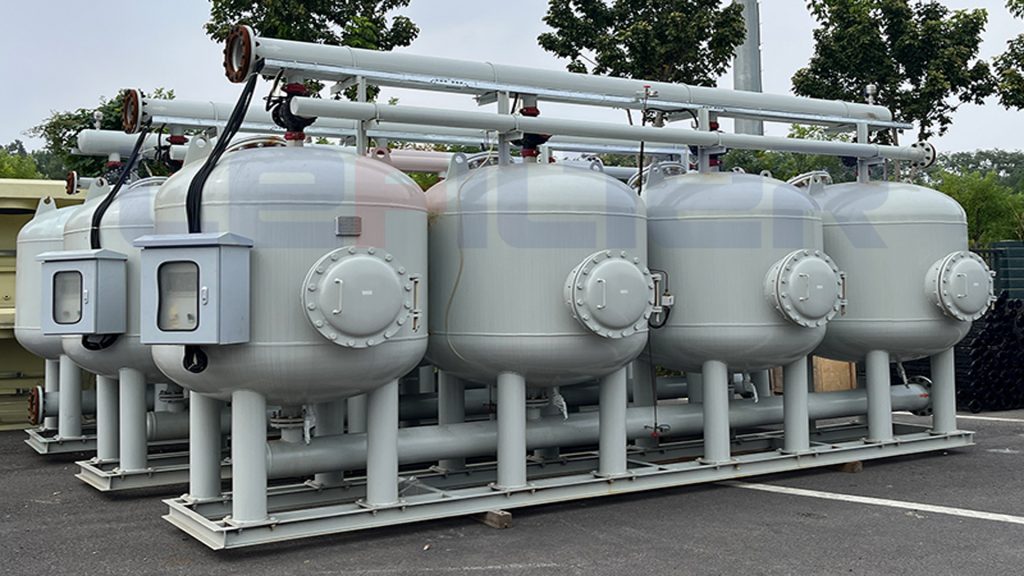
Shallow sand filter is a pressure-type mechanical filtration device with quartz sand as the filtration medium, which is specially used to remove impurities such as suspended matter, colloids, particles, etc. in liquid. In condensate treatment, it is mainly used to purify the recovered steam condensate, remove pollutants such as rust, silt, microorganisms, protect subsequent equipment (such as boilers, heat exchangers) and improve water quality.
2. Core structure
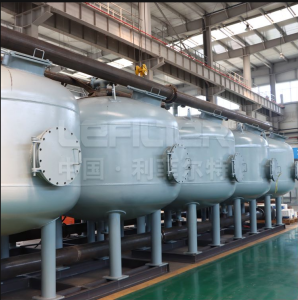
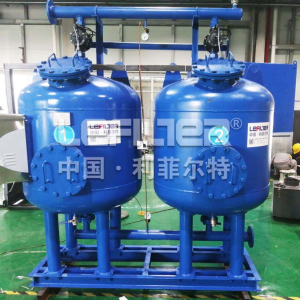
- Tank: stainless steel or carbon steel, pressure-resistant and corrosion-resistant, usually vertical design.
- Filter layer: multiple layers of quartz sand (particle size 0.4-1.2mm) to form a dense filter bed.
- Water distribution system: top water distributor ensures uniform distribution of water flow.
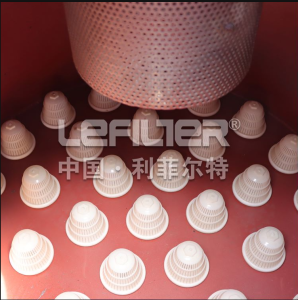
- Water collection device: bottom screen tube or filter cap collects filtered clean water.
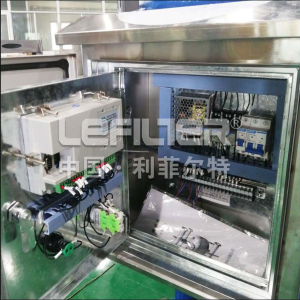
- Automatic control (optional): equipped with differential pressure sensor or timer to trigger backwashing.

3. Working principle
Filtration stage:
Condensate flows in from the top, is evenly dispersed by the water distributor, and then penetrates the sand bed from top to bottom. Suspended matter is intercepted by the sand layer, and clean water is discharged from the bottom.
Backwash stage:
When the pressure difference is greater than 0.05MPa or the timer starts, the system switches to backwash mode.
The water flows in the reverse direction (water inlet at the bottom → water outlet at the top), expands the sand layer and washes away impurities.
No need to replace the filter media, backwashing takes about 5-10 minutes, and the water consumption is about 1-3% of the filtration volume.


4. Key parameters for selection
- Parameter Reference range
- Filtration accuracy 20-50 μm
- Design flow rate 8-12 m³/(m²·h)
- Working pressure 0.2-0.6 MPa
- Single tank processing capacity 10-100 m³/h (depending on tank size)
- Connection diameter DN50-DN300
5. Typical application scenarios
- Steam system: Recover boiler steam condensate and remove pipeline corrosion products.
- Industrial cooling water: Filter algae and sediment in cooling tower circulating water.
- Pretreatment stage: As a pre-protection for reverse osmosis (RO) or ion exchange.
6. Advantages in condensate treatment
- Efficient impurity removal: can intercept particles ≥20μm and reduce the turbidity of condensate to ≤5NTU.
- High temperature resistance: suitable for condensate below 80℃ (special design can handle higher temperatures).
- Low maintenance: automatic backwashing reduces manual intervention, and the filter media life is 3-5 years.
- Economical: The operating cost is lower than that of precision filters (such as filter cartridges), suitable for large flow scenarios.
7. Comparison with other filters
| Type | Shallow sand filter | Activated carbon filter | Bag filter |
| Filter accuracy | 20-50μm | 5-10μm (adsorbed organic matter) | 1-100μm |
| Maintenance cost | Low (backwash only) | Medium (need to replace carbon) | High (change filter bag) |
| Applicable scenarios | Large flow rate coarse filtration | Organic matter/residual chlorine removal | Small flow rate precision filtration |
8. Precautions
- Pre-filtration suggestion: When the condensate contains oil, an oil removal device should be added to avoid sand layer compaction.
- Water quality monitoring: Regularly test the SS (suspended matter) and TDS (total dissolved solids) of the effluent.
- Winter protection: Outdoor installation requires insulation to prevent low temperature icing and damage to the tank.
9. Summary
Shallow sand filter has become a key pretreatment equipment in the industrial condensate reuse system due to its high flow rate, pollution resistance and low operating cost, especially suitable for continuous operation and high impurity load scenarios.