Introduction
Shallow sand filters are highly efficient filtration systems used to remove suspended solids and impurities from water. They are widely utilized in various industries and applications, from irrigation to water treatment, due to their effectiveness and simplicity. This article provides a detailed overview of shallow sand filters, including their product description, working principle, components, technical specifications, and application fields, showcasing their importance in maintaining clean and efficient water systems.
Product Introduction
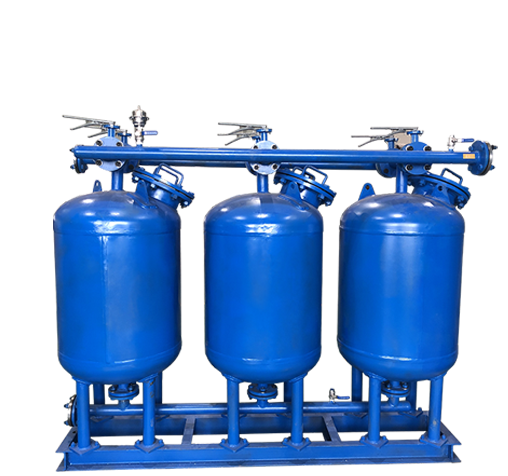
Shallow sand filters are compact, gravity-operated filtration systems designed to remove particulate matter from water. Unlike deep bed filters, shallow sand filters use a thin layer of sand or other granular media to achieve high filtration efficiency with lower head loss. These filters are known for their ease of operation, low maintenance requirements, and cost-effectiveness. They come in various sizes and configurations to suit different application needs, ensuring reliable performance and consistent water quality.
Working Principle
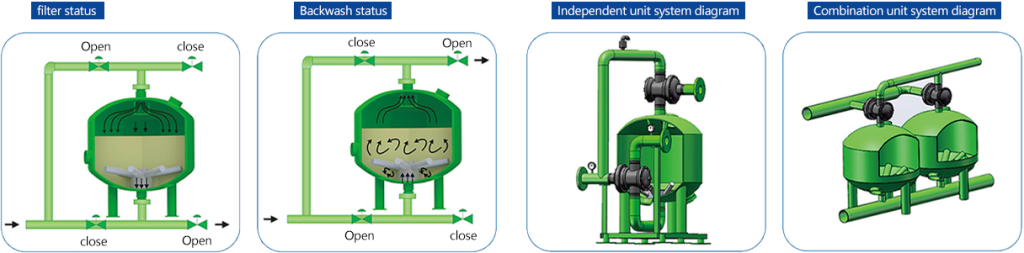
The operation of shallow sand filters is based on a straightforward filtration mechanism that effectively separates solids from water. Here’s a step-by-step explanation of how shallow sand filters work:
- Inlet Flow: Contaminated water enters the filter through the inlet port and is evenly distributed over the surface of the sand bed.
- Filtration Process: As the water passes through the sand bed, suspended solids and impurities are trapped within the sand grains. The clean water continues to flow downward through the filter media.
- Collection of Clean Water: The filtered water is collected at the bottom of the filter and exits through the outlet port, now free from most impurities.
- Backwashing: Periodically, the filter must be cleaned to remove the accumulated solids. This is done by reversing the flow of water through the filter (backwashing), which lifts and washes away the trapped particles from the sand bed.
- Resuming Operation: After backwashing, the filter resumes normal operation, providing continuous filtration.
Product Composition
A typical shallow sand filter consists of several key components, each contributing to its overall performance and reliability:
- Filter Tank: The main body that contains the sand bed and facilitates the flow of water. It is usually made from durable materials such as fiberglass, steel, or concrete, providing structural integrity and resistance to corrosion.
- Sand Bed: The core filtration media, typically made from fine sand or other granular materials. The sand bed is designed to capture and retain suspended solids while allowing clean water to pass through.
- Inlet and Outlet Ports: These ports facilitate the entry of contaminated water and the exit of filtered water. They are designed to ensure even distribution and smooth flow through the filter.
- Underdrain System: A system of pipes or channels at the bottom of the filter tank that collects the filtered water and directs it to the outlet port. The underdrain system also plays a crucial role during backwashing, ensuring effective cleaning of the sand bed.
- Backwash Mechanism: A mechanism that allows the flow of water to be reversed through the filter, lifting and washing away trapped solids from the sand bed. This may include backwash valves, pumps, and control systems.
- Support Gravel: A layer of gravel placed beneath the sand bed to support the filter media and prevent it from being washed away during backwashing.
Technical Specifications
Shallow sand filters come with a range of technical specifications to meet diverse application needs. Key specifications include:
- Flow Rate:
- Shallow sand filters can handle flow rates from a few gallons per minute (GPM) to several hundred GPM, depending on their size and design.
- Filtration Efficiency:
- The filtration efficiency indicates the size of particles the filter can remove. Shallow sand filters are effective in removing particles as small as 10 microns, making them suitable for various applications.
- Operating Pressure:
- Shallow sand filters are designed to operate at relatively low pressures, typically ranging from 10 to 50 psi, ensuring optimal filtration performance with minimal energy consumption.
- Backwash Flow Rate:
- The backwash flow rate is the rate at which water is reversed through the filter to clean the sand bed. It is typically higher than the filtration flow rate to ensure effective cleaning.
- Material Construction:
- The filter tank and components are usually made from durable materials such as fiberglass, steel, or concrete, providing resistance to corrosion and wear.
- Media Depth:
- The depth of the sand bed is typically between 12 to 24 inches, providing sufficient filtration capacity while maintaining low head loss.
Application Fields
Shallow sand filters are versatile and widely used across a variety of industries due to their efficiency, reliability, and ease of maintenance. Here are some of the key application fields where shallow sand filters play a crucial role:
1. Agriculture and Irrigation
In agricultural settings, shallow sand filters are essential for filtering irrigation water. They help remove suspended solids and organic matter, ensuring that the water supplied to crops is clean and free from contaminants that could clog irrigation systems or harm plant health. This is particularly important in drip and micro-irrigation systems where small emitters can easily become blocked.
2. Municipal Water Treatment
Shallow sand filters are commonly used in municipal water treatment plants to improve the quality of drinking water. They effectively remove turbidity, suspended solids, and particulate matter from raw water sources such as rivers, lakes, and reservoirs. This step is crucial in ensuring that the water meets regulatory standards for safety and quality before it reaches consumers.
3. Industrial Water Filtration
In various industrial processes, clean water is essential for cooling, washing, and other operations. Shallow sand filters are employed to remove contaminants from process water and wastewater, ensuring that the water used in industrial applications is free from harmful particles that could damage equipment or affect product quality. Industries such as food and beverage, pharmaceuticals, and textiles benefit significantly from using shallow sand filters.
4. Aquaculture and Fisheries
Aquaculture facilities rely on clean water to maintain healthy aquatic environments for fish and other marine life. Shallow sand filters help remove debris, uneaten feed, and waste products from recirculating water systems, ensuring optimal water quality and promoting the health and growth of aquatic organisms.
5. Swimming Pools and Recreational Water
Shallow sand filters are widely used in swimming pools and other recreational water facilities to keep the water clear and free from contaminants. They remove dirt, debris, and microorganisms, ensuring a safe and pleasant swimming environment for users. Regular backwashing of the filter ensures continuous and efficient operation.
6. Cooling Tower Water Treatment
In cooling towers, shallow sand filters are used to filter out suspended solids and particulate matter from the recirculating water. This helps prevent the buildup of scale and biofilm on heat exchange surfaces, improving the efficiency of the cooling system and reducing maintenance costs. Clean water also minimizes the risk of corrosion and extends the lifespan of cooling tower components.
7. Desalination Plants
In desalination plants, pre-treatment of seawater is crucial to protect the reverse osmosis membranes used for salt removal. Shallow sand filters are employed to remove larger particles and suspended solids from seawater before it undergoes further treatment. This helps ensure the efficiency and longevity of the desalination process.
8. Mining and Mineral Processing
In mining operations, water is used extensively for processing minerals and ores. Shallow sand filters are used to treat process water, removing suspended solids and ensuring that the water can be reused or safely discharged. This not only conserves water resources but also helps in meeting environmental regulations.
9. Power Generation
Power plants require large volumes of clean water for cooling and steam generation. Shallow sand filters help remove impurities from cooling water, ensuring efficient heat transfer and preventing fouling of heat exchangers and condensers. This contributes to the reliable and efficient operation of power generation facilities.
10. Environmental Remediation
In environmental remediation projects, clean water is often required for soil washing, groundwater treatment, and other applications. Shallow sand filters are used to remove suspended solids and contaminants from water used in these processes, helping to achieve the desired level of cleanliness and ensuring the effectiveness of remediation efforts.
Conclusion
Shallow sand filters are indispensable in a wide range of applications, from agriculture and municipal water treatment to industrial processes and environmental remediation. Their ability to efficiently remove suspended solids and contaminants from water makes them a crucial component in maintaining clean and safe water systems across various industries.