Introduction
Bag filters are a cornerstone in various liquid filtration applications due to their simplicity, efficiency, and cost-effectiveness. These filters are widely used in industries ranging from water treatment to petrochemicals, ensuring the removal of particulates and contaminants from liquids. This article delves into the product description, working principle, components, technical specifications, and application fields of bag filters, highlighting their versatility and importance in maintaining clean and efficient processes.
Product Introduction
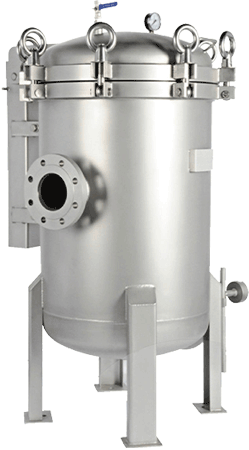
Bag filters are filtration systems that use a bag-shaped element to capture and remove solid particles from liquids. They are designed for high efficiency and ease of use, making them ideal for both low and high-flow applications. Bag filters are known for their robustness, simplicity, and ease of maintenance. They come in various sizes and materials to meet the specific needs of different industries, ensuring optimal performance and reliability.
Working Principle
The operation of bag filters is based on a straightforward yet highly effective filtration mechanism. Here’s a step-by-step explanation of how bag filters work:
- Inlet Flow: Contaminated liquid enters the bag filter housing through the inlet port and is directed into the filter bag.
- Filtration Process: The liquid flows through the filter bag, which captures and retains suspended particles and contaminants. The filter media within the bag traps solids while allowing the filtered liquid to pass through.
- Clean Water Outlet: The filtered liquid exits the bag and flows out of the housing through the outlet port, now free from most impurities.
- Maintenance: When the filter bag reaches its dirt-holding capacity, it can be easily removed and replaced, ensuring continuous filtration without significant downtime.
Product Composition
A typical bag filter system is composed of several key components, each contributing to its overall performance and reliability:
- Filter Housing: The main body that encases the filter bag. It is usually made from durable materials such as stainless steel, carbon steel, or reinforced plastic. The housing is designed to withstand high pressure and provide structural integrity.
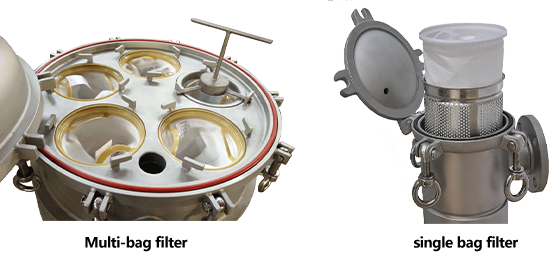
- Filter Bag: The core filtration element, typically made from materials like felt, nylon, or polypropylene. The bag captures and retains solid particles while allowing the clean liquid to pass through. Filter bags come in various micron ratings to suit different filtration needs.
- Support Basket: A perforated metal or plastic basket that holds the filter bag in place within the housing. The basket provides structural support to the filter bag, preventing it from collapsing under pressure.
- Cover or Lid: The top part of the filter housing that can be removed to access the filter bag for maintenance. It is typically secured with bolts or clamps to ensure a tight seal and prevent leaks.
- Inlet and Outlet Ports: These ports facilitate the entry of contaminated liquid and the exit of filtered liquid. They are designed to minimize pressure drop and ensure smooth flow through the filter.
- Gaskets and Seals: These components provide a leak-proof seal between the housing and the cover, preventing any bypass of unfiltered liquid.
- Drain and Vent Ports: These ports enable the removal of trapped air and accumulated debris from the filter housing, ensuring optimal performance.
Technical Specifications
Bag filters come with a range of technical specifications to meet diverse application needs. Key specifications include:
- Flow Rate:
- Bag filters can handle flow rates from a few gallons per minute (GPM) to several hundred GPM, depending on their size and design.
- Filtration Rating:
- The filtration rating indicates the size of particles the filter can remove. Bag filters are available with ratings from 1 to 200 microns, suitable for various applications.
- Operating Pressure:
- Bag filters are designed to operate at pressures ranging from 30 to 150 psi, ensuring optimal filtration performance under different conditions.
- Temperature Range:
- The materials used in bag filters allow them to operate within a wide temperature range, typically from -20°F to 400°F (-29°C to 204°C), making them suitable for various environments.
- Material Construction:
- The filter housing and bag are usually made from durable materials such as stainless steel, carbon steel, nylon, or polypropylene, providing resistance to corrosion and wear.
- Bag Capacity:
- Bag filters come in various sizes, typically ranging from 1 to 32 inches in diameter and 8 to 32 inches in length, to accommodate different volumes of liquid and dirt-holding capacities.
Application Fields
Bag Filters are versatile and used in a wide range of applications across different industries. Here are some common application fields:
- Water Treatment: Used to remove contaminants from raw water, ensuring clean and safe water for municipal, industrial, and agricultural use.
- Oil and Gas: Essential for protecting equipment and ensuring the purity of fluids in upstream, midstream, and downstream operations.
- Chemical Processing: Used to maintain the purity of chemicals, protect equipment, and ensure the quality of end products.
- Food and Beverage: Ensures the removal of impurities from liquids used in the production process, maintaining product quality and safety.
- Pharmaceutical: Critical for maintaining the purity of fluids used in the production of pharmaceuticals, ensuring compliance with stringent quality standards.
- Pulp and Paper: Used to remove contaminants from process water and other fluids, protecting equipment and improving product quality.
- Automotive: Ensures the purity of fluids used in manufacturing processes, protecting equipment and ensuring the quality of end products.
- Power Generation: Used to remove contaminants from cooling water, fuel, and other fluids, protecting equipment and maintaining efficiency.