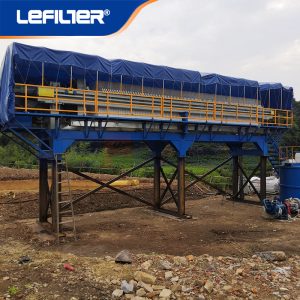
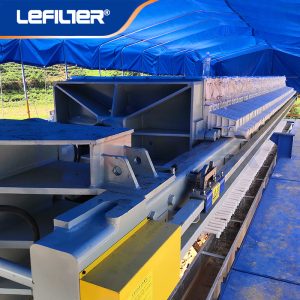
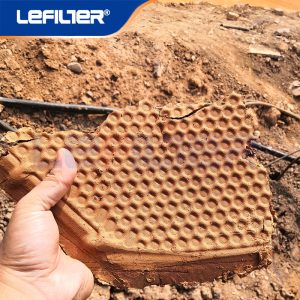
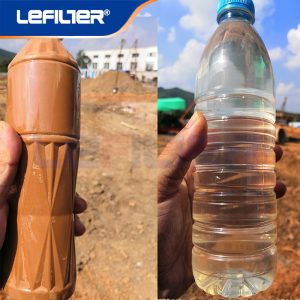
Plate and frame filter press is a solid-liquid separation equipment, and it widely use in sewage treatment. It removes water from sludge by physical squeezing to form a mud cake with low moisture content. Its core features are simple structure and strong adaptability, and it is especially suitable for treating sludge with high viscosity and high solid content.
1. Structure and composition
- Filter plate and filter frame:
- Clamping device:
- Filter cloth:
- Auxiliary system:
2. Working Principle
1. Pressing the filter plate: Start the pressing device to close the filter plate and the filter frame to form a sealed filter chamber.
2. Feed filtration: The sludge pumped into the filter chamber by the pump. The liquid (filtrate) is discharged through the filter cloth under pressure. The solid particles intercepted to form a mud cake.
3. Pressing and dehydration (optional): Some models add secondary pressing (such as diaphragm pressing) after feeding to further reduce the moisture content of the mud cake.
4. Unloading: Loosen the pressing device, pull open the filter plates one by one, and the mud cake falls off due to its own weight or is peeled off with the help of a scraper.
3. Core advantages
1. High dehydration efficiency: The moisture content of the mud cake can be reduced to 60%-75%, depending on the nature of the sludge and the squeezing pressure.
2. Strong adaptability:
– Treatment objects: municipal sludge, industrial wastewater (electroplating, printing and dyeing, papermaking, etc.), mineral tailings.
– Sludge concentration: It can treat sludge with a solid content of 1%-30%.
3. Easy maintenance: The filter cloth replacement and filter plate cleaning operations are intuitive and the failure rate is low.
4. Flexible expansion: The filter area can be adjusted by increasing or decreasing the number of filter plates (the area of a single machine is usually 5-200㎡).
4. Application scenarios
1. Municipal sewage treatment plant: Dehydration of residual sludge after concentration.
2. Industrial wastewater treatment:
– High-salt, high-COD sludge in the chemical and pharmaceutical industries.
– Solid-liquid separation of mine beneficiation tailings slurry.
3. Food processing: Dehydration of organic waste residues such as brewer’s grains and bean dregs.
4. Emergency treatment: rapid sludge reduction in river channel desilting and sudden pollution incidents.