Main components of water softening equipment
(I) Resin tank
Function
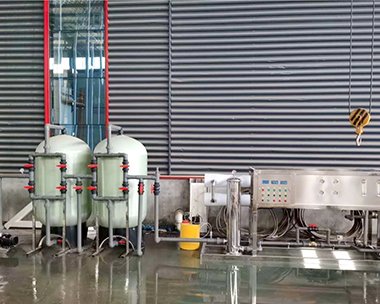
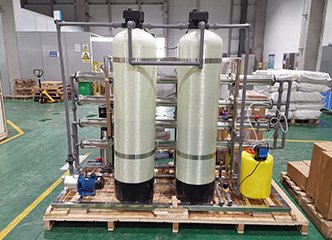
The resin tank is one of the core components of water softening equipment, which provides space for ion exchange resin. Ion exchange resin reacts with calcium, magnesium and other ions in the raw water in the tank, thereby removing hardness ions in the water.
The materials of the resin tank are usually glass fiber reinforced plastics, stainless steel, etc. Glass fiber reinforced plastic resin tanks have the advantages of corrosion resistance, light weight and relatively low price, and are suitable for most civil and industrial water softening equipment. Stainless steel resin tanks are more durable and suitable for occasions with high requirements for equipment strength and hygiene, such as food processing and pharmaceutical industries.
Structural features
The internal structure of the resin tank is reasonably designed to ensure that the water flows evenly through the resin layer. Usually there are water distributors and water collectors in the tank. The function of the water distributor is to evenly distribute the raw water entering the resin tank on the resin layer, so that the resin can fully contact the raw water and improve the ion exchange efficiency. The water collector collects the softened water after ion exchange and guides it out of the resin tank.
(II) Ion exchange resin
Ion exchange principle
Ion exchange resin is a high molecular polymer with exchangeable ions. In the process of softening water, the sodium ions on the resin (for sodium-type ion exchange resin) are exchanged with the calcium and magnesium ions in the raw water. For example, when the raw water passes through the resin layer, the Ca²⁺ in the water undergoes an exchange reaction with the 2Na⁺ on the resin, and the chemical equation is: 2R – Na+Ca²⁺→R₂ – Ca + 2Na⁺ (R represents the resin matrix). Similarly, Mg²⁺ will also undergo a similar exchange reaction.
Resin types and properties
There are many types of ion exchange resins, which can be divided into strong acid cation exchange resins, weak acid cation exchange resins, etc. according to the different active groups. Strong acid cation exchange resins have the advantages of large exchange capacity and fast exchange speed, and are widely used in softening water equipment. The performance indicators of resins include exchange capacity, particle size, water content, etc. The exchange capacity directly affects the softening effect and regeneration cycle of the water softening equipment. The particle size affects the hydraulic performance of the resin layer, while the water content is related to the physical and chemical stability of the resin.
(III) Salt box
Regeneration function
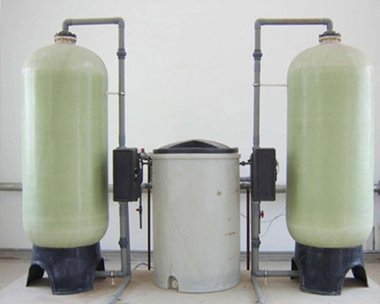
The salt box is a container that provides regeneration agent (usually sodium chloride solution) for ion exchange resin. After a period of use, the exchange capacity of the resin will decrease, and regeneration is required. The brine in the salt box is transported to the resin tank through the regeneration system, and a reverse ion exchange reaction occurs with the resin to replace the calcium and magnesium ions adsorbed on the resin, so that the resin can restore its exchange capacity.
Structure and maintenance
The salt box is generally made of plastic and has a certain capacity to meet the needs of resin regeneration. Inside the salt box, there is a salt solution stirring device to ensure that the salt can be fully dissolved to form a uniform brine solution. The salt box needs to be regularly added with salt and kept clean to prevent impurities from entering the salt solution and affecting the regeneration effect.
(IV) Controller
Control function
The controller is the brain of the water softening equipment, which is responsible for controlling the operation of the entire water softening process. The controller can set the working cycle, regeneration time, flow rate and other parameters of the softening water equipment. For example, according to the hardness of the raw water and the processing capacity of the equipment, set the appropriate operating cycle. When the set operating time or water volume is reached, the controller will automatically start the regeneration program.
Control method
Common control methods include time control, flow control and intelligent control. Time control is to regenerate according to the pre-set time interval. This method is simple and easy to implement, but it may cause untimely or excessive regeneration due to fluctuations in the raw water quality. Flow control determines the regeneration time based on the cumulative amount of water passing through the equipment. It is more scientific and reasonable and can adapt to changes in raw water quality. Intelligent control combines multiple parameters such as time and flow, and can detect water quality through sensors to achieve more accurate control.
(V) Pipeline and valve system
Pipeline
Pipelines play the role of connecting various components in softening water equipment. The water inlet pipe transports the raw water to the resin tank, and the water outlet pipe guides the softened water out of the equipment. The material of the pipeline needs to be selected according to the water quality and working environment. Generally, corrosion-resistant materials such as PVC, PPR or stainless steel are used.
Valve
Valves are used to control the direction and start and stop of water flow. In softening water equipment, there are many types of valves such as inlet valves, outlet valves, and regeneration valves. The inlet valve controls the entry of raw water, the outlet valve controls the outflow of softened water, and the regeneration valve controls the inflow of brine and the discharge of waste liquid during the resin regeneration process. The quality of the valve directly affects the operational reliability of the equipment, requiring good sealing performance and flexible operation.
Classification of softening water equipment
(I) Classification by ion exchange resin regeneration method
Downstream regeneration softening water equipment
Working principle
During the downstream regeneration process, the flow direction of the regeneration liquid is the same as the flow direction of the raw water during the softening process. The raw water enters from the upper part of the resin tank, and after passing through the resin layer, the hardness ions are adsorbed by the resin, and the softened water flows out from the lower part of the tank. During regeneration, the regeneration liquid (such as brine) also enters from the upper part of the resin tank, flows through the resin layer from top to bottom, and replaces the calcium and magnesium ions adsorbed on the resin.
Features
This equipment has a simple structure and is easy to operate. However, since the resin that the regeneration liquid contacts first during the flow process is regenerated more thoroughly, while the regeneration effect of the resin that contacts later is relatively poor, the resin at the bottom of the resin layer is not completely regenerated, the overall regeneration efficiency is low, and the amount of regeneration agent used is relatively large.
Countercurrent regeneration softening water equipment
Working principle
During countercurrent regeneration, the flow direction of the regeneration liquid is opposite to the flow direction of the raw water softening. The raw water still enters from the upper part of the resin tank, and the softened water flows out from the lower part. During the regeneration process, the regeneration liquid enters from the lower part of the resin tank and flows through the resin layer from bottom to top.
Features
Countercurrent regeneration enables the regeneration liquid to first contact the resin in the resin layer that adsorbs the most calcium and magnesium ions and has the weakest exchange capacity, thereby improving the regeneration efficiency. At the same time, since the bottom resin is regenerated thoroughly, the exchange capacity of the entire resin layer is more fully utilized. Compared with the downstream regeneration, the amount of regeneration agent can be reduced and the quality of softened water can be improved. However, the structure of the countercurrent regeneration equipment is relatively complex, and the operation and control requirements are relatively high.
(II) Classification by degree of automation of equipment
Manual water softening equipment
Operation method
Manual water softening equipment requires manual operation, including starting and stopping equipment operation, resin regeneration and other operations. For example, the operator needs to judge when to regenerate the resin based on experience or timing. During the regeneration process, the valve opening and closing should be manually controlled to adjust the flow rate and regeneration time of the regeneration liquid.
Applicable scenarios
This type of equipment is suitable for small occasions with low automation requirements, such as some small household water softening or rural areas with small water consumption. Because its operation relies on manual labor, the operation process is relatively cumbersome, and it is easy for human negligence to cause abnormal operation of the equipment.
Semi-automatic water softening equipment
Operation method
Semi-automatic water softening equipment has achieved automation in some operations. For example, it can automatically start the resin regeneration program according to the set time or flow rate, but during the regeneration process, manual assistance may be required, such as adding regeneration agent to the salt box.
Applicable scenarios
Applicable to some medium-sized enterprises or units, which have certain automation requirements for the operation of softening water equipment, but do not need fully automated operation, and can reduce equipment costs through manual assistance.
Fully automatic softening water equipment
Operation method
Fully automatic softening water equipment can automatically complete the production of softened water and the regeneration process of resin without human intervention. It accurately controls the equipment’s operating cycle, regeneration time, flow rate and other parameters through the controller. For example, according to the hardness of the raw water and the processing capacity of the equipment, the regeneration frequency is automatically adjusted, and during the resin regeneration process, the injection amount of salt solution and the regeneration process are automatically controlled.
Applicable scenarios
Widely used in large industrial enterprises, hotels, hospitals and other places with high water quality requirements and large water consumption. The fully automatic operation mode can ensure the stable and efficient operation of the equipment and reduce the errors and maintenance costs caused by manual operation.
(III) Classification by application field
Household softening water equipment
Features and requirements
Household softening water equipment is mainly used for softening domestic water, and its processing water volume is relatively small. Generally, a small resin tank and a simpler control method, such as time-based control, are used. The appearance design of the equipment is usually more beautiful, and considering the limitations of the installation space, it can often be installed in the kitchen, bathroom and other places of the family.
Water quality improvement effect
It can effectively remove calcium and magnesium ions from household tap water, prevent scale from forming in household water equipment (such as water heaters, faucets, etc.), extend the service life of the equipment, and make bathing water more comfortable and clothes washing cleaner.
Industrial softening water equipment
Features and requirements
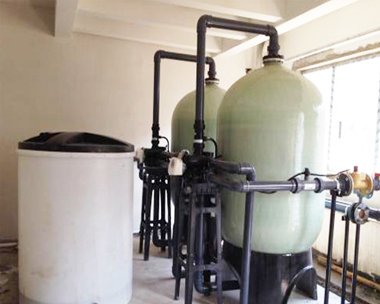
Industrial softening water equipment needs to process a large amount of industrial water, and has high requirements on the processing capacity, stability and reliability of the equipment. Depending on the different industrial uses, it may be necessary to process raw water of different hardness. For example, in the boiler industry, the quality requirements for softened water are very strict, because hard water will form scale in the boiler, reduce the heat transfer efficiency of the boiler, and even cause safety accidents. Industrial softening water equipment often uses large resin tanks, high-performance ion exchange resins and advanced control technologies such as intelligent control.
Water quality improvement effect
It can provide softened water that meets the requirements for industrial production and ensure the smooth progress of the industrial production process. In the chemical, electronic, pharmaceutical and other industries, softened water can be used as raw water or process water to avoid adverse effects on the production process and product quality caused by hardness ions in the water.
Commercial water softening equipment
Features and requirements
Commercial water softening equipment is between household and industrial use, and is mainly used in commercial places, such as hotels, swimming pools, etc. These places have a large water consumption, but do not have special and strict process requirements for water quality like industrial production. Commercial water softening equipment needs to meet the water needs of a large number of people, and must ensure the stability and reliability of equipment operation to provide a continuous supply of softened water.
Water quality improvement effect
In hotels and hotels, softened water can improve the user experience of bathing facilities and reduce equipment maintenance costs. In swimming pools, softened water can reduce the reaction of calcium and magnesium ions in water with disinfectants, improve the stability of swimming pool water quality, and also help protect the filtration and circulation equipment of swimming pools.