Introduction
In the realm of industrial filtration, the demand for efficient, high-capacity solutions has never been greater. The High Flow Cartridge Filter emerges as a pivotal innovation, designed to meet the rigorous demands of various industries. This article will explore the product introduction, working principle, components, technical specifications, and application fields of the High Flow Cartridge Filter, showcasing why it is a cornerstone in modern filtration technology.
Product Introduction
The High Flow Cartridge Filter is engineered to handle large volumes of liquids with exceptional efficiency. Unlike traditional filtration systems that may struggle with high flow rates and frequent maintenance, the High Flow Cartridge Filter offers a robust solution that minimizes downtime and maximizes productivity. Its design allows for the filtration of large quantities of liquid, making it ideal for industries where high throughput and reliability are paramount.
Working Principle
The High Flow Cartridge Filter operates on a straightforward yet highly effective principle. Contaminated liquid enters the filter housing and flows through the high-capacity filter cartridge. The cartridge, typically made from pleated or depth filter media, traps particles and impurities as the liquid passes through. The clean liquid then exits the filter housing, ready for use or further processing.
The key to the High Flow Cartridge Filter’s efficiency lies in its ability to handle high flow rates while maintaining low pressure drops. This is achieved through the use of advanced filter media and optimized cartridge design, which provide a large surface area for filtration without compromising flow rate. As a result, the filter can process large volumes of liquid with minimal resistance, ensuring consistent and reliable performance.
Product Composition
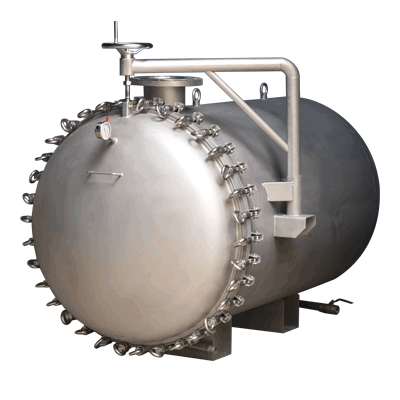
A High Flow Cartridge Filter is composed of several critical components that work together to deliver superior filtration:
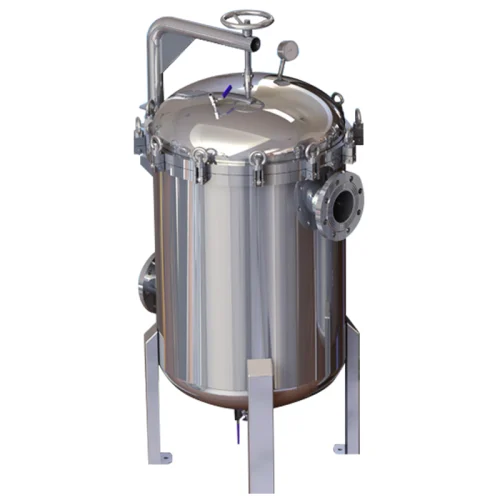
- Filter Housing: The outer casing that encloses the filter cartridge and provides structural support. It is typically made from stainless steel or other durable materials to withstand high pressures and corrosive environments.
- Filter Cartridge: The core component that captures contaminants. It is usually made from pleated or depth filter media, offering a large surface area for effective filtration.
- End Caps and Core: These components provide structural integrity to the filter cartridge and ensure a secure fit within the housing.
- Seals and Gaskets: Ensure a tight seal between the filter cartridge and housing, preventing bypass and ensuring all liquid passes through the filter media.
- Inlet and Outlet Ports: Allow the contaminated liquid to enter and the filtered liquid to exit the filter housing.
- Pressure Gauges: Monitor the pressure differential across the filter cartridge, indicating when the cartridge needs replacement or cleaning.
Technical Specifications
The technical specifications of a High Flow Cartridge Filter can vary based on the application and manufacturer. However, common parameters include:
- Filtration Rating: Typically ranges from 0.1 to 100 microns, depending on the level of filtration required.
- Flow Rate: Can handle flow rates from a few gallons per minute (GPM) to several thousand GPM, depending on the size and design of the filter.
- Operating Pressure: Usually designed to operate within a pressure range of 30 to 150 psi, with some models capable of handling higher pressures.
- Material of Construction: Filter housings are often made from stainless steel, but other materials like carbon steel or plastic may be used based on the application. Filter cartridges are typically made from synthetic or natural fibers.
- Temperature Range: Can operate within a wide temperature range, from -20°C to 120°C, depending on the materials used.
- Cartridge Length and Diameter: Varies based on the design, with common lengths ranging from 10 to 60 inches and diameters from 2.5 to 7 inches.
Application Fields
The versatility and efficiency of High Flow Cartridge Filters make them suitable for a wide range of applications across various industries:
- Water Treatment: Used in municipal and industrial water treatment plants to remove suspended solids, sediments, and other impurities, ensuring clean water supply.
- Oil and Gas: Employed in refineries, pipelines, and offshore platforms to filter out particulates from crude oil, lubricants, and other fluids, protecting equipment and ensuring product quality.
- Food and Beverage: Ensures the purity of liquids such as juices, syrups, and dairy products by removing contaminants without compromising product quality.
- Chemical Processing: Protects sensitive equipment and maintains product integrity by filtering out impurities from chemicals, solvents, and process fluids.
- Pharmaceuticals: Used in the production of drugs and medical solutions to ensure sterility and purity, meeting stringent industry standards.
- Power Generation: Filters cooling water, fuel, and lubricants in power plants, ensuring efficient operation and reducing maintenance costs.
Conclusion
The High Flow Cartridge Filter is a testament to the advancements in filtration technology, offering unparalleled efficiency, high capacity, and robust performance. Its innovative design and superior construction make it an indispensable tool in