Introduction
In the world of industrial and commercial filtration, cartridge filter housings play a crucial role in ensuring the efficiency and reliability of filtration systems. These housings are designed to accommodate filter cartridges, providing a secure and effective environment for contaminant removal. This article explores the product introduction, working principle, components, technical specifications, and application fields of cartridge filter housings, highlighting their importance in various industries.
Product Introduction
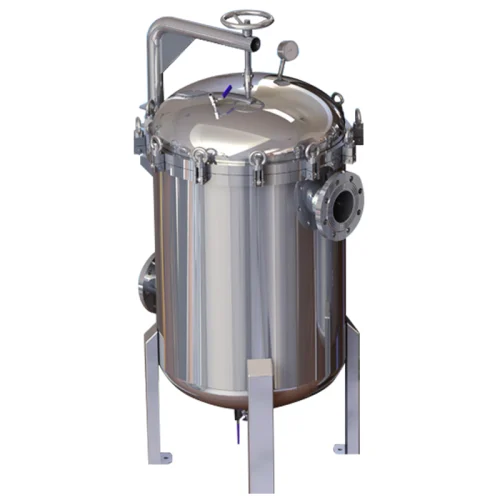
Cartridge filter housings are essential components in filtration systems, designed to hold and protect filter cartridges while facilitating the flow of liquids through the filtration media. These housings are built to withstand harsh operating conditions, ensuring the longevity and effectiveness of the filtration process. Available in various sizes, materials, and configurations, cartridge filter housings are versatile and can be tailored to meet the specific needs of different applications.
Working Principle
The working principle of cartridge filter housings is straightforward yet highly effective. Contaminated liquid enters the filter housing through the inlet port and flows through the filter cartridges contained within. The cartridges, made from various filtration media, trap particles and impurities as the liquid passes through. The clean liquid then exits the housing through the outlet port, ready for use or further processing.
The design of cartridge filter housings ensures that all liquid flows through the filter cartridges, preventing bypass and ensuring maximum filtration efficiency. The housings are equipped with seals and gaskets to maintain a tight seal, preventing leaks and ensuring that the filtration process is uninterrupted.
Product Composition
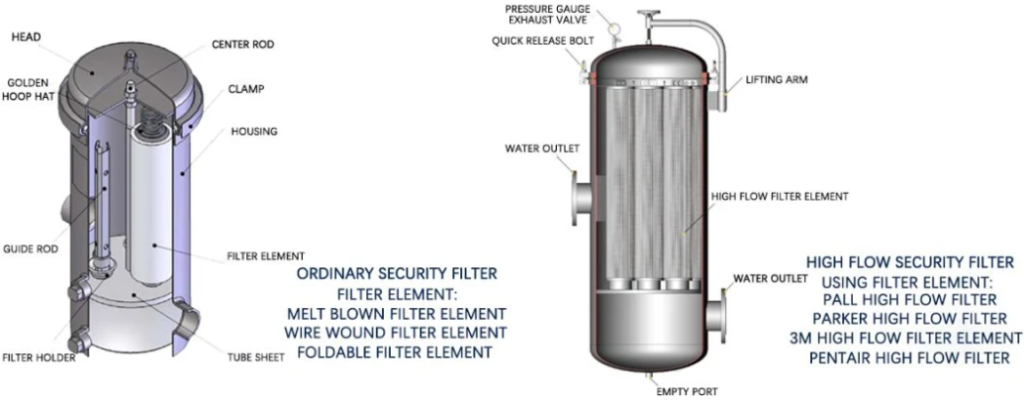
Cartridge filter housings are composed of several key components that work together to provide effective filtration:
- Housing Body: The main structure that encloses the filter cartridges and provides support. It is typically made from stainless steel, carbon steel, or plastic, depending on the application and operating conditions.
- Filter Cartridges: The core components that capture contaminants. They are inserted into the housing and can be easily replaced when needed.
- Inlet and Outlet Ports: Allow the contaminated liquid to enter and the filtered liquid to exit the housing. These ports are designed to accommodate various pipe sizes and connections.
- Seals and Gaskets: Ensure a tight seal between the housing and the filter cartridges, preventing leaks and bypass.
- Closure Mechanism: Includes clamps, bolts, or swing bolts that secure the housing cover, allowing for easy access to the filter cartridges for replacement or maintenance.
- Pressure Gauges and Vents: Monitor the pressure differential across the filter cartridges and allow for venting of air or gases from the housing.
Technical Specifications
The technical specifications of cartridge filter housings can vary based on the application and manufacturer. Common parameters include:
- Material of Construction: Filter housings are often made from stainless steel, carbon steel, or plastic, depending on the application. Stainless steel is preferred for its durability and corrosion resistance.
- Size and Capacity: Housings are available in various sizes to accommodate different numbers and lengths of filter cartridges. Common sizes include single-cartridge housings and multi-cartridge housings that can hold up to 100 cartridges or more.
- Filtration Rating: The filter cartridges used in the housings typically have filtration ratings ranging from 0.1 to 100 microns, depending on the level of filtration required.
- Operating Pressure: Cartridge filter housings are designed to operate within a pressure range of 30 to 150 psi, with some models capable of handling higher pressures.
- Temperature Range: Can operate within a wide temperature range, from -20°C to 120°C, depending on the materials used.
- Connection Types: Inlet and outlet ports are available in various connection types, including threaded, flanged, and sanitary connections, to suit different piping systems.
Application Fields
The versatility and reliability of cartridge filter housings make them suitable for a wide range of applications across various industries:
- Water Treatment: Used in municipal and industrial water treatment plants to remove suspended solids, sediments, and other impurities, ensuring clean water supply.
- Oil and Gas: Employed in refineries, pipelines, and offshore platforms to filter out particulates from crude oil, lubricants, and other fluids, protecting equipment and ensuring product quality.
- Food and Beverage: Ensures the purity of liquids such as juices, syrups, and dairy products by removing contaminants without compromising product quality.
- Chemical Processing: Protects sensitive equipment and maintains product integrity by filtering out impurities from chemicals, solvents, and process fluids.
- Pharmaceuticals: Used in the production of drugs and medical solutions to ensure sterility and purity, meeting stringent industry standards.
- Power Generation: Filters cooling water, fuel, and lubricants in power plants, ensuring efficient operation and reducing maintenance costs.