
Introduction
Shallow sand filters are a cornerstone in the realm of water filtration, providing an efficient and cost-effective solution for removing suspended particles and impurities from water. These filters are widely used in various applications, from agricultural irrigation to industrial water treatment. This comprehensive guide delves into the product introduction, working principles, components, technical specifications, and application fields of shallow sand filters.
Product Introduction
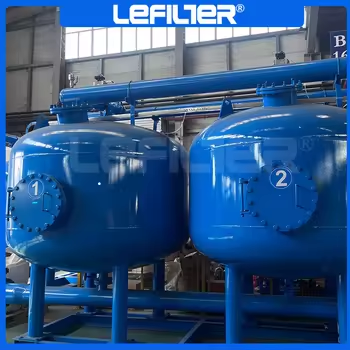
Shallow sand filters are designed to offer a simple yet effective method for water purification. Utilizing a bed of sand as the filtering medium, they capture and remove suspended solids, making the water clearer and safer for various uses. These filters are known for their robustness, low maintenance requirements, and ability to handle high flow rates. Their efficiency and reliability make them a popular choice in both small-scale and large-scale water filtration systems.
Working Principle
The working principle of a shallow sand filter is based on the physical straining and biological processes that occur within the sand bed. Here’s a detailed breakdown of the filtration process:
- Influent Water Introduction: Contaminated water enters the filter through an inlet, typically located at the top of the filter unit.
- Distribution: The water is evenly distributed over the sand bed, allowing it to percolate through the sand layers.
- Filtration: As water flows through the sand bed, suspended particles and impurities are trapped within the sand grains. The sand acts as a physical barrier, straining out particles based on size.
- Biological Action: Over time, a biofilm of beneficial microorganisms forms on the surface of the sand. These microorganisms further break down organic contaminants, enhancing the filtration process.
- Effluent Collection: The filtered water is collected at the bottom of the filter unit and exits through an outlet, ready for use or further treatment.
- Backwashing: To maintain the efficiency of the filter, periodic backwashing is performed. Clean water or air is introduced in the reverse direction to dislodge and remove trapped contaminants from the sand bed.
Product Composition
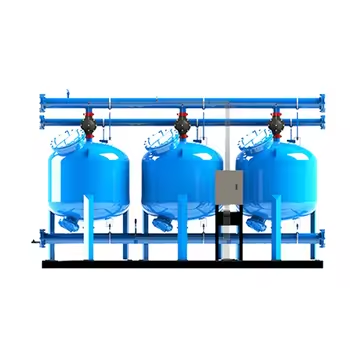
Shallow sand filters consist of several key components that work together to provide efficient and reliable filtration:
- Filter Tank: The outer casing that holds the sand bed and other internal components. It is typically made from durable materials like fiberglass, stainless steel, or reinforced plastic to withstand varying pressures and environmental conditions.
- Sand Bed: The core filtering medium, usually composed of multiple layers of sand with different grain sizes. The sand bed is responsible for trapping and removing suspended particles from the water.
- Inlet and Outlet: Ports through which water enters and exits the filter. The inlet is designed to distribute water evenly over the sand bed, while the outlet collects and channels the filtered water.
- Underdrain System: A system located at the bottom of the filter tank that supports the sand bed and ensures even flow distribution during both filtration and backwashing.
- Control Valves: Valves that regulate the flow of water during normal operation and backwashing. They ensure the proper functioning of the filtration process and facilitate maintenance activities.
- Manifold System: A network of pipes that distributes water evenly across the sand bed and collects the filtered water.
Technical Specifications
Shallow sand filters come with various technical specifications tailored to meet different application requirements. Here are some key specifications:
- Filtration Capacity: Typically measured in cubic meters per hour (m³/h), indicating the volume of water the filter can handle. Capacities can range from a few m³/h for small systems to several hundred m³/h for large-scale operations.
- Sand Bed Depth: The depth of the sand bed, usually ranging from 0.3 to 1.2 meters. Deeper sand beds provide better filtration efficiency and longer service intervals.
- Grain Size: The size of the sand grains, typically measured in millimeters. Common grain sizes range from 0.2 to 1.2 mm, with finer grains providing better filtration but potentially higher resistance to flow.
- Flow Rate: The rate at which water flows through the filter, usually measured in meters per second (m/s). Optimal flow rates ensure effective filtration without causing excessive pressure drop.
- Pressure Rating: The maximum pressure the filter can withstand, typically measured in bar or psi. Shallow sand filters are designed to handle pressures ranging from 2 to 10 bar.
- Backwash Frequency: The recommended frequency for backwashing, depending on the level of contamination and flow rate. Backwashing intervals can range from daily to weekly.
Application Fields
Shallow sand filters are versatile and used in a wide range of applications across different industries. Here are some common application fields:
- Agricultural Irrigation: Used to filter irrigation water, removing suspended particles and preventing clogging of irrigation equipment. This ensures efficient water distribution and promotes healthy crop growth.
- Drinking Water Treatment: Employed in municipal and rural water treatment plants to remove turbidity and improve water quality, making it safe for human consumption.
- Industrial Water Treatment: Used in various industrial processes to filter water used for cooling, manufacturing, and other purposes. This prevents equipment fouling and maintains process efficiency.
- Aquaculture: Ensures the cleanliness of water in fish farms and aquariums, promoting the health and growth of aquatic organisms