Structural components
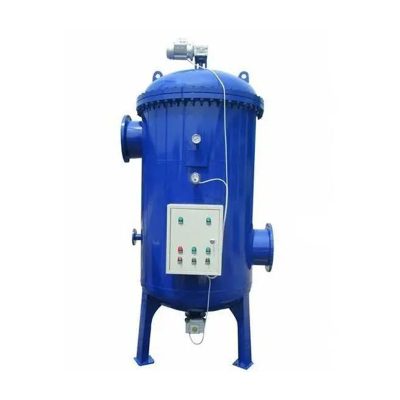
Housing: usually made of carbon steel or stainless steel, it is the outer shell of the filter, which is used to contain the internal filtering parts and fluid, and can withstand a certain pressure.
Filter element: the core component of filtration, usually made of stainless steel, polypropylene and other materials, with different pore sizes and filtration precision, can intercept different sizes of impurity particles.
Backwash structure: including backwash valve, suction nozzle, backwash pipe, etc. It is used to direct the backwash fluid to the surface of the cartridge to remove the impurities during cleaning.
Reduction gear: Used to drive the rotating parts of the backwash structure, such as suction nozzles or cleaning arms, so that they can move along the surface of the cartridge to achieve a comprehensive cleaning.
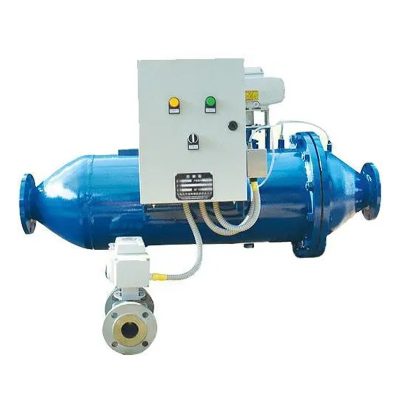
Motorised valves: control the inlet and outlet of fluids and the opening and closing of the backwashing process, usually controlled by an electric control box for automated operation.
Differential pressure controller: monitors the pressure difference between the inlet and outlet of the filter, and sends out a signal to start the backwashing process when the pressure difference reaches the set value, so as to ensure the normal operation of the filter.
Electric control box: it is the control system of the filter, which is used to receive signals from the differential pressure controller and control the operation of electric valves, reducers and other components to achieve automatic control of the filtration and backwashing process.
Working Principle
- Filtration Phase: Contaminated fluid enters the filter housing and flows through the multiple filter cartridges. Particles and impurities are trapped within the cartridges, allowing clean fluid to exit the filter.
- Monitoring: The filter system continuously monitors the differential pressure across the filter cartridges. As contaminants accumulate, the pressure difference increases, triggering the cleaning cycle.
- Cleaning Cycle: Once the differential pressure reaches a predetermined threshold, the self-cleaning mechanism is activated.
- Backwashing: In multi-cartridge systems, clean fluid is reversed through the filter cartridges, dislodging and flushing out trapped contaminants. The contaminants are then expelled through a drain or waste outlet.
- Sequential Cleaning: The cleaning process may be performed sequentially on each cartridge to ensure minimal interruption to the filtration process.
- Resumption of Filtration: After the cleaning cycle is completed, the filter automatically resumes normal filtration. This entire process occurs without interrupting the flow of the fluid, ensuring continuous operation.
Product Composition
- Filter Housing: The outer casing that holds all the internal components, typically made from durable materials like stainless steel or reinforced plastic to withstand high pressures and harsh environments.
- Filter Cartridges: The core components responsible for trapping contaminants, available in various materials and configurations to suit different applications. Common filter cartridges include pleated cartridges, depth cartridges, and membrane cartridges.
- Backwash System: The system responsible for reversing the flow of clean fluid through the filter cartridges to dislodge and flush out trapped contaminants.
- Differential Pressure Sensor: Monitors the pressure difference across the filter cartridges and triggers the cleaning cycle when the pressure reaches a predetermined threshold.
- Control Unit: Manages the operation of the self-cleaning filter, including monitoring the differential pressure, initiating the cleaning cycle, and resuming normal filtration.
- Waste Outlet: The outlet through which dislodged contaminants are expelled during the cleaning cycle.
Technical Specifications
- Filtration Efficiency: Available in different micron ratings, typically ranging from 1 to 100 microns, to capture various sizes of contaminants.
- Flow Rate: Designed to handle a wide range of flow rates, from a few liters per minute to several thousand liters per minute, depending on the system requirements.
- Pressure Rating: Built to withstand high pressures, with pressure ratings often exceeding 10 bar (145 psi) and up to several hundred bar for specialized applications.
- Temperature Range: Designed to operate in a wide range of temperatures, from sub-zero conditions to high-temperature environments, ensuring reliability in various settings.
- Cleaning Cycle Duration: The duration of the cleaning cycle can vary depending on environments.
Application Fields
- Water Treatment: Used to remove contaminants from raw water, ensuring clean and safe water for municipal, industrial, and agricultural use.
- Oil and Gas: Essential for protecting equipment and ensuring the purity of fluids in upstream, midstream, and downstream operations.
- Chemical Processing: Used to maintain the purity of chemicals, protect equipment, and ensure the quality of end products.
- Food and Beverage: Ensures the removal of impurities from liquids used in the production process, maintaining product quality and safety.
- Pharmaceutical: Critical for maintaining the purity of fluids used in the production of pharmaceuticals, ensuring compliance with stringent quality standards.
- Pulp and Paper: Used to remove contaminants from process water and other fluids, protecting equipment and improving product quality.
- Automotive: Ensures the purity of fluids used in manufacturing processes, protecting equipment and ensuring the quality of end products.
- Power Generation: Used to remove contaminants from cooling water, fuel, and other fluids, protecting equipment and maintaining efficiency.