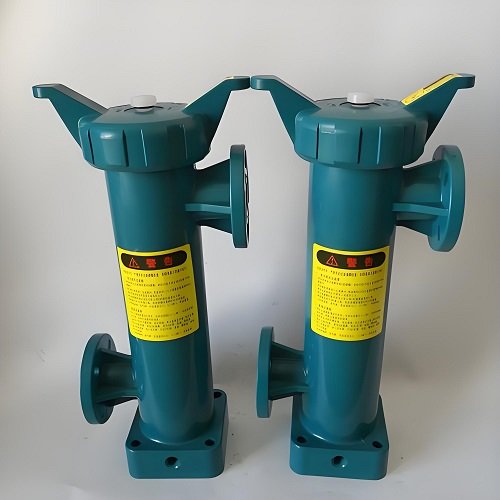
Product Introduction
The one-piece moulded bag filter represents a pinnacle of filtration engineering, integrating a seamless housing with a replaceable filter bag to deliver reliable, high-performance solid-liquid separation. Unlike traditional multi-component filter systems, its monolithic moulded casing eliminates joint vulnerabilities, ensuring leak-proof operation and structural integrity. Designed with a cylindrical filter bag as the core filtration element, it efficiently removes particles ranging from 0.5 to 200 microns, making it indispensable in industries demanding precision filtration—from water treatment and chemical processing to food & beverage production.
Structural Design Innovations
- Monolithic Housing Advantages
- Material Engineering:
- Polypropylene (PP): Corrosion-resistant for acidic/alkaline fluids (pH 1–14), operating up to 80°C.
- Stainless Steel (316L): High-pressure (up to 2.5 MPa) and high-temperature (up to 180°C) compatibility, ideal for harsh industrial environments.
- Moulding Precision: Injection-moulded PP housings feature uniform wall thickness (±0.5 mm), while stainless steel housings use orbital welding for seamless joints, eliminating leak paths.
- Material Engineering:
- Integrated Filtration System Components
- Support Basket: A perforated 304 stainless steel basket inside the housing supports the filter bag, preventing collapse under pressure and ensuring structural stability.
- Bag Sealing Mechanism: A top collar with a silicone or PTFE gasket creates a tight seal, preventing unfiltered fluid bypass. In high-purity applications, the collar design meets FDA-compliant standards.
- Intelligent Monitoring Features
- Optional Sensors:
- Pressure transmitters for remote monitoring via SCADA systems.
- Turbidity sensors that trigger alarms if filtrate clarity deviates from setpoints.
- Safety Enhancements: Explosion-proof housings (ATEX-certified) for flammable fluids, with grounding studs to dissipate static electricity.
- Optional Sensors:
Application Scenarios
- Water and Wastewater Treatment
- Ultrafiltration Pre-Filtration: In municipal water plants, 10-micron PTFE bags remove suspended solids before ultrafiltration membranes, reducing membrane fouling and extending backwash intervals by 50%.
- Industrial Wastewater Polishing: Polypropylene bags with 20-micron rating remove oil droplets and fine particulates from automotive paint shop wastewater, enabling 90% water reuse.
- Chemical and Petrochemical Processing
- Catalyst Recovery: In polypropylene production, 1-micron membrane bags recover expensive Ziegler-Natta catalysts, achieving >99.8% efficiency and reducing catalyst costs by $120,000/year for a 50 kt/year plant.
- Solvent Filtration: PTFE-lined bags filter impurities from pharmaceutical-grade solvents, ensuring product purity meets USP/NF standards.
- Food and Beverage Manufacturing
- Wine Clarification: Polyester felt bags with 1.5-micron rating remove tartrate crystals and colloidal proteins, improving wine clarity without affecting bouquet.
- Dairy Processing: 0.5-micron cellulose bags filter casein particles from skim milk, enhancing cheese yield by 8% and reducing downstream equipment fouling.
Technical Advantages
- Leakage Reduction
- The one-piece design eliminates 90% of potential leak points compared to flanged filters, validated by helium leak tests showing <10⁻⁹ mbar·L/s leakage rates.
- Superior Dirt-Holding Capacity
- Depth-loaded bags can retain up to 30 kg/m² of solids, outperforming cartridge filters by 4–6 times in cumulative dirt retention, reducing replacement frequency.
- Cost-Effective Operation
- Bag replacement costs are 40–60% lower than cartridge filters, with a case study in a beverage plant demonstrating $150,000 annual savings in consumables.
- Space and Weight Optimization
- The compact design occupies 50% less floor space than multi-housing systems, with PP housings weighing 70% less than equivalent stainless steel traditional filters.
Maintenance and Operation Guidelines
- Routine Performance Monitoring
- Daily Checks: Record inlet/outlet pressure to track bag clogging; replace bags when differential pressure exceeds 0.25 MPa.
- Monthly Inspections: For stainless steel housings, perform visual checks for pitting corrosion; for PP housings, inspect for stress cracks in high-temperature applications.
- Bag Replacement Protocols
- Sanitary Procedures: In food-grade applications, disinfect the housing interior with 70% ethanol before installing a new bag.
- Anti-Static Handling: Use grounded tools and gloves when replacing PTFE bags to prevent electrostatic discharge damage to the membrane.
- Process Optimization
- Flow Rate Control: Maintain fluid velocity below 1.2 m/s to prevent bag damage and ensure uniform filtration.
- Pre-Filtration Strategy: Install a 50-micron pre-filter in highly turbid streams to extend main bag life by 3–4 times.
Conclusion
If you are interested in this product or have any questions, please feel free to contact us at any time.