Introduce:
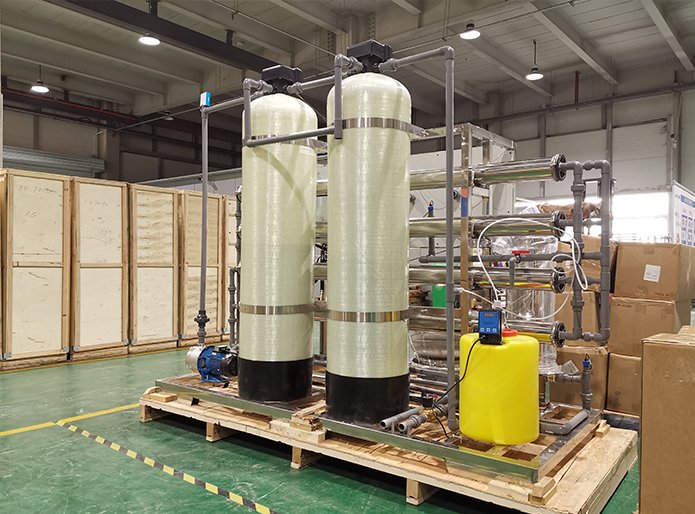
Water treatment equipment plays a pivotal role in industrial operations, where water quality directly impacts efficiency, equipment longevity, and product quality. Among the key solutions in this field are demineralized water equipment and water softening equipment, each designed to address specific water quality challenges. Water softening equipment, in particular, focuses on reducing water hardness by targeting and removing calcium and magnesium ions—common culprits behind scale buildup, clogged pipelines, and reduced heat transfer efficiency. This equipment is indispensable for industries relying on water-based systems, especially when the water source is hard, such as deep well water. Unlike demineralization processes that remove a broader range of minerals, water softening specifically targets hardness ions without altering the total salt content of the water, making it a cost-effective and targeted solution for hardness-related issues.
Advantages & Features
Water softening equipment offers a host of advantages tailored to industrial needs. Firstly, its targeted ion removal ensures that calcium and magnesium ions—responsible for scale formation in boilers, heat exchangers, and pipes—are effectively reduced, thereby extending equipment lifespan and minimizing maintenance downtime. This directly translates to lower operational costs and improved system efficiency.
Secondly, the equipment operates with automated functionality, thanks to advanced controllers that regulate water flow and timing. This automation reduces the need for manual intervention, ensuring consistent performance and reducing the risk of human error.
Another key feature is its compatibility with diverse water sources, including high-hardness deep well water, making it versatile across different industrial settings. Additionally, the use of durable materials such as stainless steel and glass fiber reinforced plastic for resin tanks ensures the equipment can withstand harsh industrial environments, enhancing its durability and long-term reliability.
Notably, water softening equipment maintains the total salt content of water, which is critical for industries where salt levels must remain stable to avoid disrupting processes—such as in printing and dyeing, where consistent water chemistry is vital for color retention and fabric quality.
Structure Specification
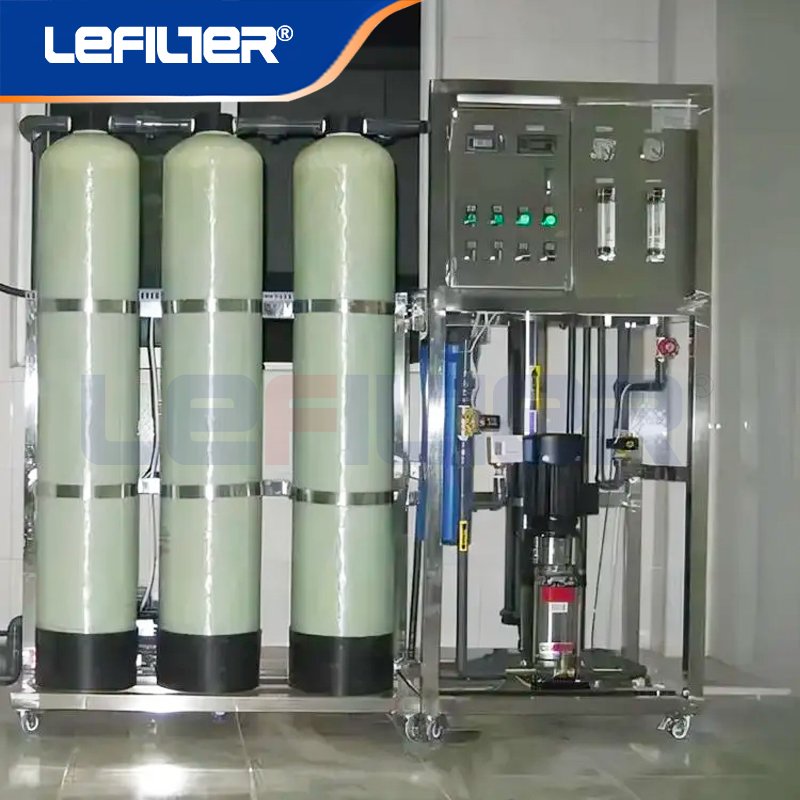
Water softening equipment comprises several core components working in tandem to deliver softened water. At its heart is the automatic softening water controller, which acts as the system’s brain, monitoring water flow and time to trigger key operations. Connected to the controller is the salt box, which stores the brine solution used for resin regeneration—a crucial step to restore the resin’s ion-exchange capacity.
The strong acid sodium ion cation resin serves as the primary filter medium, facilitating the exchange of calcium and magnesium ions with sodium ions, thereby softening the water. This resin is housed in resin tanks, typically constructed from stainless steel or glass fiber reinforced plastic to resist corrosion and ensure structural integrity under high-pressure conditions.
Complementing these components are water softener accessories, including solenoid valves or multi-channel servo valves, which execute commands from the controller to manage water supply, regeneration cycles, and wastewater discharge. Together, these components form a compact, efficient system designed for continuous operation in industrial environments.
Working Principle
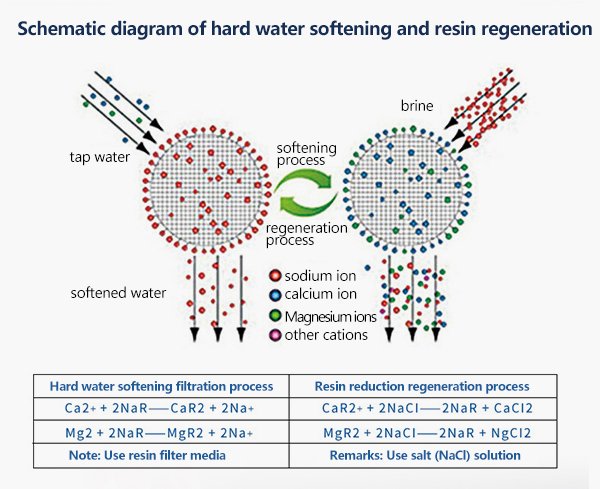
The operation of water softening equipment is based on the principle of ion exchange, orchestrated by the system’s automated controller. During the softening cycle, hard water flows through the resin tank, where the strong acid sodium ion cation resin attracts and binds calcium and magnesium ions, releasing sodium ions in their place. This exchange effectively reduces water hardness, producing softened water for industrial use.
Once the resin becomes saturated with calcium and magnesium ions, the controller initiates a regeneration cycle to restore its capacity. Brine solution from the salt box is pumped into the resin tank, flushing out the accumulated hardness ions and replenishing the resin with sodium ions. The timing and duration of regeneration are precisely controlled by the controller, based on water flow metrics and preset schedules, ensuring optimal resin performance and minimal water wastage.
This cycle of softening and regeneration allows the equipment to operate continuously, providing a steady supply of softened water to critical industrial systems such as boilers, cooling towers, and heat exchangers.
Application
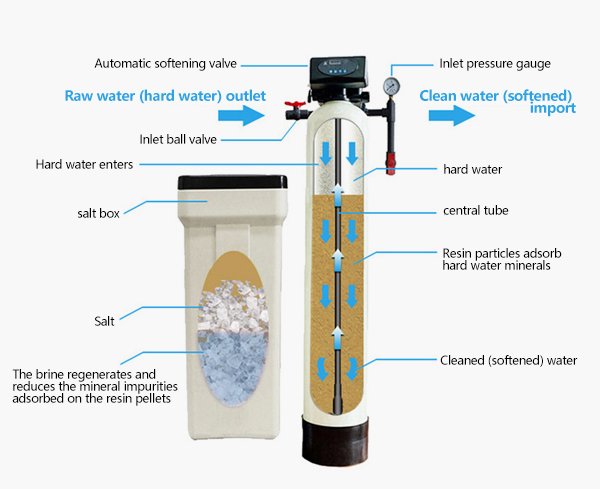
Water softening equipment finds extensive use across industries where water hardness poses operational challenges. In industrial boilers, softened water prevents scale buildup on heating surfaces, maintaining efficient heat transfer and reducing the risk of overheating or equipment failure. Similarly, in central air conditioning systems and heat exchangers, it ensures unobstructed water flow and optimal thermal efficiency, lowering energy consumption.
The printing and dyeing industry benefits from consistent water quality, as softened water prevents mineral deposits from affecting fabric dye absorption and color uniformity. Additionally, in steelmaking and steel rolling, where cooling water systems are critical, softening equipment protects pipelines and machinery from scale, ensuring smooth production processes. It is also widely used in large transformers and civil hot water boilers, where reliable water quality is essential for safety and performance.
Summary
Water softening equipment is a cornerstone of industrial water treatment, offering targeted, efficient removal of calcium and magnesium ions to combat water hardness. Its automated operation, durable construction, and compatibility with diverse water sources make it an invaluable asset across industries such as boiler operation, air conditioning, printing, and steel production. By preventing scale buildup and maintaining system efficiency, it reduces maintenance costs and extends equipment lifespan, directly contributing to operational success. For inquiries or further information, please contact us at overseas@lefilter.com.