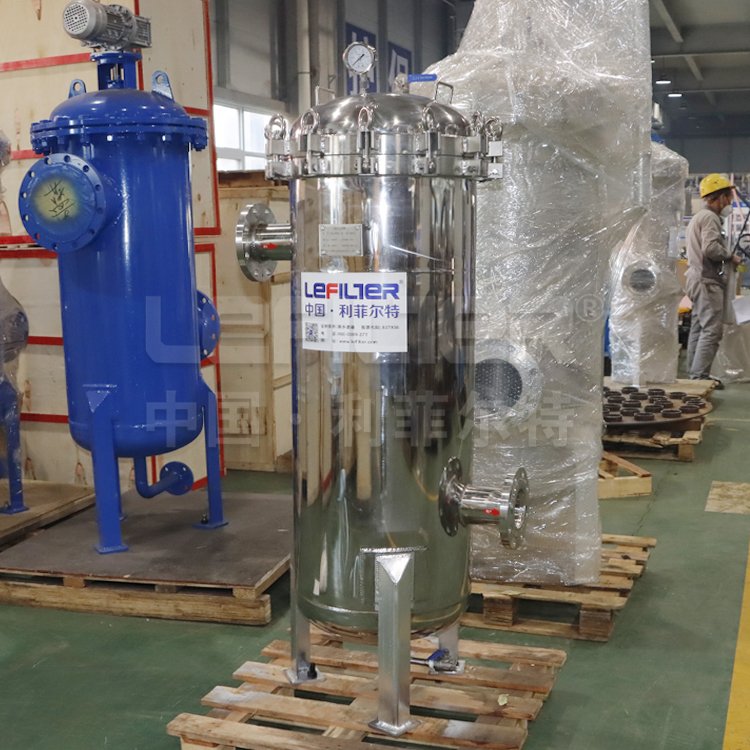
Introduce:
Cartridge filter housings, often referred to as “precision filter housings,” are specialized enclosures built to hold and secure replaceable filter cartridges (e.g., PP melt-blown, wire-wound, activated carbon, or titanium rod filters). Unlike bulky, one-size-fits-all filtration systems, these housings are tailored for targeted impurity removal—effectively capturing sediment, suspended solids, rust, colloids, bacteria, and fine particles (down to 0.1μm) from liquids like water, hydraulic oil, chemicals, and process fluids.
Crafted from high-grade materials such as 304/316 stainless steel (for corrosion resistance), fiberglass-reinforced plastic (FRP), or carbon steel (for heavy-duty scenarios), they balance structural strength with adaptability. Whether integrated into pretreatment lines for reverse osmosis (RO) systems or used as terminal security filters in food processing, cartridge filter housings ensure fluids meet strict purity standards while minimizing operational downtime.
Advantages & Features
What sets cartridge filter housings apart from traditional filtration solutions? Their design prioritizes efficiency, reliability, and cost-effectiveness—addressing key pain points in industrial settings:
- Exceptional Filtration Performance: With filtration precision ranging from 0.1μm to 120μm (bridging the gap between coarse sand filtration and ultrafiltration), they remove even micron-level impurities (e.g., bacteria, metal particles) that damage pumps, valves, or sensitive equipment.
- Durable & Corrosion-Resistant: Housings made of 316 stainless steel excel in harsh environments (e.g., chemical processing, marine applications), while 304 stainless steel offers cost-effectiveness for general use. All options feature internal/external polishing to prevent fluid contamination.
- Flexible & Versatile: Compatible with nearly all filter cartridge types—including PP melt-blown (for sediment), wire-wound (for fine particles), activated carbon (for odor/taste removal), and titanium rod (for high-temperature fluids). This allows users to switch cartridges based on specific filtration needs, no need to replace the entire housing.
- High Pressure Tolerance & Low Resistance: Engineered to withstand high operating pressures (critical for industrial pipelines), they maintain a large filtration area to ensure fast flow rates. Low flow resistance reduces energy consumption and prevents system bottlenecks.
- Easy Maintenance & Cost-Efficiency: Lightweight, compact design saves installation space. Quick-open, flange, or clamp-on lids enable tool-free cartridge replacement—cutting maintenance time by up to 50%. Reusable housings and affordable replaceable cartridges lower long-term operational costs.
- Hygienic & Compliant: Smooth, crevice-free interiors prevent bacteria buildup, making them suitable for food, beverage, and pharmaceutical industries (meeting FDA and GMP standards). Materials are non-toxic and do not leach contaminants into filtered fluids.
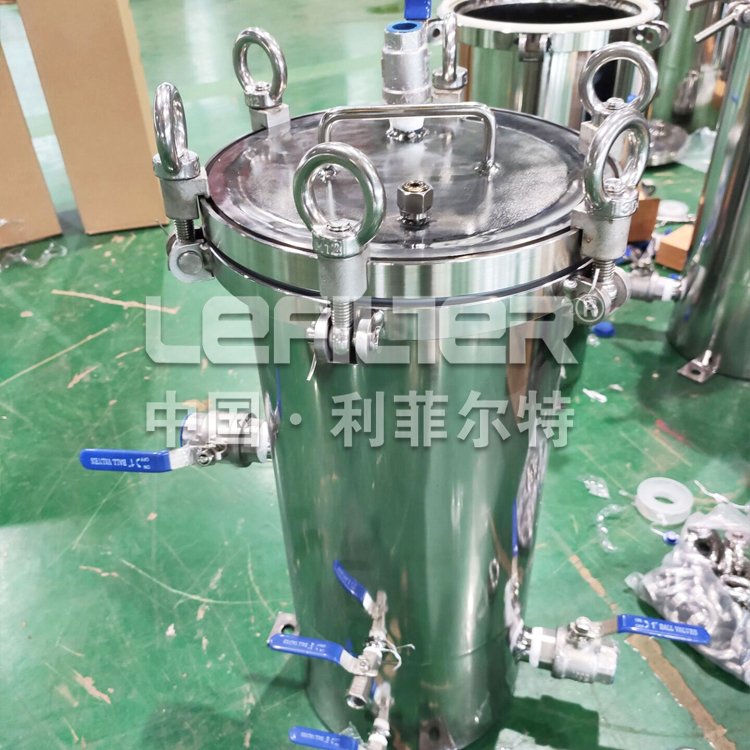
Structure Specification
Cartridge filter housings boast a streamlined, functional design optimized for performance and usability. Key structural components include:
| Component | Material Options | Function |
|---|---|---|
| Housing Body | 304/316 stainless steel, FRP, carbon steel | Main enclosure; provides structural support and corrosion resistance. |
| Lid/Closure | Stainless steel (quick-open, flange, clamp-on) | Allows easy access for cartridge replacement; ensures airtight sealing. |
| Filter Cartridge Holder | Polypropylene (PP), stainless steel | Secures the filter cartridge in place; ensures uniform fluid distribution. |
| Inlet/Outlet Ports | Stainless steel (threaded or flanged) | Connects to industrial pipelines; designed for smooth fluid flow (minimizing turbulence). |
| Sealing Gasket | Nitrile rubber, EPDM, silicone | Prevents fluid leakage; compatible with different fluids (e.g., oils, chemicals, water). |
| Pressure Relief Valve (Optional) | Stainless steel | Releases excess pressure to protect the housing and cartridges from damage. |
Standard sizes range from small benchtop models (for laboratory use) to large vertical housings (for industrial-scale flow rates up to 100 m³/h). Customizations—such as special material coatings, larger ports, or multi-cartridge configurations—are available to meet unique industry requirements (e.g., high-temperature processing, acidic fluid filtration).
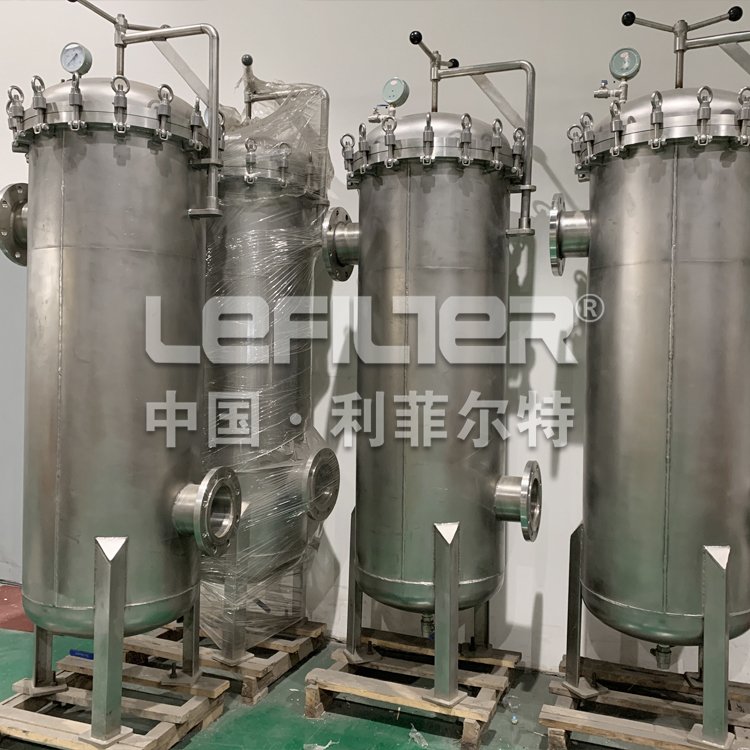
Working Principle
The operation of cartridge filter housings is based on pressure-driven, surface filtration—simple yet highly effective:
- Fluid Inlet: Contaminated fluid (e.g., raw water, hydraulic oil) enters the housing through the inlet port, guided by the streamlined internal design to avoid turbulence.
- Pressure-Driven Filtration: Under system pressure, the fluid is forced through the filter cartridge. The cartridge’s porous structure (e.g., PP melt-blown fibers, wire-wound layers) acts as a physical barrier: impurities (sediment, suspended solids, bacteria) are trapped on the cartridge’s surface or within its pores, while clean fluid passes through.
- Impurity Retention: Trapped contaminants accumulate on the cartridge over time (without clogging quickly, thanks to the large filtration area). The housing’s sealed design prevents bypass—ensuring no unfiltered fluid reaches the outlet.
- Clean Fluid Outlet: Purified fluid exits the housing through the outlet port, ready for use in downstream processes (e.g., manufacturing, drinking water supply) or discharge (meeting environmental standards).
- Cartridge Replacement: When pressure differentials across the cartridge rise (indicating clogging), the lid is opened, the old cartridge is discarded, and a new one is installed—restoring the system to full efficiency in minutes.
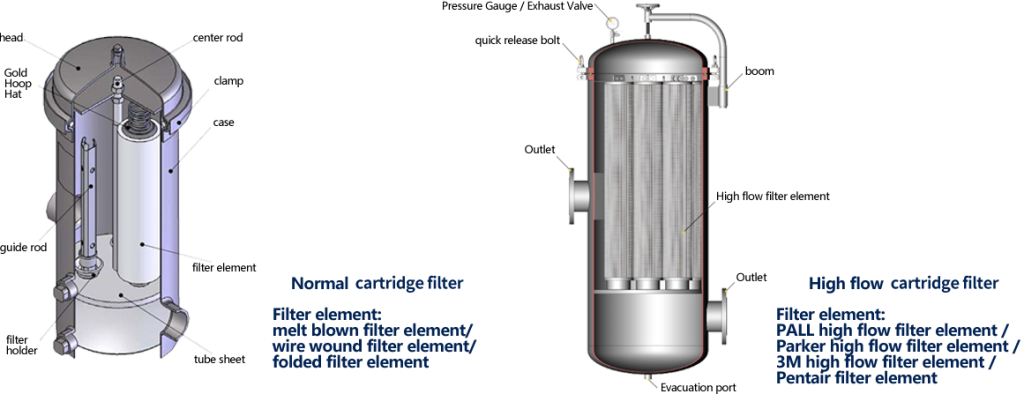
Application
Cartridge filter housings are versatile enough to serve nearly every industry where fluid purity matters. Key applications include:
- Water Treatment: Used as pretreatment for RO systems (removing sediment to protect RO membranes) in municipal water plants, commercial buildings, and offshore platforms. Also serves as terminal filters for drinking water, swimming pool water, and wastewater recycling.
- Industrial Manufacturing: Critical for hydraulic systems (filtering hydraulic oil to prevent pump/valve wear) in automotive, aerospace, and machinery industries. Also filters coolants, lubricants, and cleaning fluids in factories.
- Food & Beverage: Purifies process water for beverage production (e.g., beer, soft drinks) and removes particles from syrups, juices, and dairy products—ensuring product clarity and safety.
- Pharmaceuticals & Healthcare: Filters water for drug formulation and cleanses solvents in laboratory testing, meeting strict GMP standards to avoid contamination of medications or medical devices.
- Chemical & Petrochemical: Handles corrosive fluids (e.g., acids, solvents) and filters process streams in chemical synthesis, preventing catalyst poisoning and ensuring product purity.
- Marine & Offshore: Desalinates seawater (as part of pretreatment) for shipboard drinking water and filters fuel oils to protect marine engines from damage.
Summary
Cartridge filter housings are more than just filtration enclosures—they are a cost-effective, adaptable solution that safeguards industrial operations, improves product quality, and ensures compliance with environmental and safety standards. Their durable construction (304/316 stainless steel, FRP), flexible cartridge compatibility, and easy maintenance make them suitable for diverse sectors, from water treatment to pharmaceuticals.
By efficiently removing impurities (0.1–120μm) while maintaining high flow rates and low energy use, these housings reduce equipment downtime, extend component lifespan, and lower long-term operational costs. For any industry seeking reliable, precision filtration, cartridge filter housings are the ideal choice—delivering consistent performance where it matters most.