Introduce:
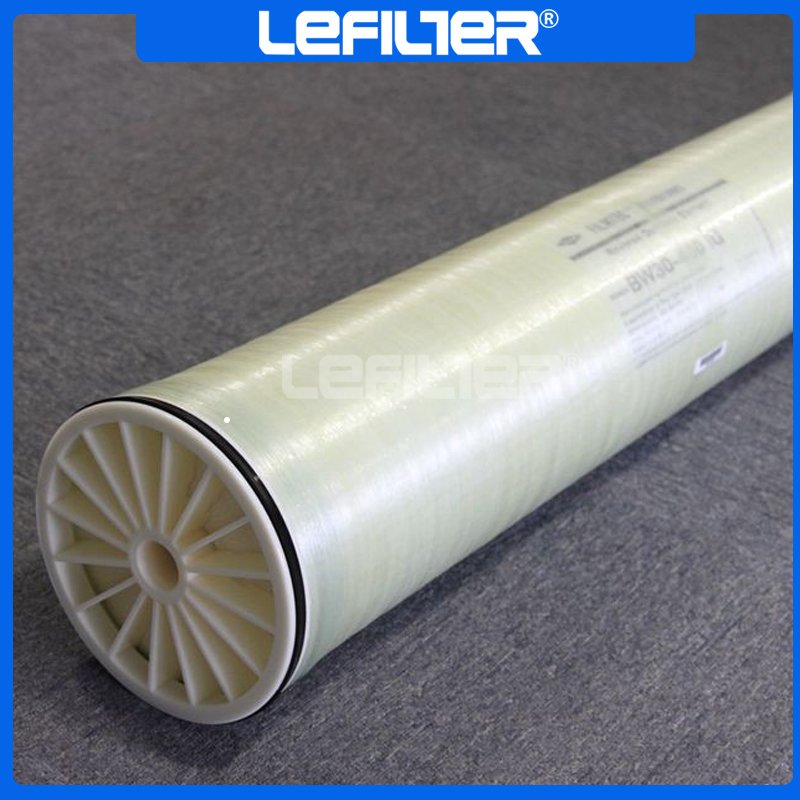
In the realm of modern water treatment, the reverse osmosis (RO) membrane stands as a revolutionary innovation, reshaping how we purify and utilize water. Inspired by biological semipermeable membranes, this artificial semipermeable membrane is the linchpin of reverse osmosis technology, enabling precise separation of water from various contaminants. As global water scarcity and pollution intensify, the RO membrane has emerged as a beacon of hope, driving efficiency and sustainability in water treatment across diverse industries.
Advantages & Features
2.1 Unparalleled Filtration Precision
RO membranes boast exceptional selectivity, effectively rejecting a vast array of impurities. They can filter out 95% – 99% of dissolved salts, along with suspended solids, colloids, proteins, microorganisms, and other molecular substances. This level of precision ensures that treated water meets stringent quality standards for various applications, from drinking water to industrial processes.
2.2 High Efficiency and Cost – Effectiveness
By leveraging pressure to drive the separation process, RO systems operate with remarkable efficiency. They require less energy compared to traditional thermal desalination methods, reducing operational costs over time. Moreover, the long – term durability of RO membranes—with a typical lifespan of 3 – 5 years under proper maintenance—translates to lower replacement and maintenance expenses, making them a cost – effective choice for large – scale water treatment.
2.3 Compact and Scalable Design
RO membrane modules feature a compact structure, allowing for easy integration into both small – scale and large – scale water treatment setups. Whether it’s a residential reverse osmosis system or a massive industrial plant, the modular design enables seamless scalability. This flexibility ensures that RO technology can adapt to varying water treatment demands, from households to entire cities.
2.4 Environmentally Friendly
Unlike some water treatment methods that rely on chemicals for purification, RO technology minimizes chemical usage. This not only reduces the environmental footprint associated with chemical production and disposal but also results in treated water that is free from chemical residues, making it safer for both human consumption and ecological systems.
RO membranes boast exceptional selectivity, effectively rejecting a vast array of impurities. They can filter out 95% – 99% of dissolved salts, along with suspended solids, colloids, proteins, microorganisms, and other molecular substances. This level of precision ensures that treated water meets stringent quality standards for various applications, from drinking water to industrial processes.
2.2 High Efficiency and Cost – Effectiveness
By leveraging pressure to drive the separation process, RO systems operate with remarkable efficiency. They require less energy compared to traditional thermal desalination methods, reducing operational costs over time. Moreover, the long – term durability of RO membranes—with a typical lifespan of 3 – 5 years under proper maintenance—translates to lower replacement and maintenance expenses, making them a cost – effective choice for large – scale water treatment.
2.3 Compact and Scalable Design
RO membrane modules feature a compact structure, allowing for easy integration into both small – scale and large – scale water treatment setups. Whether it’s a residential reverse osmosis system or a massive industrial plant, the modular design enables seamless scalability. This flexibility ensures that RO technology can adapt to varying water treatment demands, from households to entire cities.
2.4 Environmentally Friendly
Unlike some water treatment methods that rely on chemicals for purification, RO technology minimizes chemical usage. This not only reduces the environmental footprint associated with chemical production and disposal but also results in treated water that is free from chemical residues, making it safer for both human consumption and ecological systems.
Structure Specification
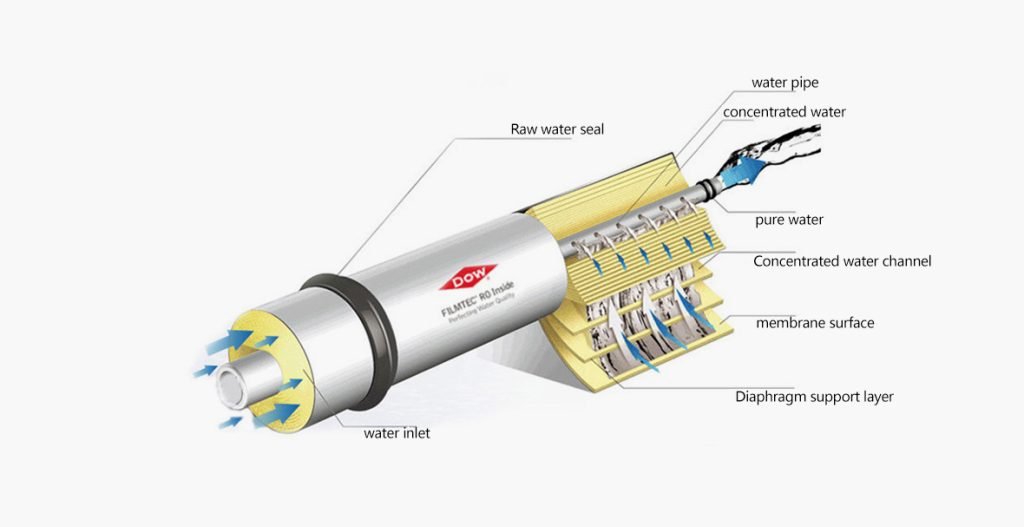
RO membranes typically consist of several key components, each playing a vital role in the filtration process:
3.1 Membrane Skin Layer
The outermost layer, this ultra – thin skin is where the separation magic happens. Composed of specialized polymers (such as polyamide), it features nanoscale pores that permit only water molecules to pass through while blocking most solutes. The precise pore size and distribution are engineered to achieve optimal rejection rates and water flux.
3.2 Support Layers
Beneath the skin layer, there are one or more support layers. These layers provide mechanical strength to the membrane, preventing it from rupturing under the high pressures used in RO systems. They also facilitate the uniform distribution of water across the membrane surface, ensuring efficient filtration. Materials like polysulfone or polyethersulfone are commonly used for these support layers due to their robustness and chemical resistance.
3.3 Spacer and Flow Channels
Within RO membrane modules, spacers create flow channels that direct the feed water across the membrane surface. This design enhances turbulence, which helps prevent the accumulation of contaminants (a phenomenon known as fouling) and promotes consistent water flux. The spacing and geometry of these channels are carefully optimized to balance pressure drop and filtration efficiency.
3.1 Membrane Skin Layer
The outermost layer, this ultra – thin skin is where the separation magic happens. Composed of specialized polymers (such as polyamide), it features nanoscale pores that permit only water molecules to pass through while blocking most solutes. The precise pore size and distribution are engineered to achieve optimal rejection rates and water flux.
3.2 Support Layers
Beneath the skin layer, there are one or more support layers. These layers provide mechanical strength to the membrane, preventing it from rupturing under the high pressures used in RO systems. They also facilitate the uniform distribution of water across the membrane surface, ensuring efficient filtration. Materials like polysulfone or polyethersulfone are commonly used for these support layers due to their robustness and chemical resistance.
3.3 Spacer and Flow Channels
Within RO membrane modules, spacers create flow channels that direct the feed water across the membrane surface. This design enhances turbulence, which helps prevent the accumulation of contaminants (a phenomenon known as fouling) and promotes consistent water flux. The spacing and geometry of these channels are carefully optimized to balance pressure drop and filtration efficiency.

Working Principle
Reverse osmosis operates by reversing the natural osmosis process through the application of external pressure. Here’s a step – by – step breakdown:
- Osmosis Background: In natural osmosis, water molecules move from a region of low solute concentration (dilute solution) to a region of high solute concentration (concentrated solution) through a semipermeable membrane, driven by the osmotic pressure difference.
- Reverse Osmosis Process: In RO, a pressure greater than the osmotic pressure of the solution is applied to the concentrated solution side. This force overcomes the natural osmotic pressure, forcing water molecules to flow in the reverse direction—from the concentrated solution through the semipermeable membrane to the dilute solution.
- Separation Outcome: As water molecules pass through the membrane, most solutes (dissolved solids, ions, large molecules) are unable to traverse the membrane’s selective pores and are retained on the concentrated solution side. This leads to two streams: a concentrated brine stream (with retained solutes) and a purified permeate stream (with highly purified water).
Application
5.1 Reverse Osmosis Pretreatment
Before water enters a reverse osmosis system for deep purification (such as desalination), RO membranes are often used in pretreatment. They remove larger particles and colloids, protecting downstream RO units from fouling and extending their lifespan. This is crucial in applications like seawater desalination, where raw water contains high levels of suspended matter.
5.2 Drinking Water Treatment
In municipal and residential settings, RO membranes are pivotal for producing high – quality drinking water. They eliminate contaminants like heavy metals (lead, mercury), nitrates, and harmful microorganisms, ensuring water is safe and pleasant to drink. RO – treated water is also free from unpleasant tastes and odors, enhancing its palatability.
5.3 Reclaimed Water Reuse
As water scarcity becomes more acute, reusing wastewater (reclaimed water) is increasingly important. RO membranes play a central role in advanced wastewater treatment, purifying effluent to a level suitable for non – potable uses like irrigation, industrial cooling, and toilet flushing. This not only conserves freshwater resources but also reduces the environmental impact of wastewater discharge.
5.4 Industrial Applications
Pharmaceuticals: RO membranes are used to produce purified water for drug manufacturing, meeting strict purity standards to ensure product safety and efficacy.
Food and Beverage: They purify water for processes like beverage production, dairy processing, and brewing, removing impurities that could affect product quality and taste.
Power Generation: In power plants, RO – treated water is used in boiler feed systems, preventing scale buildup and corrosion that can damage equipment and reduce efficiency.
Before water enters a reverse osmosis system for deep purification (such as desalination), RO membranes are often used in pretreatment. They remove larger particles and colloids, protecting downstream RO units from fouling and extending their lifespan. This is crucial in applications like seawater desalination, where raw water contains high levels of suspended matter.
5.2 Drinking Water Treatment
In municipal and residential settings, RO membranes are pivotal for producing high – quality drinking water. They eliminate contaminants like heavy metals (lead, mercury), nitrates, and harmful microorganisms, ensuring water is safe and pleasant to drink. RO – treated water is also free from unpleasant tastes and odors, enhancing its palatability.
5.3 Reclaimed Water Reuse
As water scarcity becomes more acute, reusing wastewater (reclaimed water) is increasingly important. RO membranes play a central role in advanced wastewater treatment, purifying effluent to a level suitable for non – potable uses like irrigation, industrial cooling, and toilet flushing. This not only conserves freshwater resources but also reduces the environmental impact of wastewater discharge.
5.4 Industrial Applications
Pharmaceuticals: RO membranes are used to produce purified water for drug manufacturing, meeting strict purity standards to ensure product safety and efficacy.
Food and Beverage: They purify water for processes like beverage production, dairy processing, and brewing, removing impurities that could affect product quality and taste.
Power Generation: In power plants, RO – treated water is used in boiler feed systems, preventing scale buildup and corrosion that can damage equipment and reduce efficiency.
Summary
The reverse osmosis membrane is far more than a component—it’s a catalyst for transforming water treatment. With its unmatched filtration precision, efficiency, and versatility, it addresses critical challenges in water scarcity and pollution. From ensuring access to clean drinking water to enabling sustainable industrial processes, the RO membrane empowers industries and communities worldwide. As technology advances, we can expect even more innovative developments in RO membrane design and application, further solidifying its role as the cornerstone of advanced water treatment for years to come. Whether in urban centers, remote communities, or sprawling industrial complexes, the RO membrane continues to prove itself as an indispensable tool in our quest for a more water – secure future.