How to judge whether the filtering effect of the filter element has deteriorated?
Observe the physical properties of the water
Clarity: Use a transparent container to collect the water filtered by the filter element and compare it with the unfiltered raw water. If the filtered water is turbid, has suspended matter or visible impurities, it means that the filtering effect of the filter element has deteriorated. For example, some tiny sand particles can be seen in the water before filtration. These sand particles should not be seen after filtering with a normal filter element, but if the sand particles still exist, it means that the filter element has not effectively intercepted these large particles of impurities.
Color change: Carefully observe the color of the filtered water. Under normal circumstances, the color of filtered water should be close to colorless and transparent. If the color of the water is yellow, green, red or has other abnormal tones, it may be because the filter element cannot effectively remove pigments, algae, rust and other substances in the water, and the filtering effect has deteriorated. For example, when there are iron ions in the water, it will appear light red. A normal filter element can remove these iron ions and restore the color of the water to normal. If the color is still abnormal, it means that the filter element has failed.
Bubble situation: When observing the water in the container, you can also pay attention to the bubbles. If there are a lot of abnormal small bubbles in the water, it may be because there is a problem with the material of the filter element, such as leakage of adsorbent materials such as activated carbon inside, which releases gas into the water, which also indicates that the filtering effect is not good.
Smell and taste judgment
Smell: Smell the filtered water to see if there is any peculiar smell. If there is a clear smell of chlorine, rotten smell, musty smell or other strange smells, it is likely that the filter element cannot effectively remove volatile organic compounds, microorganisms or disinfectant residues in the water, indicating that the filtering effect has deteriorated. For example, tap water is usually disinfected with chlorine. Normal filtered water should not smell chlorine, but if you can smell a clear chlorine smell, it means that the filter element may not fully remove the chlorine in the water.
Taste: Take a sip of filtered water (when ensuring safety). If you feel astringency, bitterness, saltiness or other abnormal taste, it may be because the filter element cannot effectively remove minerals, heavy metals or other dissolved impurities in the water, resulting in poor quality of filtered water. For example, when there is an excessive amount of heavy metals in the water, the water may have a metallic taste, and a normal filter element can reduce this taste.
Testing water quality indicators
TDS (total dissolved solids) value: Use a TDS test pen to measure the TDS value of water before and after filtration. The TDS value represents the total amount of various inorganic and organic substances dissolved in water, including calcium, magnesium, sodium, potassium and other ions and some small molecular organic matter. If the TDS value of the filtered water is not significantly lower than the TDS value of the raw water or the decrease is very small, this indicates that the filter element may not be able to effectively remove the dissolved solids in the water and the filtration effect is poor. For example, the TDS value of the raw water is 300mg/L. A normal high-quality filter element should reduce the TDS value to below 50mg/L after filtration. If the TDS value after filtration is still above 200mg/L, it means that the filter element has a problem with its filtration capacity.
pH value: Use pH test paper or pH meter to test the pH value of water before and after filtration. Although most filter elements do not have a huge impact on the pH value, some special filter elements (such as filter elements with ion exchange function) will change the pH value of water. If it is found that the pH value of the filtered water does not change as expected or fluctuates abnormally compared with the original water, it may mean that the filter element does not perform its function normally and the filtering effect is poor. For example, after the water with an original pH value of 7.5 passes through a filter element with a pH adjustment function, the pH value should be stable within a specific range (such as 7.0-7.2). If the pH value is still 7.5 or there is a large deviation, it may be that the filter element has failed.
Microbial indicators: If conditions permit, the content of bacteria, viruses, parasites and other microorganisms in the filtered water can be tested in the laboratory. If the microbial content exceeds the standard, it means that the filter element cannot effectively intercept and remove these harmful microorganisms, and the filtering effect is deteriorated. However, this detection method is relatively complicated and may be difficult for ordinary home users. Professional laboratory equipment and technicians are required.
Equipment operation parameter observation
Pressure change: For some filtration systems with pressure monitoring devices, observe the difference between the inlet pressure and the outlet pressure. As the filter element is blocked or the filtering effect deteriorates, this pressure difference will gradually increase. When the pressure difference exceeds the normal range set by the equipment, it may mean that the resistance of the filter element increases and the filtering effect decreases. For example, under normal circumstances, the water inlet pressure is 3bar, the water outlet pressure is 2.5bar, and the pressure difference is 0.5bar. If the pressure difference gradually increases to more than 1bar, and the water outlet flow rate also decreases, this may be because the filter element is blocked or cannot filter normally, resulting in increased resistance to water flow.
Flow change: Observe the water flow after filtering through the filter element. If the flow rate decreases significantly, after excluding the influence of external water pressure and other factors, it is likely that the filter element is blocked, affecting the filtering effect. If the flow rate suddenly increases, it may be that the filter element is damaged, causing some water to pass directly without effective filtration, which also indicates that the filtering effect has deteriorated. For example, a normal large-flow water filter element can filter 10 liters of water per minute, and suddenly drops to only 3 liters of water per minute, or suddenly increases to 15 liters of water per minute (when the water pressure remains unchanged), you need to check the filtering condition of the filter element.
To determine whether the large-flow water filter needs to be replaced, you can start from the following aspects:
Changes in water output:
The water output is significantly reduced: Under normal water pressure and water temperature conditions, if the water flow after filtering by the large-flow water filter is significantly reduced compared to before, and it still cannot be restored to normal levels after flushing, then it is likely that the filter is clogged and needs to be replaced. For example, if the water purifier originally had a large water flow, and the water flow suddenly becomes very thin, this may be a signal that the filter is clogged. Because the filter will continuously intercept impurities, particles and other pollutants in the water during long-term use, when these pollutants accumulate to a certain extent, they will hinder the normal passage of water, resulting in a decrease in water output.
Abnormal increase in water output: If the water output of the large-flow water filter suddenly becomes much larger than normal, it may be that the filter is damaged or the structure is damaged, resulting in normal filtration. In this case, the filter also needs to be replaced. For example, the water after normal filtration should flow out slowly and steadily. If the water flow suddenly becomes turbulent and the water quality does not improve significantly, you need to check whether the filter is damaged.
Changes in filtering effect:
Water quality deteriorates: The filtering effect of the filter element can be judged by observing the clarity and color of the filtered water. If the filtered water becomes turbid, has an odor, or has an abnormal color (such as yellowing, redness, etc.), it means that the filtering function of the filter element has declined and cannot effectively remove pollutants in the water, and the filter element needs to be replaced. For example, if the originally clear tap water has visible impurities after being filtered by the filter element, or the taste of the water becomes similar to that of unfiltered tap water, with obvious chlorine and other odors, it means that the filtering effect of the filter element is not good.
TDS value changes: If conditions permit, you can use a TDS test pen to test the TDS (total dissolved solids) value of the water before and after filtration. The higher the TDS value, the more dissolved solids there are in the water. If the filter element works normally, the TDS value of the filtered water should be significantly reduced. If the test finds that the TDS value of the filtered water has no significant change compared to the unfiltered water, or the change is very small, then it may be that the filtering capacity of the filter element has declined and needs to be replaced.
Usage time: Refer to the instruction manual of the filter element or the replacement cycle recommended by the manufacturer. Generally speaking, high-flow water filter cartridges have a rough service life, such as 3 months, 6 months, 1 year, etc. The specific time depends on factors such as the material, type and filtration accuracy of the filter cartridge. If the filter cartridge has been used close to or reached the recommended replacement cycle, even if there seems to be no obvious problem, you should consider replacing it, because the filtration performance of the filter cartridge will gradually decrease with the extension of use time.
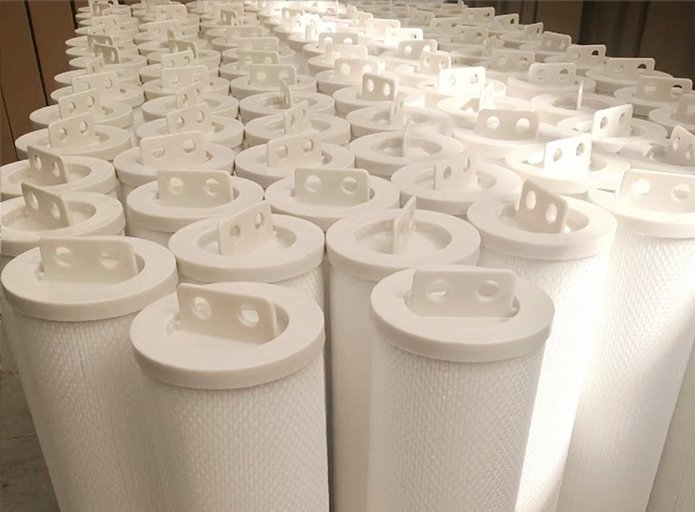
Appearance inspection: Remove the high-flow water filter cartridge from the filtration equipment and check the appearance of the filter cartridge. If there is severe dirt, sediment, mildew, discoloration, etc. on the surface of the filter cartridge, or the structure of the filter cartridge is deformed or damaged, it means that the filter cartridge can no longer work properly and needs to be replaced in time. For example, if the surface of the PP cotton filter cartridge becomes very dirty and the color becomes black, or if powdery substances fall off the activated carbon filter cartridge, these are signs that the filter cartridge needs to be replaced.