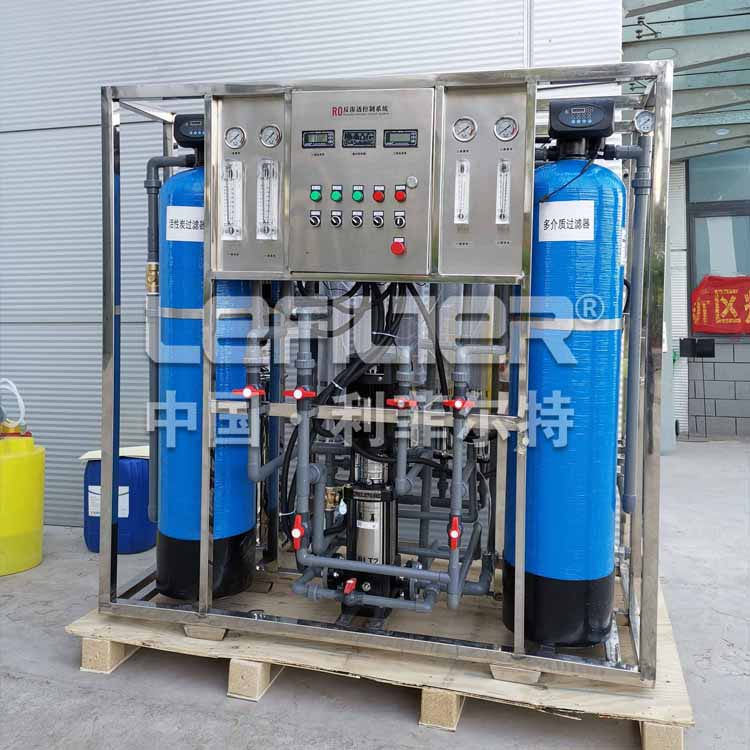
Introduce:
In an era where clean, high-quality water is essential for industries, communities, and daily life, reverse osmosis (RO) equipment stands as a transformative solution. As a premium water purification system, it integrates pretreatment, fine filtration, and softening processes to prepare raw water, then uses high-pressure pumps and advanced RO membranes to eliminate a wide range of contaminants—from industrial pollutants and heavy metals to viruses, bacteria, and radioactive substances. The result? Crystal-clear, crisp water that meets the strictest purity standards, making RO equipment a cornerstone of sustainable water management across sectors.
Advantages & Features
2.1 Exceptional Contaminant Removal
RO equipment delivers unrivaled purification, removing 95%–99% of dissolved salts, heavy metals (e.g., lead, arsenic, mercury), industrial toxins, bacteria, and viruses. Unlike traditional filters, it targets even microscopic impurities and inorganic/organic substances, ensuring water is safe for sensitive applications like pharmaceutical production or drinking water supply.
2.2 Energy Efficiency & Cost Savings
Equipped with high-efficiency pumps and low-energy RO membranes, modern RO systems minimize energy consumption compared to thermal desalination methods. They also reduce water waste via optimized recovery rates (often 70%–85%) and extend the lifespan of downstream equipment by preventing scale buildup—cutting long-term operational and maintenance costs.
2.3 Versatility & Adaptability
RO equipment is highly customizable to suit diverse raw water conditions (e.g., seawater, brackish water, industrial wastewater) and flow demands. Whether for small-scale factories or large municipal plants, it can be scaled up or down, with modular designs that enable easy integration into existing water treatment setups.
2.4 Reliable & Low-Maintenance Operation
Built with durable components (corrosion-resistant pumps, long-lasting RO membranes), RO equipment operates stably with minimal downtime. Automated controls (e.g., pressure monitoring, flush cycles) simplify maintenance, while self-cleaning features reduce the need for manual intervention—ideal for 24/7 industrial use.
RO equipment delivers unrivaled purification, removing 95%–99% of dissolved salts, heavy metals (e.g., lead, arsenic, mercury), industrial toxins, bacteria, and viruses. Unlike traditional filters, it targets even microscopic impurities and inorganic/organic substances, ensuring water is safe for sensitive applications like pharmaceutical production or drinking water supply.
2.2 Energy Efficiency & Cost Savings
Equipped with high-efficiency pumps and low-energy RO membranes, modern RO systems minimize energy consumption compared to thermal desalination methods. They also reduce water waste via optimized recovery rates (often 70%–85%) and extend the lifespan of downstream equipment by preventing scale buildup—cutting long-term operational and maintenance costs.
2.3 Versatility & Adaptability
RO equipment is highly customizable to suit diverse raw water conditions (e.g., seawater, brackish water, industrial wastewater) and flow demands. Whether for small-scale factories or large municipal plants, it can be scaled up or down, with modular designs that enable easy integration into existing water treatment setups.
2.4 Reliable & Low-Maintenance Operation
Built with durable components (corrosion-resistant pumps, long-lasting RO membranes), RO equipment operates stably with minimal downtime. Automated controls (e.g., pressure monitoring, flush cycles) simplify maintenance, while self-cleaning features reduce the need for manual intervention—ideal for 24/7 industrial use.
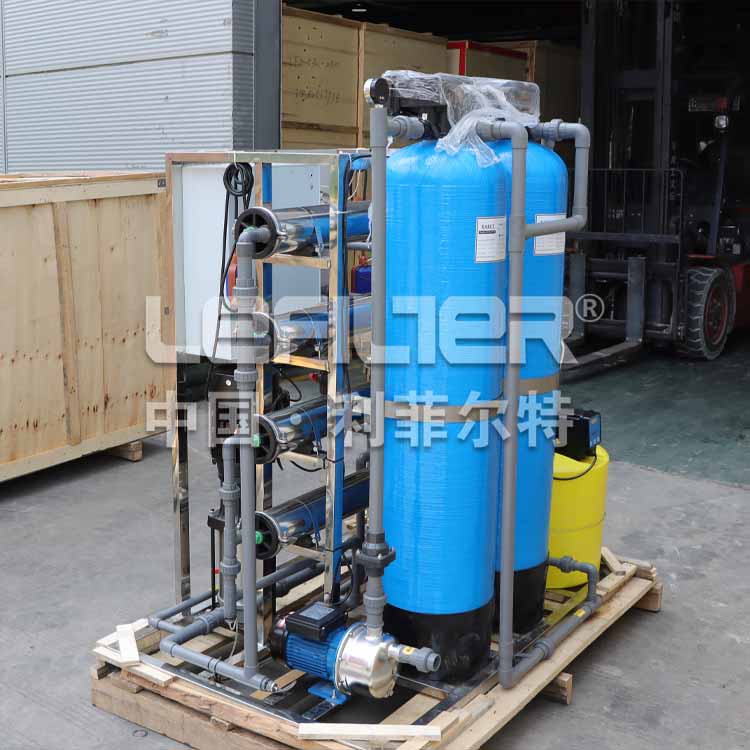
Structure Specification
RO equipment comprises interconnected components working in tandem to ensure efficient purification:
3.1 Pretreatment System
This stage prepares raw water to protect RO membranes from fouling. It includes:
Sediment filters: Remove large particles (sand, silt) via 5–20μm cartridges.
Activated carbon filters: Adsorb chlorine, organic compounds, and odors.
Water softeners: Reduce calcium/magnesium ions to prevent scale formation on membranes.
3.2 High-Pressure Pump
A key component that applies pressure (15–100 bar, depending on water type) to raw water, overcoming the osmotic pressure of the solution and forcing water through RO membranes. Pumps are typically stainless steel for corrosion resistance and high durability.
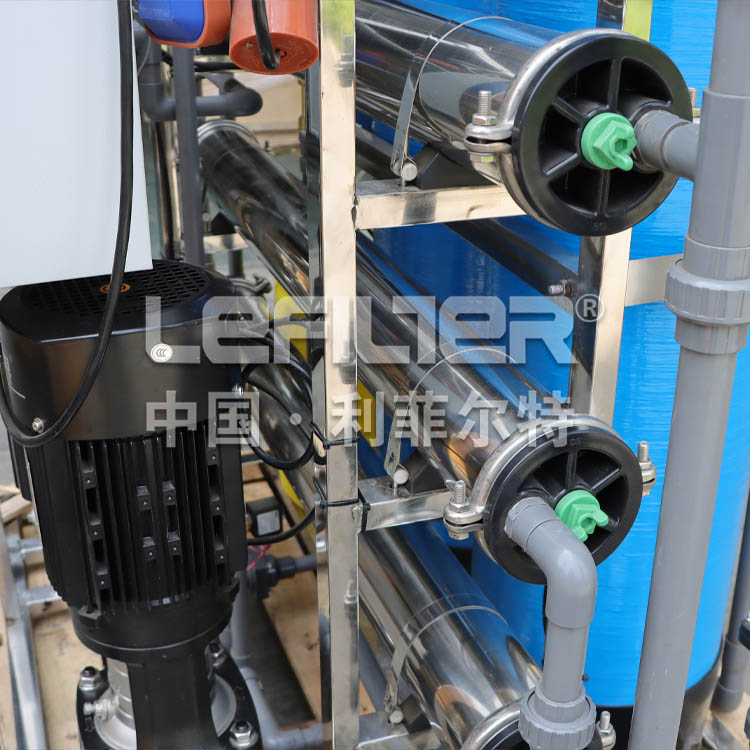
3.3 RO Membrane Module
The core of the system, housing semipermeable RO membranes (usually spiral-wound polyamide). Membranes have nanoscale pores that allow only water molecules to pass, retaining contaminants. Modules are designed for easy replacement and maximum water flow.
3.4 Post-Treatment & Control System
Post-filters: Polish purified water (e.g., 1μm cartridges) for ultra-clean output.
Control panel: Features digital displays and automated sensors to monitor pressure, flow rate, and water quality, triggering alarms or flush cycles if anomalies occur.
3.1 Pretreatment System
This stage prepares raw water to protect RO membranes from fouling. It includes:
Sediment filters: Remove large particles (sand, silt) via 5–20μm cartridges.
Activated carbon filters: Adsorb chlorine, organic compounds, and odors.
Water softeners: Reduce calcium/magnesium ions to prevent scale formation on membranes.
3.2 High-Pressure Pump
A key component that applies pressure (15–100 bar, depending on water type) to raw water, overcoming the osmotic pressure of the solution and forcing water through RO membranes. Pumps are typically stainless steel for corrosion resistance and high durability.
3.3 RO Membrane Module
The core of the system, housing semipermeable RO membranes (usually spiral-wound polyamide). Membranes have nanoscale pores that allow only water molecules to pass, retaining contaminants. Modules are designed for easy replacement and maximum water flow.
3.4 Post-Treatment & Control System
Post-filters: Polish purified water (e.g., 1μm cartridges) for ultra-clean output.
Control panel: Features digital displays and automated sensors to monitor pressure, flow rate, and water quality, triggering alarms or flush cycles if anomalies occur.
Working Principle
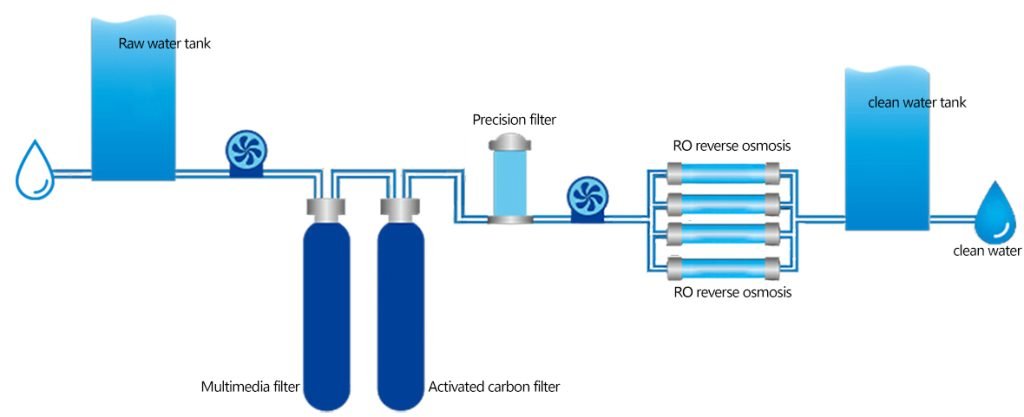
RO equipment operates on the principle of reverse osmosis, reversing the natural osmotic process to purify water:
Pretreatment Stage: Raw water first flows through sediment, carbon, and softening filters to remove large impurities, chlorine, and scale-causing minerals. This protects RO membranes from damage and fouling.
Pressurization: The pretreated water is pumped at high pressure into the RO membrane module. This pressure (higher than the water’s osmotic pressure) overcomes the natural tendency of water to flow from low-salt to high-salt solutions.
Membrane Separation: Inside the module, water molecules pass through the RO membrane’s tiny pores, while contaminants (salts, heavy metals, bacteria, viruses) are blocked and retained on the “concentrate” side of the membrane.
Output of Purified Water: The water that passes through the membrane (called “permeate”) is crystal-clear and free of contaminants, ready for use. The retained contaminants (called “brine”) are flushed out of the system to prevent buildup.
Pretreatment Stage: Raw water first flows through sediment, carbon, and softening filters to remove large impurities, chlorine, and scale-causing minerals. This protects RO membranes from damage and fouling.
Pressurization: The pretreated water is pumped at high pressure into the RO membrane module. This pressure (higher than the water’s osmotic pressure) overcomes the natural tendency of water to flow from low-salt to high-salt solutions.
Membrane Separation: Inside the module, water molecules pass through the RO membrane’s tiny pores, while contaminants (salts, heavy metals, bacteria, viruses) are blocked and retained on the “concentrate” side of the membrane.
Output of Purified Water: The water that passes through the membrane (called “permeate”) is crystal-clear and free of contaminants, ready for use. The retained contaminants (called “brine”) are flushed out of the system to prevent buildup.
Application
RO equipment’s versatility makes it indispensable across multiple industries:
5.1 Municipal Drinking Water
Treats brackish or contaminated groundwater/surface water to produce safe drinking water, removing harmful substances like arsenic, nitrates, and pathogens—critical for communities with poor water quality.
5.2 Industrial Manufacturing
Pharmaceuticals: Produces ultra-pure water (UPW) for drug formulation and equipment cleaning, meeting FDA and USP standards.
Electronics: Supplies high-purity water for semiconductor manufacturing, where even trace impurities can ruin microchips.
Food & Beverage: Purifies water for beverage production, dairy processing, and brewing, ensuring product quality and taste consistency.
5.3 Desalination
Converts seawater or brackish water into usable freshwater for coastal regions or arid areas (e.g., Middle Eastern countries), addressing water scarcity challenges.
5.4 Wastewater Reuse
Treats industrial wastewater (e.g., from oil refineries, textile plants) to remove toxins, enabling water recycling for non-potable uses like irrigation, cooling, or equipment washing—reducing reliance on freshwater sources.
5.1 Municipal Drinking Water
Treats brackish or contaminated groundwater/surface water to produce safe drinking water, removing harmful substances like arsenic, nitrates, and pathogens—critical for communities with poor water quality.
5.2 Industrial Manufacturing
Pharmaceuticals: Produces ultra-pure water (UPW) for drug formulation and equipment cleaning, meeting FDA and USP standards.
Electronics: Supplies high-purity water for semiconductor manufacturing, where even trace impurities can ruin microchips.
Food & Beverage: Purifies water for beverage production, dairy processing, and brewing, ensuring product quality and taste consistency.
5.3 Desalination
Converts seawater or brackish water into usable freshwater for coastal regions or arid areas (e.g., Middle Eastern countries), addressing water scarcity challenges.
5.4 Wastewater Reuse
Treats industrial wastewater (e.g., from oil refineries, textile plants) to remove toxins, enabling water recycling for non-potable uses like irrigation, cooling, or equipment washing—reducing reliance on freshwater sources.
Summary
Reverse osmosis equipment is more than a water purifier—it’s a vital tool for addressing global water challenges. With its exceptional contaminant removal, energy efficiency, and adaptability, it meets the diverse needs of municipalities, industries, and communities. From producing safe drinking water to enabling wastewater reuse and desalination, RO equipment ensures access to high-quality water while promoting sustainability. As technology advances, RO systems will continue to evolve—becoming more efficient, cost-effective, and accessible—solidifying their role as the gold standard in modern water purification for years to come.