Product Introduction
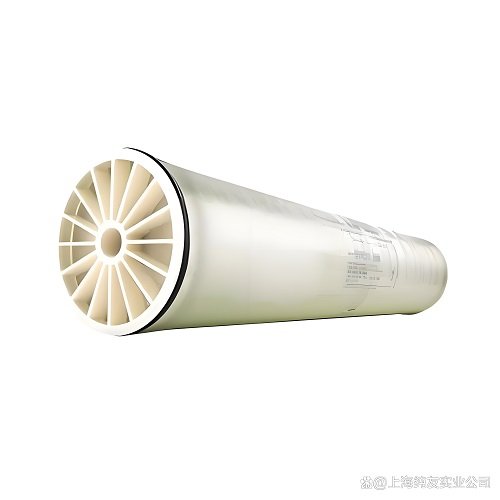
The BW30-400 reverse osmosis (RO) membrane is a leading filtration technology designed to address the challenges of brackish water treatment, renowned for its exceptional salt rejection and water productivity. Manufactured by DuPont (formerly Dow FilmTec), this spiral-wound membrane utilizes aromatic polyamide thin-film composite (TFC) technology to achieve over 99.5% salt rejection while delivering a water flux of approximately 10,000 gallons per day (37.8 m³/d). Engineered for municipal water supply, industrial processes, and desalination pre-treatment, the BW30-400 balances reliability with energy efficiency, setting a standard for RO membranes in demanding applications worldwide.
Working Principle
- Reverse Osmosis Fundamentals
The BW30-400 operates on the principle of reverse osmosis, where hydraulic pressure exceeding the osmotic pressure drives water through a semi-permeable membrane, rejecting dissolved salts and contaminants. Key mechanisms include:- Semi-Permeable Barrier: The polyamide active layer allows selective water passage while blocking ions (e.g., Na⁺, Cl⁻), colloids, and organic matter through nano-porous structure (pore size <0.0001 microns) and charge repulsion.
- Pressure-Driven Flow: Operating at 150–400 psi (1.0–2.8 MPa), the membrane forces water from the feed side to the permeate side. Higher salt concentrations in feed water require increased pressure to maintain flux, making pre-treatment critical for efficiency.
- Osmotic Pressure Management: The membrane’s dense polyamide network enhances salt rejection, with divalent ions (e.g., Ca²⁺, Mg²⁺) rejected more effectively than monovalent ions.
- Thin-Film Composite Architecture
- Active Layer: A cross-linked polyamide layer, formed via interfacial polymerization, provides the primary salt rejection capability and chemical resistance.
- Support Layer: A microporous polysulfone substrate offers structural integrity without compromising water flow.
- Feed Spacer: A polypropylene mesh maintains turbulent flow in the feed channel, reducing concentration polarization and fouling risks.
- Operational Parameters
- pH Range: Functions effectively between pH 2–11, with short-term tolerance to pH 12 for cleaning.
- Temperature Optimum: Peaks at 25°C, with flow decreasing ~1% per °C below this temperature; maximum allowable temperature is 45°C.
- Chlorine Sensitivity: Free chlorine >0.1 ppm degrades the polyamide layer, necessitating pre-treatment with activated carbon or sodium bisulfite.
Structural Design and Engineering
- Spiral-Wound Module Design
- Membrane Leaf Construction: Multiple membrane leaves (active layer + support layer) are wound around a perforated central tube, forming a cylindrical element:
- Feed Channel: Axial flow through the spacer ensures uniform contact with the membrane surface.
- Permeate Collection: Purified water spirals into the central tube, minimizing pressure loss.
- Dimensions: 8-inch diameter x 40-inch length (203 mm x 1016 mm) with 400 ft² (37.2 m²) effective membrane area, optimizing space efficiency in filtration systems.
- Membrane Leaf Construction: Multiple membrane leaves (active layer + support layer) are wound around a perforated central tube, forming a cylindrical element:
- Material Innovations
- Polyamide Active Layer: Engineered for high cross-link density, enhancing salt rejection while maintaining hydrophilicity to promote water flux.
- GRP Pressure Vessel: Glass-reinforced polyester housing withstands up to 600 psi (4.1 MPa), with UV-resistant coatings for outdoor installations.
- Anti-Fouling Surface: Modified surface chemistry reduces adsorption of organic matter and colloids, extending time between cleanings.
- Flow Dynamics Optimization
- Turbulence Induction: The feed spacer’s geometry promotes cross-flow velocity >1 m/s, minimizing particulate deposition.
- Permeate Channel Design: Smooth interior reduces resistance, ensuring uniform water collection across the membrane area.
Application Scenarios
- Municipal Water Treatment
- Drinking Water Production: In regions with brackish groundwater, the BW30-400 reduces TDS from 1,000–5,000 ppm to <50 ppm. A case study in Texas showed the membrane reduced arsenic from 30 ppb to <10 ppb, meeting EPA standards.
- Water Recycling: Treats municipal wastewater effluent to non-potable standards, with COD removal >90% and turbidity <0.1 NTU for industrial reuse or irrigation.
- Industrial Process Water
- Power Generation: Purifies boiler feed water, removing silica (<0.5 ppm) and dissolved solids to prevent heat exchanger scaling, saving 15–20% on chemical treatment costs in a 300 MW plant.
- Semiconductor Manufacturing: Produces ultra-pure water (UPW) with conductivity <0.1 μS/cm, critical for wafer cleaning and semiconductor fabrication.
- Desalination Pre-Treatment
- Seawater RO Pre-Filtration: Used ahead of seawater membranes, the BW30-400 reduces SDI (silt density index) from 4–6 to <3, extending seawater membrane life by 30–40% in coastal desalination plants.
- Brackish Water Desalination: Achieves 80–85% recovery in brackish water systems, with energy consumption as low as 0.6–1.0 kWh/m³, depending on feed water quality.
Technical Advantages
- Exceptional Salt Rejection
- Maintains >99.5% NaCl rejection at standard operating pressure, with >99% rejection of divalent ions, outperforming conventional membranes by 5–10% in ion removal efficiency.
- High Water Productivity
- Delivers 26 gpd/ft² (10.2 L/m²·h) at 25°C and 200 psi (1.4 MPa), 25–30% higher flux than older-generation RO membranes, enabling smaller system footprints and lower capital costs.
- Operational Flexibility
- Adapts to varying feed water TDS (500–10,000 ppm) and pH (2–11), with proven performance in challenging water sources like industrial wastewater and agricultural runoff.
- Tolerates short-term upsets in feed water quality, such as sudden turbidity spikes or chemical fluctuations.
- Cost-Effective Longevity
- With proper pre-treatment, the membrane operates for 3–5 years, reducing lifecycle costs by 20–30% compared to lower-performance options. A food processing plant in California reported $100,000 in savings over a 4-year period.
Maintenance and Operation Considerations
- Comprehensive Pre-Treatment
- Particle Filtration: 5-micron cartridge filters remove suspended solids to prevent membrane abrasion and channel blockage.
- Chlorine Removal: Sodium bisulfite dosing (3–5 ppm) reduces free chlorine to <0.05 ppm, verified by on-line ORP sensors.
- Scale Control: Anti-scalant injection (2–5 ppm polyphosphate) prevents calcium sulfate and carbonate scaling at recovery rates >75%.
- Proactive Cleaning Protocols
- Trigger Events: Initiate cleaning when pressure drop increases by 15%, flow decreases by 10%, or salt rejection declines by 5%.
- Chemical Cleaning Formulations:
- Organic Fouling: 2% citric acid + 0.1% SDS at pH 3–4 for 60 minutes.
- Biofouling: 0.5% sodium hypochlorite at pH 10 for 30 minutes, followed by a citric acid rinse.
- Inorganic Scaling: 1–2% sodium hydroxide with EDTA at pH 10–11 for 90 minutes.
- Frequency: Every 4–8 months in typical applications, extending to 12 months with advanced pre-treatment (e.g., UF pre-filtration).
- Operational Optimization
- Recovery Management: Maintain <80% recovery for feed water >3,000 ppm TDS to avoid concentrate scaling.
- Temperature Compensation: Adjust pressure by 3 psi/°C (0.02 MPa/°C) to maintain constant flux in seasonal temperature variations.
- Flux Control: Avoid exceeding 1.0 gpm/ft² (1.6 L/m²·h) to prevent irreversible fouling and membrane compaction.
Conclusion
The BW30-400 reverse osmosis membrane represents the pinnacle of RO technology, combining superior salt rejection, high water productivity, and operational resilience. Its thin-film composite architecture and spiral-wound design make it indispensable in water-scarce regions and industries requiring high-purity water. As global water demands grow, the BW30-400’s role in sustainable water management—through efficient brackish water treatment, wastewater recycling, and energy-efficient desalination—will continue to expand. Future innovations, such as nanocoated anti-fouling membranes and AI-driven predictive maintenance systems, promise to further enhance its performance, solidifying its status as a cornerstone of modern water purification technology.
If you are interested in this product or have any questions, please feel free to contact us at any time.