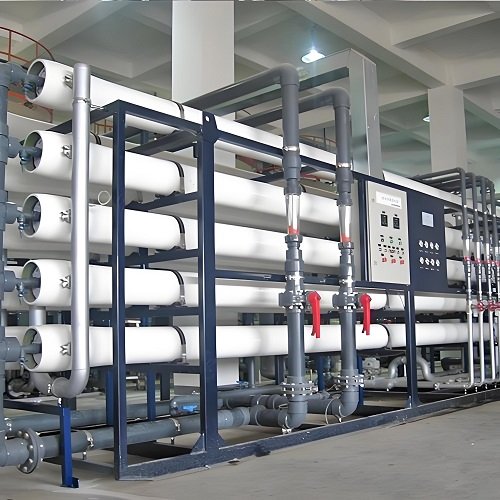
Product Introduction
Reverse osmosis (RO) systems have emerged as a transformative solution in the global quest for clean and sustainable water resources. These systems leverage cutting-edge membrane technology to address complex water treatment challenges across various sectors, from industrial manufacturing to municipal water supply and beyond. This comprehensive analysis delves into the technical intricacies, diverse applications, and performance advantages of RO systems, while also exploring their role in shaping a more water – secure future.
The Fundamental Mechanics of RO Systems
- Pretreatment Phase: Raw water undergoes a series of pre – treatment processes. Multi – media filtration removes large sediment particles, activated carbon filtration adsorbs organic compounds and residual chlorine, and security filtration acts as a final barrier against fine particles. This pre – treatment is crucial as it prevents membrane fouling, which can significantly reduce the system’s efficiency and lifespan.
- Pressurization and Membrane Separation: A high – pressure pump forces the pretreated water towards the RO membrane. As the water is pressurized, it overcomes the natural osmotic pressure, and water molecules permeate the membrane. This process results in two distinct streams: the permeate, which is the purified water, and the brine, which contains the concentrated contaminants that have been rejected by the membrane.
- Post – treatment (Optional): Depending on the end – use requirements, post – treatment steps such as UV sterilization for microbial disinfection or pH adjustment may be employed to further refine the water quality.
Wide – Ranging Applications of RO Systems
Industrial Pure Water Production
Wastewater Reclamation and Recycling
Desalination for Potable Water
Municipal Water Supply Enhancement
Performance Advantages of RO Systems
High Desalination Efficiency
Cost – Effectiveness in the Long Term
Stability and Automation
Compact and Customizable Design
Technical Specifications and Design Flexibility
Treatment Efficiency Parameters
Operational Limits
Customization and Scalability
Future Trends in RO Technology
Membrane Innovations
AI – Driven Optimization
Sustainability – Focused Advancements
Conclusion
Reverse osmosis systems represent a sophisticated and versatile solution for water purification. Their combination of high desalination efficiency, cost – effectiveness, stability, and customizability makes them an indispensable tool in addressing the world’s water treatment challenges. As technology continues to advance, with innovations in membrane materials, AI – driven optimization, and sustainability – focused designs, RO systems will play an even more crucial role in ensuring a sustainable supply of clean water for various applications, from industrial processes to municipal water supply and desalination. They are not just a solution for today’s water needs but a key enabler for a more water – secure and sustainable future.
If you are interested in this product or have any questions, please feel free to contact us at any time.