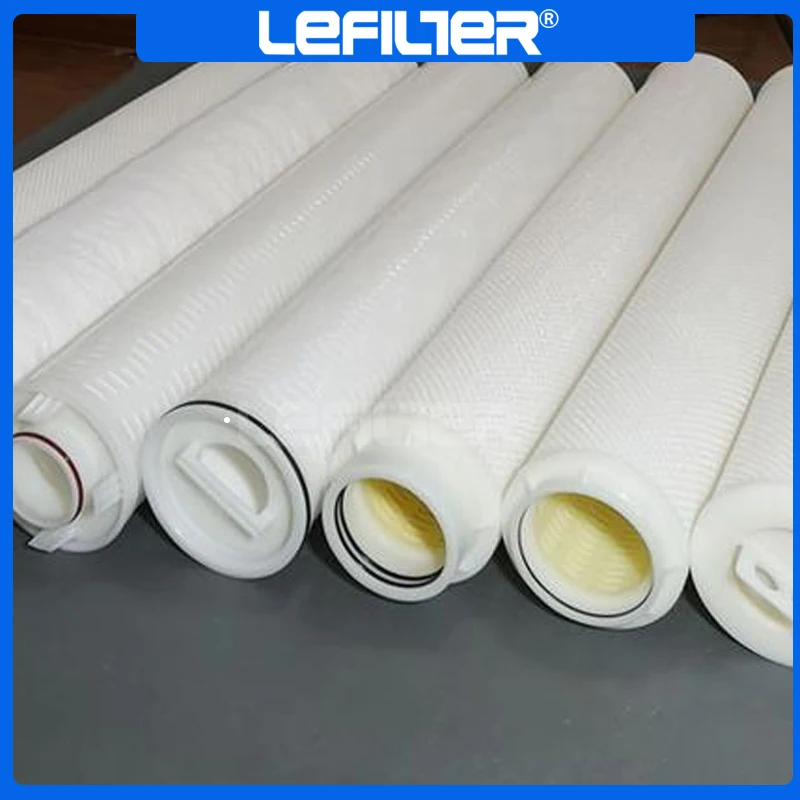
introduction
RO reverse osmosis membrane is an efficient water treatment technology widely used in industrial and municipal water treatment fields. It uses the selective separation effect of a semi permeable membrane to remove dissolved salts, organic matter, bacteria, and other impurities from water, thereby producing high-quality purified water. The working principle of RO membrane is to use pressure to drive water molecules through the membrane pores, while larger dissolved substances and particles are intercepted, achieving water purification.
RO reverse osmosis membranes are suitable for various water sources, including groundwater, surface water, seawater, and wastewater. It can effectively remove ions, colloids, microorganisms, and organic matter from water, and is widely used in fields such as drinking water purification, industrial water treatment, seawater desalination, electronic chip manufacturing, food and beverage production, and pharmaceutical manufacturing.
specifications
- Size Specifications
- Element Diameter: There are diameters such as 2.5 inches (for example, in the 2540 specification, 25 represents a diameter of 2.5 inches, approximately 6.35 cm), 4 inches (in the 4040 specification, 40 represents 4 inches, approximately 10.16 cm), and 8 inches (in the 8040 specification, 80 represents 8 inches, approximately 20.32 cm). The design of the element diameter aims to adapt to different pressure vessels for optimal performance. Different – sized diameters are suitable for water treatment systems of different scales. Larger – diameter membrane elements are usually used in large – scale industrial systems for high – flow processing, while smaller – diameter ones are suitable for small – scale systems or places with space limitations.
- Element Length: Common lengths include 20 inches, 40 inches, 60 inches, etc. In Suez’s pure water membrane products, there are also lengths like 30 inches (in some specification models). The setting of length specifications is mainly based on different water production requirements. Longer membrane elements can provide a larger filtration area, thus increasing the water production. In practical applications, the appropriate length of the membrane element is selected according to the water treatment capacity of the system and space conditions.
- Model Naming and Specification Correspondence
- Suez Pure Water Membrane: Take AK8030F – 400,WET as an example. A represents the membrane type (RO membrane of series A), K represents the membrane flux, 80 represents the element diameter of 8 inches, 30 represents the element length of 30 inches, F represents the outer shell form of fiberglass, 400 represents the membrane area, and WET is additional information. Different models correspond to different performance characteristics. For example, the AK series is a low – pressure brackish water membrane suitable for extremely low – pressure operations, which can achieve good desalination effects under a low – pressure operation condition of 100 psi (689 kPa). Different models have different membrane areas and fluxes, and are applicable to different application scenarios and water quality conditions.
- Membranes Represented by Xinxiang Lifeierte: There are various models from multiple brands, such as BW30XFR – 400/34 of Dow and ESPA1 – 4040 of Hydranautics. The naming rules of these models vary, but they all contain information about the membrane material, application scenario, size, etc. Different models differ in performance parameters such as filtration accuracy, flow rate, and salt rejection rate to meet the needs of different industries.
- Filtration Accuracy Specifications: The filtration accuracy of RO reverse osmosis membranes is usually measured by the molecular weight cut – off or pore size. Generally, it can retain substances with a size of 0.0001 – 0.001 μm, effectively removing dissolved salts, colloids, microorganisms, organic matter, and other impurities in water. For example, Suez’s reverse osmosis membranes can effectively retain various ions, with a rejection rate of over 99% for common ions such as sodium, calcium, and magnesium, and a rejection rate of up to 99.9% for bacteria and viruses. High filtration accuracy is the key to its ability to produce high – purity water.
- Other Specification Parameters
- Water Production: The water production of different membrane elements varies greatly. For example, the average flow rate of Suez’s AD – 365 seawater desalination membrane element is 6,000 gallons per day (22.7 m³/d), while that of the AD – 440 model is 7,100 gallons per day (26.9 m³/d). The water production is affected by many factors such as membrane area, operating pressure, and temperature. In practical applications, membrane elements with appropriate water production are selected according to water demand.
- Salt Rejection Rate: The salt rejection rate of reverse osmosis membranes is an important indicator, generally ranging from 95% to 99.9%. The average NaCl rejection rate of Suez’s AD series seawater desalination membrane elements can reach 99.75%. The salt rejection rate is related to the membrane material, structure, and operating conditions. A high salt rejection rate can effectively remove salts in water to meet the water quality requirements of different industries.
- Operating Pressure: Different series of membrane elements have different operating pressures. The general operating pressure of Suez’s AD series seawater desalination membranes is 800 psig (5,516 kPa), while that of the AK series low – pressure brackish water membranes is generally 100 psig (689 kPa). The selection of operating pressure depends on factors such as raw water quality, membrane type, and product water requirements. Appropriate operating pressure can ensure water production and salt rejection rate while reducing energy consumption and equipment costs.

Feature
- High Filtration Precision: RO reverse osmosis membranes can retain extremely small particles. They are capable of effectively removing dissolved salts, colloids, microorganisms (with a rejection rate of up to 99.9% for bacteria and viruses), organic matter, and other impurities from water. With a filtration accuracy reaching 0.0001 – 0.001μm, they can block substances at the ionic level, separating various impurities from the influent water and ensuring high – purity product water.
- High Salt Rejection Rate: Generally, the salt rejection rate of RO membranes ranges from 95% to 99.9%. They can retain more than 99% of common ions such as sodium, calcium, and magnesium. Some seawater desalination membrane elements can achieve an extremely high sodium chloride rejection rate of up to 99.75%, effectively reducing the salt content in water and meeting the strict water quality requirements of different industries.
- Diverse Flow and Pressure Performance: The water production capacity varies depending on the model. The water production of different brands and models of membrane elements ranges from several thousand to tens of thousands of gallons per day. The operating pressures also differ. There are seawater desalination membranes suitable for high – pressure environments, with an operating pressure reaching 800 psig (5,516 kPa), and there are also brackish water membranes suitable for low – pressure applications, such as the AK series, which can operate under a low pressure of 100 psig (689 kPa). Membrane elements with appropriate pressure can be selected according to the raw water quality, application scenarios, and product water requirements.
- Good Chemical Stability: Some membrane materials, such as polyamide membranes, have a certain tolerance to pH changes and can operate stably within a certain pH range, usually between 4.0 – 11.0. However, different membrane materials have different tolerances to chemical substances. For example, cellulose acetate membranes have a certain tolerance to chlorine, while polyamide membranes require strict control of the oxidant content in the influent water to prevent membrane degradation.
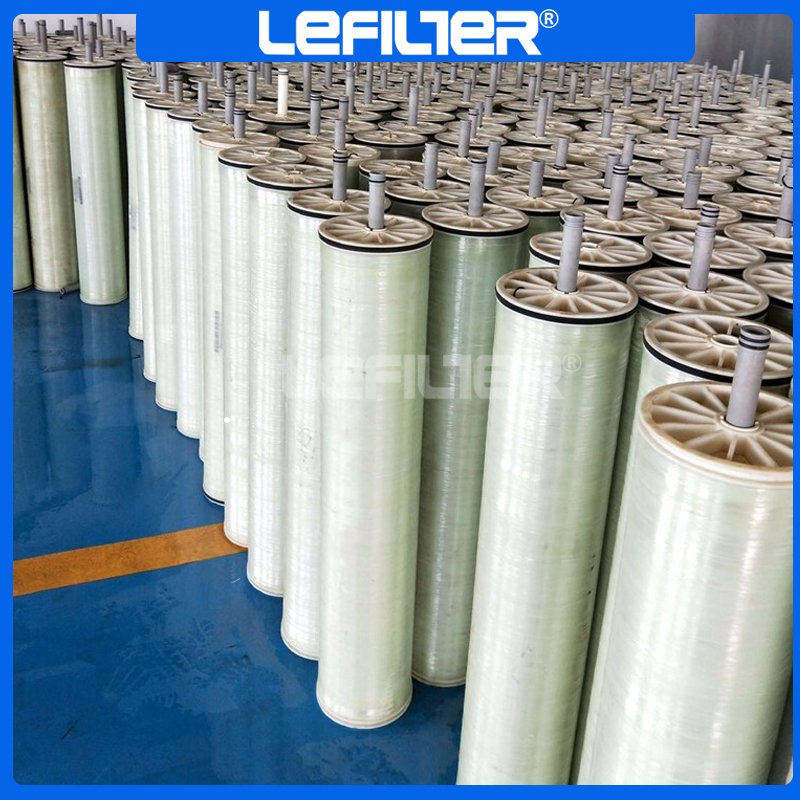
- Reasonable Structural Design: The common spiral – wound membrane is formed by folding and sealing flat membrane sheets into membrane envelopes, with porous support materials inside to form the product water flow channels. Multiple membrane envelopes are spirally wound around a central tube, resulting in a compact structure. This structural design not only reduces the footprint of the equipment but also provides a large filtration area, improving the filtration efficiency. At the same time, the connection and sealing design of the membrane elements ensure the effective treatment of water flow, reducing influent bypass and guaranteeing the quality of product water.
- Wide Range of Applications: RO reverse osmosis membranes are widely used in many fields, including pure water preparation, drinking water desalination, wastewater treatment, reclaimed water reuse, and zero – liquid – discharge systems. They cover numerous industries such as electronic chip manufacturing, food and beverage, pharmaceutical, power generation, chemical engineering, metallurgy, textile, and seawater desalination, meeting the demand for high – quality water in different industries as well as the requirements for wastewater treatment and water resource recycling.
- Service Life and Maintenance Requirements: Under proper pretreatment, regular cleaning, and maintenance, the service life of RO reverse osmosis membranes is generally 3 – 5 years. However, the actual service life is affected by factors such as raw water quality and operating conditions. For example, high – TDS influent water will accelerate the wear of the membrane and shorten its service life. To ensure the performance and service life of the membrane, regular cleaning is required. The cleaning frequency is generally once every 6 months or longer, depending on the raw water quality and system operating conditions.
- Synergy with Other Membrane Separation Technologies: RO reverse osmosis membranes are often used in conjunction with other membrane separation technologies such as microfiltration (MF), ultrafiltration (UF), and nanofiltration (NF) to form a complete water treatment process. Different membrane technologies play their respective roles in different stages based on their pore size and filtration characteristics, jointly achieving in – depth water treatment and improving water quality.
- Printing and Dyeing Wastewater Treatment
- Pollutant Removal: The textile printing and dyeing process generates a large amount of wastewater containing pollutants such as dyes and auxiliaries. RO reverse osmosis membranes, with their high – precision filtration performance, can effectively remove dye molecules, heavy metal ions (such as copper and zinc), organic auxiliaries (such as surfactants), and some dissolved salts from printing and dyeing wastewater. Their filtration accuracy can reach 0.0001 – 0.001μm, which can intercept these pollutants, making the treated water meet the discharge standards or reuse standards and reducing environmental pollution.
- Water Resource Recycling: Through the treatment of printing and dyeing wastewater by RO reverse osmosis membranes, water resource recycling can be achieved. The treated water can be reused in processes such as washing and dyeing in the printing and dyeing production, reducing the intake of fresh water resources and alleviating the water use pressure in the textile industry. For example, the relevant technologies of Suez pure water membranes can effectively treat printing and dyeing wastewater, improve the water recovery rate, reduce production costs, and at the same time reduce wastewater discharge, meeting environmental protection requirements.
- Textile Production Water Preparation
- Providing High – Quality Production Water: Textile production has high requirements for water quality, especially in the production of some high – end textile products. RO reverse osmosis membranes can remove tiny particles, bacteria, viruses, and dissolved salts from water, providing a pure water source for textile production. In the production of chemical fibers, high – quality water can ensure the stable quality of fibers and reduce fiber defects caused by water quality problems. In the dyeing process of high – grade fabrics, using water treated by RO reverse osmosis membranes can make the dyeing more uniform and enhance the fabric quality.
- Ensuring the Stable Operation of Production Equipment: Water with impurities removed enters the textile production equipment, which can reduce scaling and corrosion inside the equipment. When the content of calcium, magnesium, and other ions in water is high, scale is likely to form on the surface of the equipment, affecting the heat transfer efficiency and normal operation of the equipment. RO reverse osmosis membranes can effectively reduce the content of these ions in water, extend the service life of the equipment, reduce equipment maintenance costs, and ensure the continuity and stability of textile production.
Other Application
- Food and Beverage Industry: It is used for the treatment of production water, removing impurities, microorganisms, and salts in water to ensure the quality and taste of products. For example, it provides pure water sources in beverage and wine production.
- Pharmaceutical Industry: It is used to prepare high – purity water for injection and process water, meeting the strict water quality requirements of pharmaceutical production and ensuring the safety and effectiveness of drugs.
- Electronics Industry: When manufacturing precision components such as electronic chips, it provides ultrapure water to prevent impurities in water from affecting product performance and the yield of qualified products.
- Power Industry: It is used to treat boiler make – up water, removing salts and impurities in water to prevent boiler scaling and corrosion, improving power generation efficiency and equipment safety.
- Seawater Desalination: It converts seawater into potable and usable fresh water, providing a stable source of fresh water for coastal areas and islands.
- Wastewater Treatment and Reuse: It deeply treats sewage, removes pollutants, and realizes the reuse of reclaimed water for irrigation, landscape water replenishment, etc., improving water resource utilization efficiency.
conclusion
- Enhancing Product Quality:In the manufacturing of electronic chips, RO reverse osmosis membranes provide ultrapure water by removing tiny particles, ions, and other impurities. Chip manufacturing has extremely high requirements for water quality, as even trace amounts of impurities can affect chip performance and the yield of qualified products. For example, companies like TSMC use RO reverse osmosis membranes to treat production water, effectively reducing chip defects such as short – circuits and leakage caused by water quality issues. This has improved the performance and reliability of chips, enhancing their competitiveness in the market.
- Ensuring Stable Operation of Production Equipment:In the power industry, if boiler water contains many impurities, it will cause scaling and corrosion in the boiler, affecting heat transfer efficiency and even posing potential safety hazards. RO reverse osmosis membranes can deeply purify boiler make – up water, removing calcium, magnesium ions, and other impurities. Take the Three Gorges Hydropower Station as an example. By using RO reverse osmosis membranes to treat boiler water, the scaling and corrosion inside the boiler have been significantly reduced. This has extended the service life of the boiler, lowered equipment maintenance costs, ensured the stable operation of power generation equipment, and improved power generation efficiency.
- Achieving Water Resource Recycling:In the printing and dyeing industry, printing and dyeing wastewater contains a large amount of pollutants such as dyes and auxiliaries. RO reverse osmosis membranes can conduct in – depth treatment of this wastewater, removing pollutants and enabling the treated water to meet the reuse standard. Some printing and dyeing enterprises in Shaoxing, for instance, utilize RO reverse osmosis membrane technology to recycle treated printing and dyeing wastewater for production processes like washing and dyeing. This realizes the recycling of water resources, reduces the intake of fresh water, cuts production costs, and simultaneously reduces wastewater discharge, alleviating environmental pollution.
- Solving the Problem of Freshwater Shortage:RO reverse osmosis membranes are the core technology in seawater desalination. In Saudi Arabia, for example, large – scale seawater desalination plants equipped with RO reverse osmosis membranes convert seawater into fresh water, providing a stable source of fresh water for urban residents and industrial production. The desalinated seawater meets a large amount of local water demand, alleviating the constraints on economic development and residents’ lives caused by the shortage of fresh water resources and promoting the sustainable development of the region.