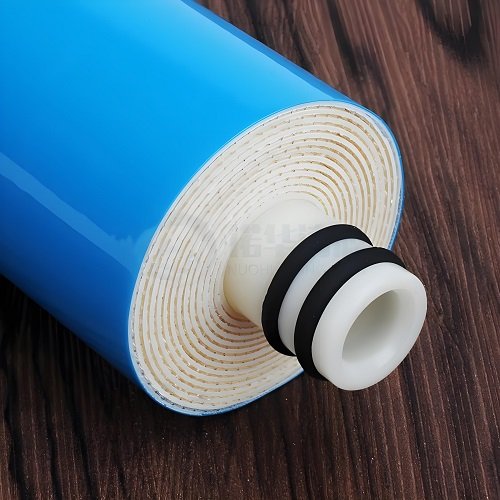
Product Introduction
The ULP-2012-100 ultra-low pressure reverse osmosis (RO) membrane is designed for applications requiring high efficiency and minimal energy consumption. Ideal for residential, small-scale commercial, and light industrial systems, this membrane combines exceptional salt rejection with reduced operational costs. Its ultra-low pressure design (50–100 psi) ensures energy savings while maintaining reliable performance in diverse water treatment scenarios.
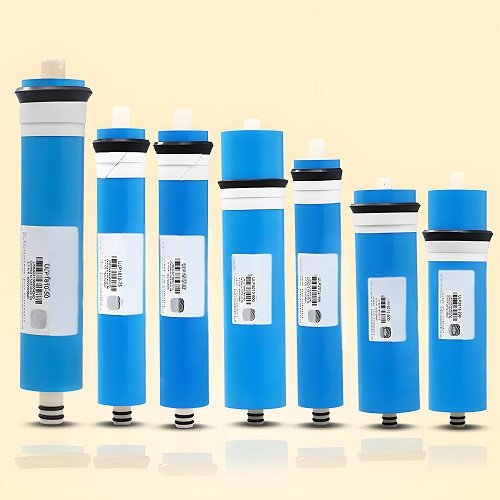
Technical Specifications
| Parameter | Value/Description |
|---|---|
| Model | ULP-2012-100 |
| Type | Ultra-low pressure RO membrane |
| Effective Membrane Area | 100 sq ft (9.3 m²) |
| Product Flow Rate | 2,000 GPD (7.6 m³/day) |
| Salt Rejection | ≥98% |
| Stable Salt Rejection | ≥97% (long-term operation) |
| Operating Pressure | 50–100 psi (3.4–6.9 bar) |
| Maximum Temperature | 35°C (95°F) |
| pH Tolerance Range | 3–10 (continuous operation), 2–11 (short-term cleaning) |
| Maximum Pressure Drop | 10 psi (0.7 bar) |
| Recommended Cleaning pH | 5–9 |
| Feed Flow Rate | 15 gpm (3.4 m³/h) |
| Feed Turbidity Requirement | <1 NTU |
| Free Chlorine Tolerance | <0.05 ppm |
| Dimensions (Diameter × Length) | 4 in × 21 in (102 mm × 533 mm) |
| Weight | ~15 lbs (6.8 kg) |
Test conditions: 1,500 ppm NaCl, 75 psi (5.2 bar), 77°F (25°C), pH 7, 20% recovery.
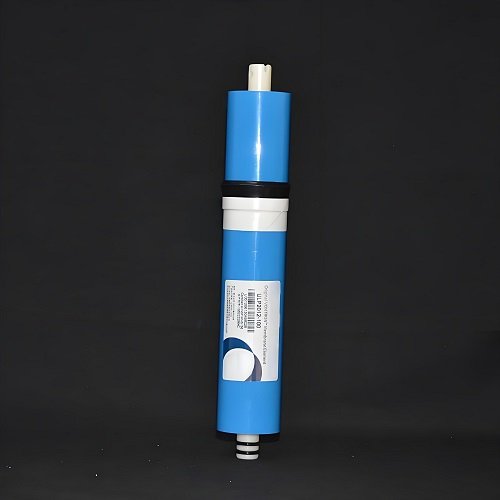
Working Process
- Feedwater Pretreatment
Raw water undergoes prefiltration (e.g., sediment filters, carbon blocks) and chemical dosing (antiscalants) to meet RO feed requirements (turbidity <1 NTU, chlorine <0.05 ppm). - Low-Pressure Separation
- Low-energy pumps pressurize feedwater to 50–100 psi, minimizing power consumption.
- The thin-film composite (TFC) polyamide layer rejects dissolved salts (≥98%), organics (MW >150 Da), and microorganisms.
- Product and Concentrate Streams
- Permeate: High-purity water flows to storage tanks for direct use.
- Concentrate: Efficiently discharges contaminants, with optional partial recycling to improve water recovery.
- Energy-Saving Design
Optimized flow channels reduce energy loss, while compatibility with solar-powered systems enhances sustainability.
- Feedwater Pretreatment
Product Advantages
- Ultra-Low Energy Demand: Operates at 50–100 psi, reducing energy costs by up to 40% compared to standard RO membranes.
- Compact & Lightweight: Ideal for space-constrained installations (e.g., under-sink systems, mobile units).
- Easy Maintenance: Wide pH cleaning range (2–11) simplifies fouling control.
- Eco-Friendly: Supports green initiatives through reduced carbon footprint.
Applications
- Residential: Purifies tap water for drinking, cooking, and appliances.
- Hospitality: Provides clean water for restaurants, hotels, and cafes.
- Agriculture: Treats irrigation water to prevent soil salinization.
- Laboratories: Delivers reagent-grade water for precision applications.
- Emergency Relief: Rapid deployment in disaster zones for safe drinking water.
Conclusion
The ULP-2012-100 ultra-low pressure RO membrane redefines efficiency in water treatment, offering ≥98% salt rejection at minimal energy consumption. Its compact design, ease of integration, and low maintenance make it a top choice for residential and small-scale commercial applications. By combining cutting-edge membrane technology with sustainable operation, the ULP-2012-100 empowers users to achieve clean water access while reducing environmental impact.
lf you are interested in us or have any questions, please contact us.